Amazon retires the Fire, hands the keys to Google
The Fire brand is gone. Amazon's new Alexa Tablets run full Android with Google Play, a quiet surrender on app store economics and a bet that the only thing customers ever wanted from a cheap tablet was a real app store.
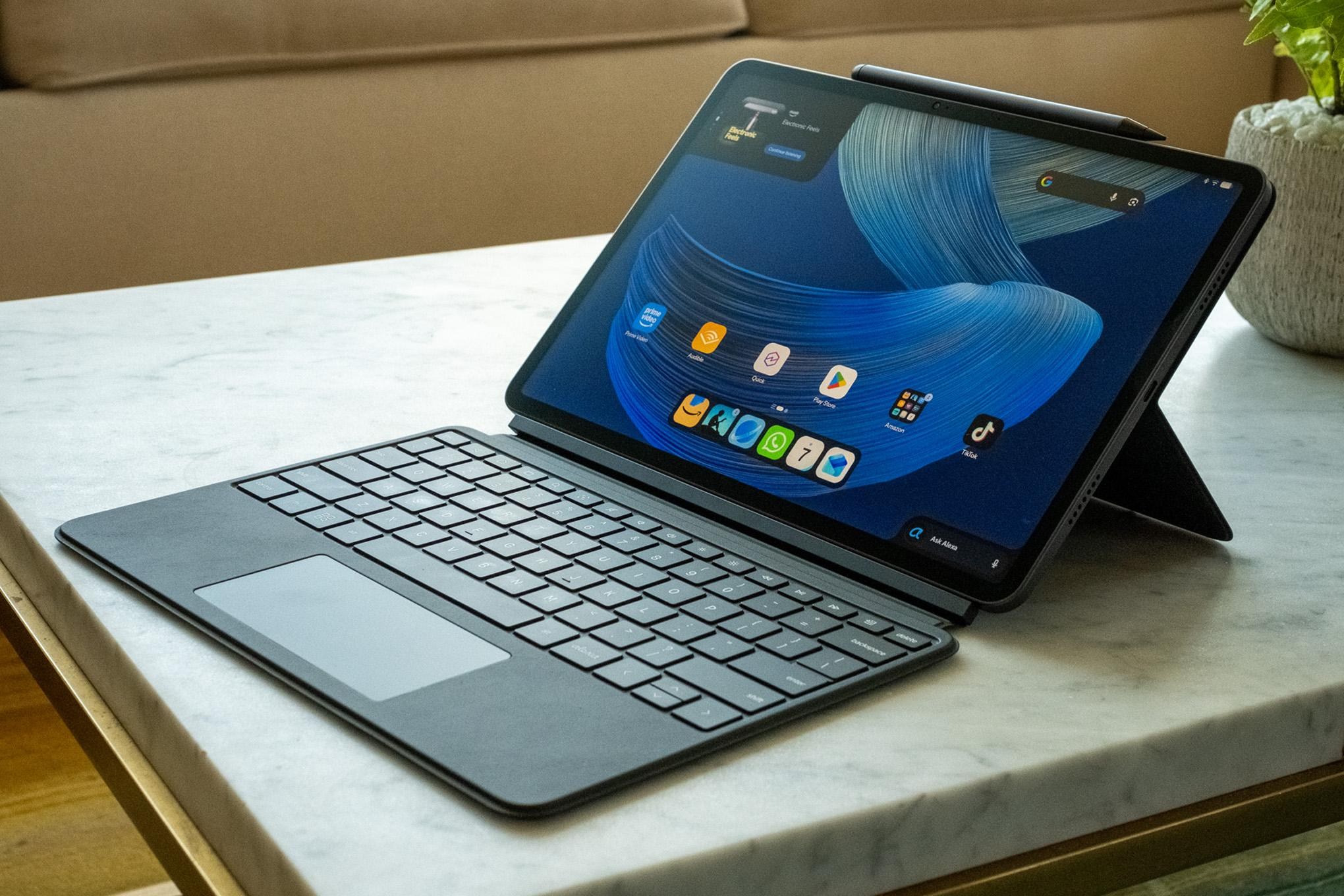
On 8 October 2026, Amazon's Panos Panay told Bloomberg what the company had spent roughly a decade denying publicly: the Fire tablet line, the cheap, ad-supported slab that put a web browser in millions of shopping baskets, is being put down. In its place, Amazon will sell hardware called the Alexa Tablet, and the operating system on which it runs will, for the first time in the product's history, be proper Android with the Google Play Store preinstalled.
The shift is more than a rebrand. For fourteen years, Amazon's tablets ran Fire OS, a forked Android build that walled customers off from Google's app catalogue in favour of Amazon's Appstore, a smaller, curated garden that the company controlled end to end. Customers, as Panay conceded to Bloomberg, were not satisfied with that arrangement. The Verge and Ars Technica both reported the same day that the new lineup ships with Google Play out of the box and that Amazon has effectively retired its own app distribution layer for tablets. The Appstore does not vanish, but its gravitational centre does.
The price points tell part of the story. The Verge's hands-on with the $499 Alexa Tablet 12 Pro, the new flagship of a line that once defined itself by being cheap, marks the clearest break yet with the original value proposition. Amazon's tablets were inexpensive because they were subsidised by Amazon's content flywheel and constrained by the Appstore's narrow selection. The new hardware still carries an ad-supported SKU, but the company's pitch has changed: matte display, premium build, parental controls worthy of a parent who has actually tried to use them. The Verge notes that the Kids Tablets introduced alongside the mainline devices let parents manage access to Google Play, not the Appstore.
Why the Appstore lost
Monexus analysis: the Appstore was a control surface disguised as a feature. Inside the walled garden, Amazon curated which apps were acceptable and reserved the right to set the terms under which digital goods were sold. That structure made sense when the company's goal was to put a tablet in every Prime member's stocking at minimal cost. It made less sense once iPads had eaten the productivity case and Android tablets with full Google services had become cheap enough to compete on price without Amazon's subsidy. Panay's framing in the Bloomberg interview, paraphrased by The Verge, that customers were not "getting what they were asking for," is the company acknowledging in public what developers had been saying in private for years: an Amazon-only app catalogue is a smaller pond, and developers vote with their time.
The structural read is straightforward. Amazon is a hardware company that succeeds when it controls the surface underneath. The Kindle runs the Kindle store. Echo runs Alexa. Fire ran the Appstore. With the new tablets, that equation inverts. Amazon is now a hardware company that is choosing to ship a competitor's operating system and app store because the cost of running its own has stopped paying back. The trade is twofold. Amazon loses the cut it used to take on Appstore purchases, and it gains a chance to sell tablets to people who were previously buying iPads or Samsung Galaxies because the Fire could not run the apps they wanted.
The Android dependency, plainly stated
Monexus assessment: there is no clean way to read this as anything other than a quiet dependency disclosure. The Verge's coverage and the Ars Technica piece both make the same point in different words. The new tablets are more Android than any Amazon hardware has ever been, full stop. Google Play ships preinstalled. The Appstore, where present, sits alongside it. Ars Technica's headline said it directly: "more Android than ever." For a company that once sold the Kindle Fire as the anti-iPad, the anti-Android, an alternative to the duopoly rather than a member of it, this is a strategic reorientation.
The dependency runs in one direction. Google gets a new licensee for Play Services and a fresh vector into living rooms and kitchen counters. Amazon gets a tablet line that no longer has to apologise for what it cannot run. The terms of the deal have not been disclosed publicly, and the available source items do not specify what revenue share, if any, Google now takes on in-app purchases routed through Play. What the reporting does establish is that the structural decision has been made. The question of how much of the Appstore's economics Amazon is willing to give back in order to compete on the high end of the Android tablet market is now the open one.
What this means for the cheap-tablet market
Monexus analysis: the practical consequence of the pivot is a narrowing of the genuinely budget-tablet segment. Fire tablets were the default recommendation for a parent who wanted a device that could survive a toddler and not break the bank. The Verge's hands-on explicitly notes that the new flagship is positioned as a premium Android alternative, not a price leader. Kids Tablets are still in the lineup, but the cheap, ad-supported, take-it-or-leave-it model that defined the brand is no longer the centre of the pitch.
That leaves a gap. Apple does not compete at the bottom. Samsung does, occasionally, with older A-series hardware. Lenovo, through its Tab M line, has been the closest competitor to what Fire used to be. The Verge's coverage suggests Amazon has chosen to compete with Samsung's Tab S line and the base-model iPad instead. Whether the Kids Tablets retain their former price aggression is a question the available source items do not specify. The early reporting frames the launch as a pivot upmarket, not as a price war.
What to watch next
Three concrete things will clarify whether the bet pays off. First, sell-through on the $499 Alexa Tablet 12 Pro when it ships; if reviewers and buyers reject the premium positioning, Amazon will face pressure to reintroduce a cheaper model that almost certainly reverts to Fire OS for cost reasons. Second, the Appstore's fate on Kindle devices, where Fire OS still runs; The Verge and Ars Technica both focused on tablets, and the available reporting does not specify whether the e-reader line will follow. Third, the terms Amazon and Google ultimately disclose, if they do, around Play Services licensing and revenue share. The shift is, structurally, a small surrender of platform autonomy in exchange for relevance in a category Amazon had been losing for years. The principal question is not whether the trade was strategically necessary; Panay's interview concedes that. The question is whether Amazon can build a tablet business that is interesting again without owning the software underneath it.
The available source items do not specify whether Amazon has signalled any change to the Kindle e-reader line, and do not address the broader Alexa device roadmap beyond the tablets and Kids Tablets introduced on 8 October 2026. This article has not independently established what revenue terms govern the new hardware's Play Store integration.
Desk note: Monexus treated this as a platform-strategy story, not a consumer-electronics review. The wire coverage emphasised the matte display and the parental controls; the more durable line is the Appstore's reduced role and what it signals about Amazon's willingness to compete inside someone else's garden when its own stopped growing.
Wire provenance
This editorial synthesis draws on the following public wire/social posts:
- https://www.theverge.com/tech/1008059/amazon-phasing-out-fire-tablet-panos-panay
- https://arstechnica.com/gadgets/2026/10/amazons-new-alexa-tablets-drop-the-fire-branding-but-are-more-android-than-ever/
- https://www.theverge.com/tech/1007473/amazon-alexa-tablet-12-pro-nanomatte-hands-on
- https://www.theverge.com/tech/1007768/amazon-kids-tablet-android-kid-proof-case-google-play
- https://t.me/theverge_news/9400
- https://t.me/theverge_news/9388
- https://t.me/theverge_news/9386
- https://www.theverge.com/tech/1008059/amazon-phasing-out-fire-tablet-panos-panay
- https://arstechnica.com/gadgets/2026/10/amazons-new-alexa-tablets-drop-the-fire-branding-but-are-more-android-than-ever/
- https://www.theverge.com/tech/1007473/amazon-alexa-tablet-12-pro-nanomatte-hands-on
- https://www.theverge.com/tech/1007768/amazon-kids-tablet-android-kid-proof-case-google-play
- https://t.me/theverge_news/9400
- https://t.me/theverge_news/9388
- https://t.me/theverge_news/9386