Araghchi dials Riyadh: Iran offers to broker Saudi–Houthis talks
Tehran publicly offers to facilitate a Saudi–Houthi political track, hours after a phone call between the two foreign ministers dominated regional wires.
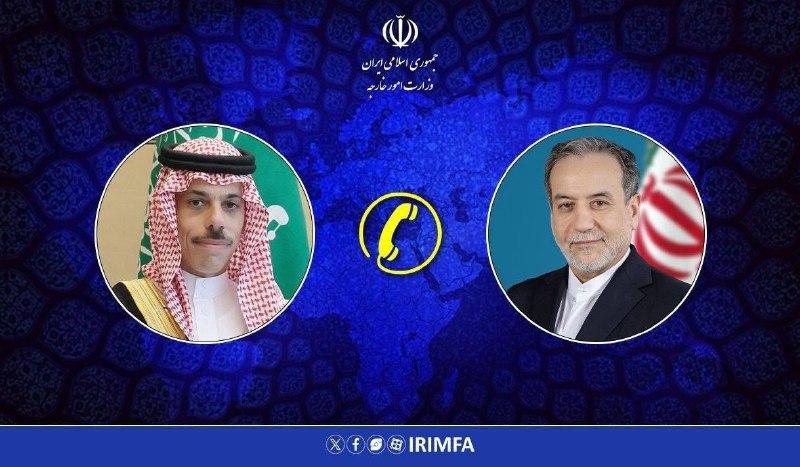
A telephone call between Iranian Foreign Minister Seyed Abbas Araghchi and his Saudi counterpart Faisal bin Farhan on 11 October 2026 produced an unusually explicit piece of public diplomacy: a public offer from Tehran to help start a political track between Saudi Arabia and the Yemeni Houthis. The call, confirmed across Iranian state-aligned outlets within minutes of one another, ran along a recognisable template. Regional crises, Araghchi argued, have no military solution. Insisting on a military approach while disregarding politics would only compound the problem. Iran was ready to assist any dialogue that produced results.
The offer matters because the war in Yemen has been, for the better part of a decade, the most consequential sandbox of the Saudi–Iranian cold contest. Any Saudi movement toward a negotiated settlement is by definition a Saudi movement away from the logic of the 2015 intervention. Iran's positioning itself as a facilitator, rather than an outside patron of the Houthis, recasts the geometry of who gets credit if talks advance, and who absorbs blame if they stall.
The call, line by line
The reporting converged fast. Tasnim News English, the English wire of Iran's IRGC-aligned Tasnim News Agency, published the headline that the two foreign ministers had "discussed and exchanged views on current regional developments" during the call. Fars News International, another Iranian state outlet, ran the line that would dominate the cycle: Araghchi stressed that "the current crises in the region have no [military solution]" and that Iran was "ready to help initiate dialogue between Saudi Arabia and Yemen." Al-Alam Arabic, the Arabic-language Iranian state channel, split the message into two breaking-news posts: one on the offer of assistance, one on the principle that the region's crises have no military answer.
Mehr News and Jahan Tasnim added the analytical edge. Jahan Tasnim paraphrased Araghchi as warning that "insisting on a military approach and disregarding a political solution would further complicate the current situation." Mehr's framing was procedural: a confirmation that the call had taken place, the principals named, the agenda described in broad terms as "regional developments." The story was, in effect, an Iranian-state package: a verifiable event (the call), a quotable line (no military solution), and an offer (Iranian mediation).
That the entire diplomatic record here comes from Iranian state-aligned outlets is worth naming. The thread context does not include a Saudi read-out from Riyadh, nor any wire from a Western or Gulf-based outlet. Every quotation, characterisation and offer in the public record of the call is presently Tehran's own framing of what was said.
What Tehran is buying with the offer
The offer is not costless. By publicly attaching itself to a Saudi–Houthi political track, Iran imports two risks. First, it exposes itself to blame if the track collapses. A facilitator who publicly volunteers for the role has volunteered to be measured against an outcome. Second, it narrows Tehran's claim to be a disinterested outside power. Iran is the Houthis' most consequential external backer; presenting itself as a neutral midwife requires the audience to forget, or to discount, years of material support to the movement that has fought Saudi Arabia since 2015.
The purchase price is clearer. Tehran secures a seat at any negotiation it does not otherwise have. If a settlement eventually emerges in Yemen, Iran wants its signature visible in the margin. That is consistent with a wider Iranian pattern in 2026: visible diplomatic activity on Lebanon, on Syria's reconstruction track, and now on Yemen, all of which point to Tehran trying to convert regional de-escalation into diplomatic capital and sanctions relief leverage.
For Riyadh, the calculation runs the other way. A negotiated Yemen settlement would close the most expensive line item of the Saudi defence budget and reset a relationship with Tehran that has spent most of the last decade in managed hostility. The 2023 China-brokered Saudi–Iranian rapprochement provided the diplomatic architecture for exactly this kind of exchange; the Yemen file is its most consequential unfinished item.
A wider diplomatic current
Yemen is the most legible piece of a broader pattern of regional de-escalation underway. The available sources do not specify the full agenda of the Araghchi–bin Farhan call beyond "regional developments," and do not name any other file raised in the conversation. What they do show is the persistence of the channel: that the two foreign ministers speak by phone, that the calls are made public, and that Tehran uses the read-outs to project a specific posture.
Monexus analysis: read together, the pattern is one of Iran seeking visible diplomatic ownership of the de-escalation phase, in a region where its leverage has been weakened by the collapse of the Assad government in Syria and the Israeli campaign against Hezbollah in Lebanon. Iran is offering what costs it least (facilitation rhetoric) in a theatre (Yemen) where Saudi Arabia is the actor with the strongest incentive to accept. That is not a settlement. It is the diplomatic pre-positioning for one.
What to watch next
The decisive variable is the Saudi response. Riyadh has not, in the available record, accepted or rejected the Iranian offer publicly. The next markers are familiar: a Saudi read-out of the call, a Houthi statement of position, and any third-party facilitation that emerges (Oman and Kuwait have historically played this role; China is the most consequential external broker in the room).
The other marker is whether the Iranian offer travels with substance. Facilitation without a Houthi negotiating team to fly into a room is a press release, not a process. The thread context does not specify whether any Houthi representative has been consulted on, or informed of, the Iranian offer. Until that becomes public, the read is that Tehran has staked out the chair at a table that has not yet been built.
The desk note: Monexus ran this story on Iranian-state wires alone, by necessity. The Saudi and Houthi positions are not present in the available record. The piece treats the Iranian offer as Tehran's framing of itself, and flags that every quotation in the public ledger of the call is presently Iranian.
Wire provenance
This editorial synthesis draws on the following public wire/social posts:
- https://t.me/FarsNewsInt/263407
- https://t.me/alalamarabic/509845
- https://t.me/alalamarabic/509844
- https://t.me/tasnimnews_en/42496
- https://t.me/mehrnews/421640
- https://t.me/JahanTasnim/239184