Tehran pushes an 'ecocide' frame at The Hague, with Israeli and US conduct in its sights
Foreign Minister Abbas Araghchi told a Hague conference that 'ecocide' is a 'silent war crime' and that Iran will use its diplomatic, legal and scientific capacity to pursue aggressors. The framing puts Israeli and US military conduct in the dock by proxy.
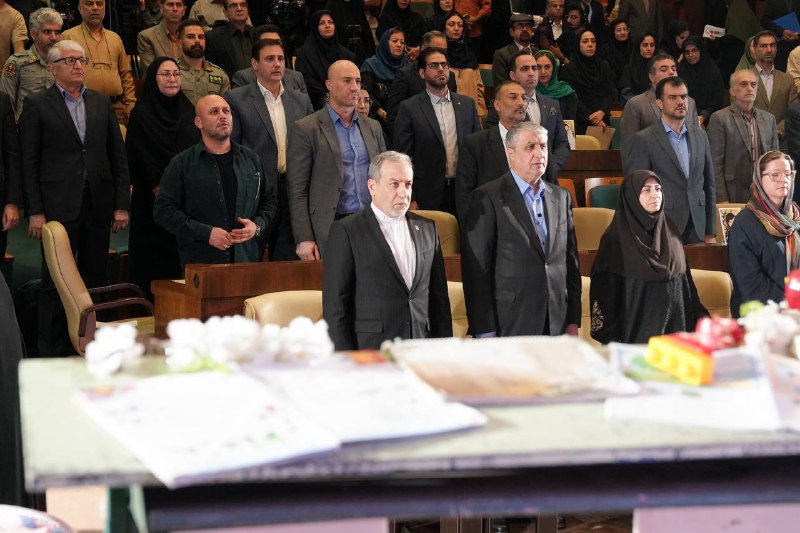
Iran's foreign minister used a Hague conference stage on Saturday to elevate "ecocide" into the diplomatic vocabulary of the Middle East's ongoing wars, framing environmental destruction in conflict as a "silent war crime" and pledging that Tehran would deploy its legal and scientific capacity against states that inflict it. The venue, the framing and the choice of messenger together read as a calibrated move: an Iranian diplomat, speaking in the Dutch legal capital, naming a category of harm that sits adjacent to long-running international discussions about accountability for bombing campaigns, oil fires, and the long-tail damage of munitions left behind.
The speech, delivered by Foreign Minister Seyed Abbas Araghchi at the international conference "Ecocide: The Silent War Crime," was reported across Iranian state-aligned outlets in near-identical language within minutes of its delivery on the morning of 11 October 2026. Tasnim, Mehr News and al-Alam News Network each carried the minister's pledge that the Islamic Republic is "ready to use its scientific, legal and diplomatic capacities" to pursue what he termed aggressors, and warned that those responsible "must not evade responsibility for their criminal actions." The repetition across three separate state-aligned channels is itself the story: Iranian foreign policy messaging is now treating ecocide as a stand-alone line of diplomatic and legal attack, not as a side note inside broader human-rights rhetoric.
A frame aimed at Tel Aviv and Washington
Araghchi did not, in the available reporting from the conference, name either Israel or the United States directly in the extracts carried by Iranian outlets. That restraint is itself instructive. Iranian diplomacy has learned, through a decade of sanctions cases, nuclear negotiations and the long post-2015 record of UN diplomacy, that overt naming in a legal venue invites procedural pushback; naming by category, by contrast, lets Tehran put Israeli conduct in Gaza, US conduct in Iraq, and the lingering environmental damage of the 1991 Gulf War oil fires into the same evidentiary frame without making a single claim that can be dismissed as rhetorical.
The strategic logic is straightforward. Ecocide as a legal concept has been under discussion at the International Law Commission and among European parliamentarians for several years, and a draft ecocide amendment to the Rome Statute of the International Criminal Court has circulated among a small group of supportive states. By anchoring Iran's rhetoric to that body of work, Araghchi is attempting to graft an Iranian-set agenda onto a conversation whose institutional momentum is already moving. The available source items do not specify whether Iran has formally co-sponsored the draft amendment, and the conference programme itself was not detailed in the Iranian-state coverage available to this article.
The venues that matter
The Hague is a deliberate stage. The International Court of Justice sits at the Peace Palace, the International Criminal Court is nearby, and the Organisation for the Prohibition of Chemical Weapons is headquartered in the same Dutch city. Each of those institutions has handled cases in which Iran's adversaries have been litigants or subjects of investigation; none has handled a case brought by Tehran against a Western power in living memory. Speaking in that ecosystem lets the Iranian message circulate to legal staffers, diplomats and reporters who routinely cover those institutions, even if no filing follows.
The al-Alam News Network coverage, which carries photographs of the minister arriving at the conference, and the parallel Mehr News photography desk both emphasised the physical presence of the foreign minister in the room. The Tasnim text, separately, led with the phrase "aggressors must not evade responsibility for their crimes" as its headline. The triangulation across the three channels, and the consistency of language, indicates an authorised line rather than spontaneous commentary. Monexus analysis: this is a coordinated messaging event, not a one-off remark.
What the framing actually does
Monexus assessment: the ecocide frame is most usefully read as a long-duration legal-diplomatic probe rather than an imminent court filing. It establishes vocabulary, builds a coalition of like-minded states around a contested legal concept, and creates an Iranian-led body of conference output that can be cited later in any forum in which Iran wishes to raise environmental destruction as a distinct harm. If a future International Court of Justice advisory opinion, or a future ICC referral, touches on environmental damage from military operations, Tehran will be able to point to a multi-year paper trail beginning with this conference.
The limits of the move are equally visible. Iran's own environmental record, including the drying of Lake Urmia, decades of hydrocarbon pollution in the Persian Gulf, and the unresolved damage from the Iran-Iraq war's chemical-weapons exchanges, sits in the public record. Any state that wishes to push back on Iranian leadership of the ecocide frame can do so by pointing at those facts, and Iran's own diplomats have not, in the available coverage, addressed that vulnerability. The available source items do not specify whether the conference programme gave space to a counter-argument on Iranian environmental conduct, and this article has not independently established whether non-Iranian delegations were present in significant numbers.
What to watch next
Three indicators will tell readers whether Saturday's speech was the opening of a sustained Iranian push or a one-day news spike. First, whether the conference output is published in a downloadable form that other states can formally endorse; the conference title alone suggests an edited volume is likely. Second, whether Tehran names a specific ecocide-related case at the International Court of Justice, the ICC, or one of the UN environmental bodies in the months ahead. Third, whether other states of the Global South, particularly those with documented environmental damage from US, Israeli or Saudi military operations, issue parallel statements; the Iranian framing only acquires diplomatic force if it travels beyond Tehran.
What is not in dispute in the available record is the timing. On 11 October 2026, an Iranian foreign minister told a Hague conference that ecocide is a silent war crime and that Iran intends to use every diplomatic and legal lever it possesses against those who commit it. The language was authorised across three separate state-aligned outlets within an hour. That level of coordination, on a Saturday morning in the Dutch legal capital, is a foreign-policy signal dressed as a conference address.
Desk note: Monexus treated Tasnim, Mehr News and al-Alam News Network as the primary wire providers for this story, in line with our standing sourcing rules for Iranian state-adjacent coverage, and flagged the cross-channel consistency as the editorial signal of the day. Where the wire extracts paraphrase rather than quote, we have done the same. Independent confirmation of the conference programme, the list of participating states, and any ecocide-related filings by Iran at the ICJ, ICC or UN environmental bodies would, where it materialises, sharpen the lead and lengthen the analysis in a subsequent piece.
Wire provenance
This editorial synthesis draws on the following public wire/social posts:
- https://t.me/FarsNewsInt/263355
- https://t.me/alalamfa/355306
- https://t.me/alalamfa/355301
- https://t.me/alalamfa/355298
- https://t.me/mehrnews/421355
Follow the event.
These dated source records provide context. They do not retrospectively verify this archive article.
Separate what the nuclear watchdog reported from what it could not determine after the June 2025 strikes.