Senator Tillis and bipartisan Hill pushback frame Trump Russian diesel deal as a sanctions question
On 11 October 2026 reporting identified Senator Thom Tillis as the lawmaker publicly calling a Trump-brokered Russian diesel arrangement potentially illegal, with bipartisan senators joining the criticism and a reported Treasury licence doing little to settle the legal question.
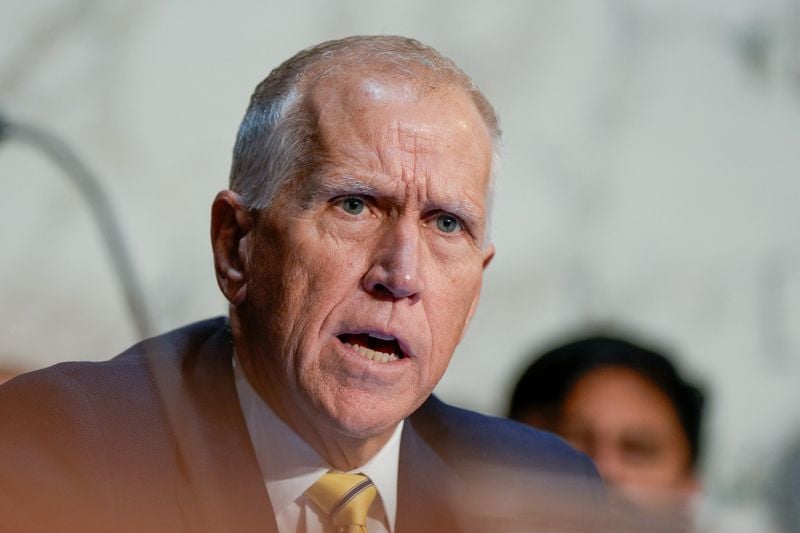
On 11 October 2026 the South China Morning Post, syndicated through Investing.com's commodities desk, named Senator Thom Tillis, a Republican, as the lawmaker publicly alleging that the Trump administration's arrangement to allow Russian diesel into US fuel markets may run afoul of US sanctions law. The intervention lands on the same day the White House is selling a separate, narrowly framed "energy truce" with Moscow that, per reporting relayed by Telegram channel Tsaplienko citing Axios, covers only strikes on oil refineries rather than the wider fuel chain. The collision of those two tracks sets up a domestic legal fight inside the GOP, with bipartisan reinforcement from the other side of the aisle, at exactly the time Washington is trying to manage a wartime energy conversation with the Kremlin.
Read in plain terms: a sitting Republican senator, identified in the public reporting, is on the record arguing that the diesel arrangement is unlawful, and is being joined by colleagues across the aisle. That is not a fringe comment from the backbench. It is a direct challenge to a sitting administration's sanctions architecture, from people who have a hand in writing it. The intrigue now is whether the claim becomes a legislative probe, a judicial referral, or a story that ages out by Tuesday's news cycle. The shape of the next 72 hours tells us which way the wind is blowing on Capitol Hill.
The senator, and the bipartisan weight behind him
The SCMP report and its Investing.com mirror frame the allegation as a violation of US sanctions law rather than a policy disagreement over whether Russian diesel should be imported. That puts the dispute in the courtroom, not the op-ed page. The reporting identifies the lawmaker as Senator Thom Tillis, a Republican, invoking the legal architecture that the United States itself built after February 2022 and now, in this allegation, accusing the administration of breaching. The reported allegation is the kind of claim that, if it survives a single news cycle without retraction, triggers letters from committee chairs to the Office of Foreign Assets Control and to Treasury's sanctions enforcement division. The sources do not specify which statutory provision is allegedly breached, and the operative word in the public reporting is "illegal."
The political geometry is more complicated than a one-versus-one story. Monexus analysis: a Democratic challenger would have produced a press release and a fundraising email. A Republican challenger, named in the public reporting and joined by bipartisan colleagues in separate Hill coverage, produces a constitutional crisis conversation inside the party that controls both ends of Pennsylvania Avenue. The White House's options narrow accordingly: defend the deal in detail, narrow its scope, or quietly let it lapse. The cited source items do not specify which path the administration has signalled it will take.
The energy truce, narrowly read
The same news cycle carries a separate piece of context that complicates the diesel question. Per reporting relayed by Telegram channel Tsaplienko on 11 October 2026, citing Axios, the Trump-brokered "energy truce" with Moscow applies only to strikes on oil refineries, not to the wider energy infrastructure that moves crude, diesel and other refined products to market. Ukraine, per the same excerpt, has only one oil refinery left, which is not operating because of Russian strikes. That narrow scope matters because it tells you what the truce is for: a wartime de-escalation mechanism aimed at protecting the downstream refining capacity that Moscow and its customers depend on for export revenue.
It also tells you what the truce is not. It is not a sanctions package. It is not a financial architecture. It is a flight rule for kinetic action between the warring parties. A sanctions question raised by a US lawmaker sits one institutional layer above that. The diesel allegation and the refinery truce can both be true at the same time: the kinetic pressure on Russian refining can be paused while the financial architecture around Russian fuels is being contested on Capitol Hill.
Why this story is bigger than the diesel cargo
The structural reality is layered. The United States has, since 2022, run a tiered sanctions regime with carve-outs for some agricultural and medical trade, with country-level price caps on seaborne Russian crude enforced by a coalition of G7 enforcement states, and with a series of general licences that permit specific transactions on a case-by-case basis. Monexus analysis: a "diesel deal" inside that architecture is not automatically unlawful if it has a licence, and the contested question is precisely whether the licence path was followed properly and whether the licence itself survives legal and political scrutiny. The senator's allegation, read alongside separate reporting referenced on the Hill, is that even where a temporary authorisation exists, the underlying policy choice to bring Russian diesel into US fuel markets is on the wrong side of the sanctions architecture Congress built. The structural point is that sanctions policy is now contested inside the GOP, with bipartisan reinforcement, at the exact moment that Russia is being offered one of the smallest possible wartime accommodations: a pause on strikes against the refineries.
That is a pattern. In moments when Washington tries to thread a needle between sustaining Ukraine and managing a relationship with Moscow, the needle breaks on Capitol Hill. The diesel allegation is the needle breaking. Whether the administration defends the licence, narrows the deal's scope, or walks it back entirely is the question that the rest of this week will answer.
What to watch next
Three things move the bill. A formal letter from a senior committee chair to Treasury or OFAC would convert a named senator's allegation into a documented legal inquiry. A bipartisan letter, gathering signatures across both parties, would convert it into a coordinated constitutional question. The third is the cargo: if a named vessel is publicly identified as moving Russian diesel to a US-linked buyer under the reported authorisation, the legal exposure widens and the political pressure narrows the administration's options.
The cited source items do not specify a vessel, a licence number, or the dollar value of the alleged arrangement. What they do specify is that Senator Thom Tillis, on 11 October 2026, has gone on the public record alleging illegality, and that the same news cycle is reporting an energy truce defined narrowly enough to leave the legal architecture around Russian fuels outside its protection. The shape of the next move is a Senate letter, a Treasury response, or a quiet rollback. Each path tells a different story about who in Washington actually decides American sanctions policy.
Desk note: Monexus framed this story around the legal architecture, not the cargo. Wire coverage highlighted the political friction inside the GOP; this piece reads the sanctions story as the operative layer, the bipartisan weight behind the named senator as the under-reported one, and the refinery truce as a narrower, separate track.
Wire provenance
This editorial synthesis draws on the following public wire/social posts:
- https://www.scmp.com/news/world/united-states-canada/article/3370512/trumps-russian-diesel-deal-may-be-illegal-says-prominent-republican-senator
- https://www.investing.com/news/commodities-news/prominent-republican-senator-says-trumps-russian-diesel-deal-may-be-illegal-4942755
- https://t.me/SCMPNews/112009
- https://t.me/Tsaplienko/100354
Follow the event.
These dated source records provide context. They do not retrospectively verify this archive article.
A dated voting record is evidence of one decision. Use the original UN record before turning it into an alignment label.
Visual explainer · historical vote of 2022-03-02 →- https://www.scmp.com/news/world/united-states-canada/article/3370512/trumps-russian-diesel-deal-may-be-illegal-says-prominent-republican-senator
- https://www.investing.com/news/commodities-news/prominent-republican-senator-says-trumps-russian-diesel-deal-may-be-illegal-4942755
- https://t.me/SCMPNews/112009
- https://t.me/Tsaplienko/100354