Trump rolls a three-stop energy pitch: Greenland, Alaska, Taiwan
Within a 24-hour window, President Donald Trump announced oil and gas exploration in Greenland, campaigned in Alaska on high prices, and claimed a Taiwan offtake for an Alaska LNG pipeline.
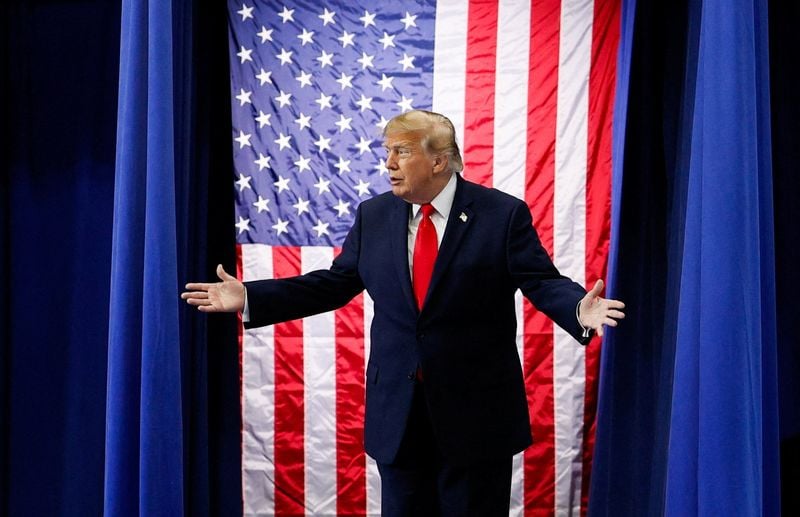
At 04:30 UTC on 14 October 2026, U.S. President Donald Trump announced that oil, gas and mineral exploration would begin in Greenland, the latest in a series of resource-sovereignty overtures that have defined the administration's posture toward the Arctic. The same 24-hour stretch produced an Alaska campaign rally framed around high pump prices, and a third, separate claim that Taiwan had agreed to purchase 30% of the output of a proposed Alaska LNG pipeline.
Three announcements, three geographies, one consistent through-line: the United States is trying to convert domestic energy abundance, frontier-territory access and East Asian security demand into a single political proposition. The credibility of each leg will determine whether the proposition survives the next news cycle.
Greenland: oil, gas, minerals, and an absent counterparty
Trump's Greenland announcement, carried at 04:30 UTC on 14 October by Investing.com, layers oil and gas onto an existing mineral-extraction pitch. The source items in this thread do not specify which companies are lined up to operate, which licences have been issued, or whether Nuuk or Copenhagen have signed off.
Monexus assessment: the announcement reads as a unilateral declaration of intent. A credible prior public record, drawn from reporting outside this thread, documents a pattern of Greenlandic and Danish pushback against Trump-linked exploration rhetoric, including warnings attributed to officials that drilling-related activity has occurred without proper permission. That prior record is not contained in the source items in this thread, and the source items in this thread do not include a Greenlandic or Danish reaction dated 14 October 2026. The contradiction between announcement and on-the-ground authority is therefore the dominant reading, but the reader should treat the timeline-to-exploration claim as political signalling until licensing or partnership terms appear in the official record.
Alaska: the rally stop the White House wanted you to see
By 03:06 UTC on 14 October, Trump was campaigning in Alaska, a conservative state that has, per the same Investing.com wire, felt the pinch of high energy prices despite sitting on significant reserves. The political reading is straightforward: the rally is a reminder to the local base that the administration's energy agenda is, in the framing used at the rally, theirs.
The structural reading is harder. Alaska's energy economy is widely understood to feature infrastructure bottlenecks, but the source items in this thread do not specify whether flared gas, remote-community fuel costs, or Trans-Alaska Pipeline throughput are part of the problem the rally was designed to address. Whatever the applause line, the gap between reserves and delivered BTUs to American households is the underlying policy question, and the rally did not, on the evidence available here, supply new operational detail.
Taiwan and the Alaska LNG pipe
The most concrete of the three announcements came at 02:42 UTC on 14 October, when Trump told reporters that Taiwan had agreed to buy 30% of the gas from an Alaska pipeline project. CNBC, reporting the same Trump statement at 02:09 UTC on 14 October, framed the headline around the offtake claim rather than around any executed contract.
Monexus assessment: a 30% offtake commitment, if executed as a long-term sales and purchase agreement, would be the kind of anchor tenant that project lenders require to reach financial investment decision on a greenfield LNG facility. It would also, in one move, tie an Indo-Pacific security partner to a U.S. energy export corridor. The source items, however, do not specify whether the agreement is a signed SPA, a heads of agreement, a memorandum of understanding, or a verbal commitment announced at a rally. Each of those carries a different probability of closing.
The political economy is harder to ignore. The Trump administration has, in its second term, repeatedly used trade and tariff pressure to push Pacific partners toward deeper bilateral procurement arrangements. A Taiwanese commitment to Alaska LNG would fit that pattern: security-aligned demand being converted into a multi-decade hydrocarbon import relationship underwritten by the United States. The source set does not record a Taiwanese official confirmation of the 30% figure as of 02:42 UTC on 14 October.
The three-leg proposition, weighed
Read together, the Greenland, Alaska, and Taiwan announcements sketch a U.S. energy doctrine pitched at three constituencies at once: a domestic base for whom fuel prices are the salient metric, a frontier-territory government in Nuuk whose cooperation the United States has chosen to court, and an Indo-Pacific partner whose energy dependence on the U.S. would deepen an existing security alignment.
The doctrine has internal tensions. A genuine U.S. push to develop Greenlandic hydrocarbons would compete, over a five-to-ten-year horizon, with any Alaska LNG project for the same capital, the same permitting bandwidth, and the same political oxygen. A Taiwanese offtake announcement magnifies the demand side without, on the evidence available here, committing additional supply. And a rally in Alaska cannot, on its own, shorten the timeline to a final investment decision on a megaproject that the market has, in past cycles, treated with caution.
Counter-narrative to weigh: the more sceptical read is that these are three separate, sequential announcements designed for separate audiences, with no integrated policy machinery behind any of them. On that reading, the Greenland announcement is a long-running claim repackaged for the news cycle, the Alaska rally is a domestic political performance, and the Taiwan LNG announcement is a rally-deal in the tradition of presidential deal-making rhetoric, several of which have historically not translated into executed contracts. That reading is not contradicted by the available source set.
The sources do not specify: which Greenlandic or Danish authorities, if any, have endorsed the exploration announcement; the identity of any Alaska LNG project operator or consortium; the contractual status of the claimed 30% Taiwanese offtake; the price indexation or term length of any proposed agreement; whether any U.S. federal permit has advanced for either project in the last 30 days. Those are the datapoints that would convert rhetoric into a verifiable plan.
Stakes, concretely: if the proposition holds, U.S. LNG and Arctic hydrocarbons gain two large new customers and a politically aligned supplier reputation in the Pacific. If it does not, the gap between presidential announcements and project execution widens further, and the administration's energy and Arctic posture loses credibility with the very partners it is trying to bind to it.
The three stops will be measured, in the end, by the same yardstick: contracts filed, permits issued, drilling rigs mobilised. Until those appear, the announcements are a coherent political frame and an unverified commercial one.
Desk note: Monexus reads the three stops as one coordinated energy pitch and flags the absence of first-party counterparty confirmation in the source set; the Greenland leg in particular is framed against a broader public record of Danish and Greenlandic pushback that the thread itself does not contain.
Wire provenance
This editorial synthesis draws on the following public wire/social posts:
- https://www.investing.com/news/commodities-news/trump-says-oil-gas-and-mineral-exploration-to-begin-in-greenland-4947991
- https://www.investing.com/news/commodities-news/trump-campaigns-in-alaska-a-conservative-state-feeling-the-pinch-of-high-energy-prices-4947922
- https://www.investing.com/news/economic-indicators/trump-says-taiwan-agrees-to-buy-30-of-lng-from-alaska-pipeline-project-4947902
- https://www.cnbc.com/2026/10/14/taiwan-alaska-lng-project-trump-.html
- https://www.france24.com/en/americas/20261014-trump-asks-us-ambassador-to-greece-kimberly-guilfoyle-to-resign-over-allegations
- https://www.investing.com/news/commodities-news/trump-says-oil-gas-and-mineral-exploration-to-begin-in-greenland-4947991
- https://www.investing.com/news/commodities-news/trump-campaigns-in-alaska-a-conservative-state-feeling-the-pinch-of-high-energy-prices-4947922
- https://www.investing.com/news/economic-indicators/trump-says-taiwan-agrees-to-buy-30-of-lng-from-alaska-pipeline-project-4947902
- https://www.cnbc.com/2026/10/14/taiwan-alaska-lng-project-trump-.html
- https://www.france24.com/en/americas/20261014-trump-asks-us-ambassador-to-greece-kimberly-guilfoyle-to-resign-over-allegations