Ansar Allah official demands international probe into Saudi-led war on Yemen, cites 1.4 million civilian deaths
On 15 October 2026, a senior Ansar Allah official called for a comprehensive international investigation into the Saudi-led war on Yemen and cited 1.4 million civilian deaths and 300,000 killed in bombardments as his tally.
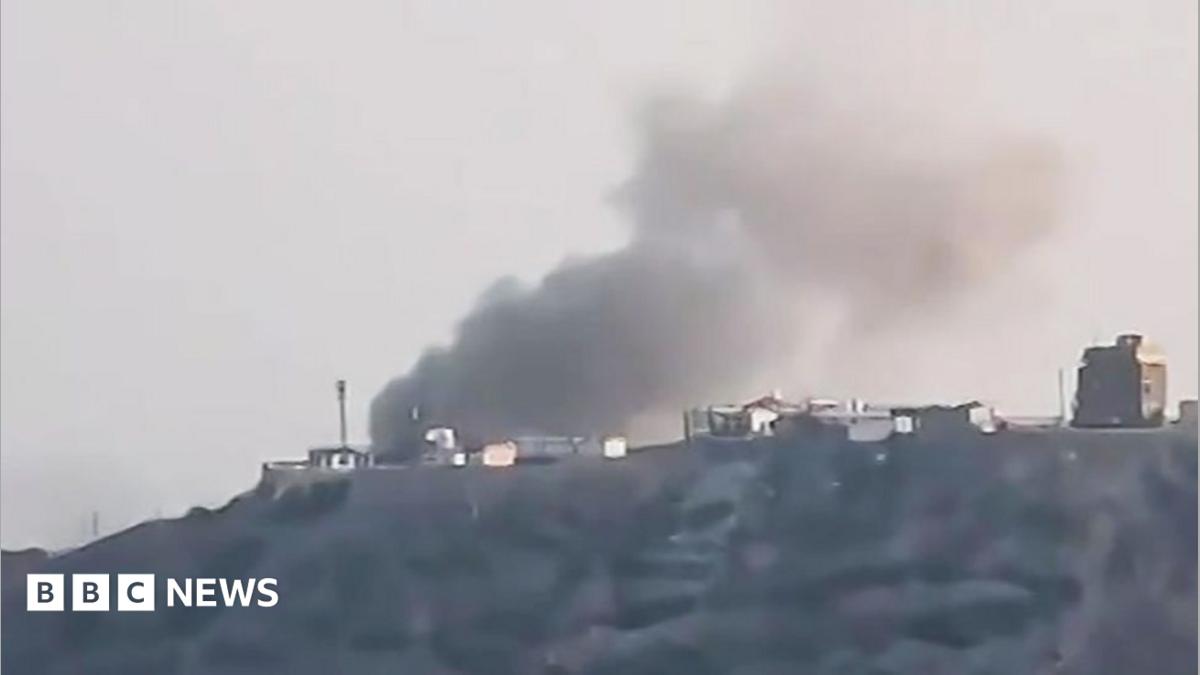
Mohammed al-Farah, a member of Ansar Allah's political bureau, called on 15 October 2026 for a "comprehensive, impartial and independent international investigation" into the Saudi-led war on Yemen, framing the demand as an accountability bid rather than a tactical manoeuvre. In a series of statements carried by Al Alam Arabic's Telegram channel between 20:42 and 20:50 UTC, al-Farah laid out a procedural demand, a casualty ledger, an attribution of responsibility, and a pointed remark about Iran's proximity to Saudi territory.
The demand lands as a formal on-the-record move from a party that has consistently sought outside investigation of the coalition's conduct and has consistently been refused. What the four Telegram posts change, in form, is the public framing of those grievances under a single political-bureau voice on a single evening, with a single stated toll.
The four posts, in order
Al-Farah's first post, at 20:42 UTC, was procedural. He called for a comprehensive, impartial and independent international investigation into the Saudi war on Yemen, naming no operative, no venue, and no timeline (Al Alam Arabic, Telegram, 15 October 2026).
At 20:44 UTC, he moved to the substantive. He attributed civilian deaths to four specific Saudi-led actions: the war itself, the blockade, the withholding of food and medicine, and what he described as obstruction of travel for medical treatment. He put the civilian death toll at 1 million and 400,000. In the same statement he said that 300,000 Yemenis were killed in bombardments. The figures are not independently verifiable from the supplied source items; this publication treats them as a claim made by a party to the conflict on a partisan channel, not as a corroborated statistic.
At 20:46 UTC, al-Farah argued that the Saudi-led coalition bears responsibility because, in his reading, it has used civilians as "shields to protect facilities" while ignoring what he characterised as repeated, explicit warnings.
At 20:50 UTC, he turned the Iran file back on Riyadh. If confronting Iran is the stated pretext for Saudi aggression, he said, then Iran is geographically closer to Saudi Arabia than the Yemeni capital Sanaa is. The line is rhetorical, but it sits inside a regional escalation cycle in which Ansar Allah has, over the past two years, conducted missile and drone strikes against Saudi and Emirati territory and disrupted Red Sea commercial shipping in claimed solidarity with Palestinians in Gaza.
How the ledger stacks against other counts
The 1.4 million civilian death figure is the centre of any honest reading of this episode, and it has to be handled carefully. It is several times the most-cited contemporary academic estimate of war-related deaths in Yemen, which a 2021 Lancet paper put at 377,000 through the end of 2019, including both direct and indirect causes. ACLED's conflict-monitoring dataset, which counts only documented battle deaths, lists far fewer. The 300,000 killed-in-bombardments figure in the same statement sits inside the same family of partisan tallies and has not been corroborated here against UN OCHA or ACLED ledgers. Monexus treats both numbers as political claims until corroborated, not as base rates.
The structural point al-Farah is making is not new. From 2015 onward, UN agencies, the World Food Programme, and humanitarian NGOs have documented the impact of coalition blockade and import restrictions on food, fuel, and medical supply flows, particularly through the ports of Hodeidah and as-Salif. The Saudi-led coalition has consistently rejected UN and international-investigator access on sovereignty grounds. Ansar Allah has consistently demanded such access as a precondition for political negotiations. The impasse is the conflict's most durable feature.
Why this sequence, on this evening
The sequence is more interesting than any single line. Ansar Allah has used formal demands for international investigations before, including during the 2018-2019 Hodeidah ceasefire period and around the 2023 prisoner-exchange talks. What is different in October 2026 is the regional backdrop: a Gaza war grinding on, an Iran-Saudi detente that has visibly cooled, and a Red Sea shipping crisis in which Ansar Allah's attacks on commercial vessels have drawn US and UK military responses. The political bureau is, in effect, trying to move the conversation from tactical strikes back onto the larger war, and onto a frame in which Riyadh is the aggressor and the Yemeni civilian is the victim.
Monexus analysis: the 20:50 UTC pivot on Iran's geography is the most telling line in the sequence. By locating Iran closer to Saudi Arabia than Sanaa is, al-Farah is collapsing two of the kingdom's longstanding regional anxieties into a single sentence: that Iranian power is at its border, and that the Yemen war has not bought Riyadh the strategic depth it was sold as achieving in 2015. The line will be read in Riyadh as a threat posture; it should be read here as a deliberate provocation designed to surface the Iran variable as the dominant frame.
The counter-read, and what is missing
The Saudi-led coalition's position on civilian casualties has historically rested on three legs: that coalition operations target military infrastructure, that the high Yemeni casualty toll is principally the product of Ansar Allah's own conduct of the war, and that any independent investigation must be reciprocal rather than one-sided. None of those positions appear in the supplied source items, and this publication has not independently established the coalition's official response to al-Farah's 15 October statement as of the time of writing.
The plausible alternative read of the same fact base is that al-Farah's call is not aimed at any plausible international venue. The UN Group of Eminent Experts on Yemen was effectively wound down in 2020; the Office of the High Commissioner for Human Rights has retained a country presence but no standing investigative mandate. A "comprehensive, impartial and independent international investigation" along the lines Ansar Allah has historically demanded would require either a UN Human Rights Council resolution, historically blocked by Saudi-aligned states, or a referral from the International Criminal Court, a process the Yemeni government has refused to engage with. The call, on this reading, is a record-setting exercise: an on-the-timeline statement that the war, and Ansar Allah's grievance about it, are not over.
What remains uncertain
Two things are unsettled at the close of 15 October 2026. First, the casualty figures: the 1.4 million civilian-death number and the 300,000 killed-in-bombardments number are political claims made by a party to the conflict on a partisan channel, and the supplied source items contain no independent corroboration. Readers who need to act on a number should consult UN OCHA, ACLED, or the most recent peer-reviewed excess-mortality studies before treating either figure as a base rate. Second, the regional response: this publication has not independently established whether Saudi Arabia, the United Arab Emirates, the United States, the United Kingdom, the UN Special Envoy for Yemen, or the Office of the High Commissioner for Human Rights issued a public response to the call by 23:59 UTC on 15 October 2026.
The call for an investigation, made on a Tuesday evening by a political bureau member via a Telegram channel, is now on the record. The supplied source items do not specify whether any external actor has yet responded.
Desk note: Monexus is publishing the casualty figures exactly as Ansar Allah's political bureau member stated them, with explicit caveat. The 2015-2026 war has produced widely divergent casualty estimates across UN agencies, academic studies, and the conflict parties; we treat the 1.4 million and 300,000 figures as contested political claims, not corroborated statistics.
Wire provenance
This editorial synthesis draws on the following public wire/social posts:
- https://t.me/alalamarabic/510900
- https://t.me/alalamarabic/510901
- https://t.me/alalamarabic/510902
- https://t.me/alalamarabic/510904