Trump rules out nukes and ground troops on Iran, while leaving other options open
On 16 October 2026 the US president said he would not use nuclear weapons against Iran or send ground troops into the country, while his administration is reported to be weighing fresh strike options.
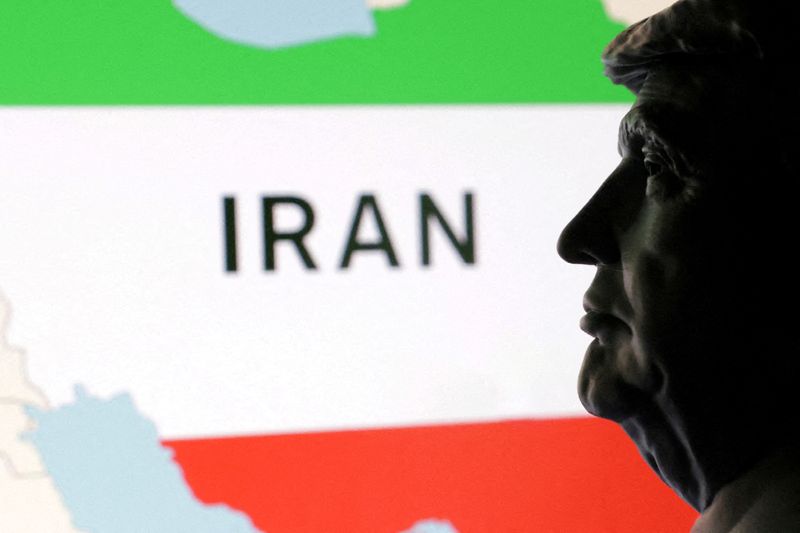
Donald Trump drew two explicit lines on Iran on 16 October 2026, and stopped there. In remarks reported the same day, the US president said he would not use nuclear weapons against Iran and would not send American ground troops into the country, according to a CNBC report published at 07:56 UTC. The CNBC piece, dated 16 October 2026, sits inside the network's broader Iran-war coverage and frames the comments alongside reported deliberations inside the administration.
That pairing, the two most catastrophic instruments formally taken off the table, paired with the suggestion that conventional options are still in the air, is the through-line of the day's signalling. Earlier the same day, at 02:48 UTC, Investing.com reported that Trump said he was "considering more military action against Iran." The two reports can sit in the same news cycle without contradiction: the president is narrowing the menu at the top while keeping the lower shelves stocked.
What the two wires actually carry
The CNBC report is the load-bearing source for the day's Iran news. Its headline, "Trump says he won't use nuclear weapons or send ground troops to Iran," is dated 16 October 2026 and the URL places it in the network's "us-iran-war" series. The available excerpt refers to "new strike options" being weighed, but it does not enumerate them; the report frames the choice as one the administration is reported to be weighing, not as a confirmed operational order. Investing.com's piece, dated 16 October 2026 at 02:48 UTC, is the second wire on the same file. Its headline, "Trump says considering more military action against Iran," is shorter and more declarative. Read against each other, the two wires agree on the fact of consideration and disagree on tone: CNBC carries the constraints, Investing.com carries the escalation.
The CNBC piece's URL also references the Strait of Hormuz. The available excerpt does not detail what role the strait plays in the reporting; the URL is the only place the geography is named. Monexus analysis: the strait's appearance in the URL slug is consistent with a frame in which any US strike consideration is read against the chokepoint that handles a large share of seaborne crude flows, but the cited material does not specify what the administration is doing, or proposing to do, about Hormuz transit. That distinction, what is reported versus what is entailed, is the line this article holds.
The pattern underneath one day's news
Monexus analysis: the 16 October 2026 signalling has a specific shape that matters. The president publicly rules out two categories of force at the top of the escalation ladder, and the same morning's wires carry the open aperture on what remains below them. Read together, the two pieces describe a bounded risk envelope: nuclear and ground-invasion scenarios are formally deprioritised, while conventional strike options remain on the table. For markets and allied foreign ministries parsing the day, the operative question is not whether force is being considered (the wires say it is) but where the ceiling has been set. The CNBC URL's reference to the Strait of Hormuz is the only geographic anchor the cited material offers; the available wires do not specify what role, if any, the waterway plays in the deliberations under way. What the day's reporting establishes is narrower and more durable: a declared ceiling and an undeclared on the means.
The domestic subtext on the same day
In a separate item carried by the Telegram channel Clash Report at 07:50 UTC on 16 October 2026, Trump is quoted as saying: "The only thing they can impeach me for is making our country really strong." The available material does not specify that this was a separate appearance from the Iran remarks; the Clash Report post carries the line as a standalone item. Read alongside the Iran file, the remark functions as a marker of the president's posture on the day military options against Iran are being weighed publicly: a domestic political line drawn in the open, in the same news cycle as a foreign-policy line drawn in the open. Whether the two items were uttered in the same room, at the same event, or in entirely different venues, the cited material does not say. Monexus analysis: the through-line is a White House comfortable putting both files on the record in the same morning, not that the two remarks were necessarily connected in delivery.
A third item in the same cycle, carried by Euronews via Telegram at 08:00 UTC on 16 October 2026, has Trump saying that Crimea is "surrounded by ocean on four sides." The remark sits in a different file altogether, the Ukraine file, and the cited material does not connect it to Iran. The relevant point for this article is narrower: the same public-comments register that produced the Iran red lines also produced, on the same day, a geographic claim about Crimea that any competent foreign-policy desk would treat as unsupportable on basic mapwork. That is a story about the White House's posture toward its own public statements, not about Iran, and this article does not draw a causal line between the two.
What the sources do not specify
The cited material is narrow. It does not enumerate which Iranian assets are under consideration, whether any strikes have been authorised or merely discussed, what concessions the US might be seeking from Tehran in return, or whether any third party (Saudi Arabia, the United Arab Emirates, Israel, Iraq) has been brought into the conversation. The available wires do not specify whether Iran's mission to the United Nations has been engaged on 16 October 2026, or whether the IAEA has been consulted. Each is a question a competent foreign-policy shop can answer in a follow-up cycle; none can be answered from the wires in front of us now.
What can be said is narrower and more durable. On 16 October 2026, the president of the United States publicly ruled out two specific categories of force against Iran, and the same day's reporting carries the suggestion that other options are under consideration. The CNBC URL references the Strait of Hormuz, without specifying what role the waterway plays in the day's deliberations. Markets opened the day treating that signal as bounded risk rather than tail risk. Whether that read survives the next briefing is the question worth watching before the next market close.
Desk note: Monexus ran the day's Iran file against two US wires (CNBC, Investing.com) and two Telegram relays (Clash Report, Euronews), treating the wires as the load-bearing sources and the Telegram posts as cross-checks. The frame here, restraint on the two most catastrophic instruments paired with an open aperture on conventional force, is this publication's reading of where the two wires actually disagree.
Wire provenance
This editorial synthesis draws on the following public wire/social posts:
- https://www.cnbc.com/2026/10/16/us-iran-war-trump-hormuz.html
- https://www.investing.com/news/economy-news/trump-says-considering-more-military-action-against-iran-4952990
- https://t.me/ClashReport/101274
- https://t.me/euronews/23203
Follow the event.
These dated source records provide context. They do not retrospectively verify this archive article.
Separate what the nuclear watchdog reported from what it could not determine after the June 2025 strikes.