Lavrov to visit Tehran on 19 October, Russian Foreign Ministry confirms
Russia's Foreign Ministry announced on 16 October 2026 that Foreign Minister Sergey Lavrov will travel to Tehran on 19 October for talks with his Iranian counterpart, an itinerary carried by five Iranian state and state-aligned Telegram channels in a 14-minute window between 08:03 and 08:17 UTC.
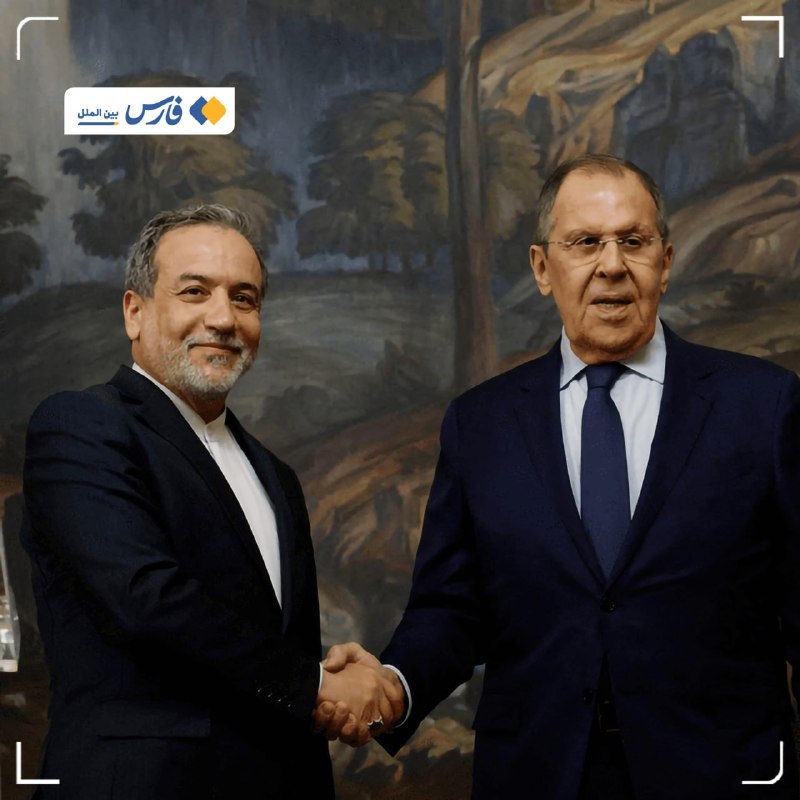
Russia's Foreign Ministry announced on 16 October 2026 that Foreign Minister Sergey Lavrov will make a working visit to Tehran on 19 October, the equivalent of 27 Mehr in the Iranian calendar, and will meet and hold talks with Iran's foreign minister. The announcement reached readers through five Iranian state and state-aligned Telegram channels in a 14-minute window between 08:03:54 and 08:17:24 UTC, a synchronisation tight enough to suggest coordinated amplification rather than five newsrooms working the same story independently.
The available source items specify the date, the framing as a working visit, and the Iranian counterpart. They do not specify an agenda, a delegation list, or any other participants. The substantive weight of the trip therefore sits in what those omissions imply. Working visits between the two foreign ministers have historically been where sanctions-sensitive, security-sensitive and nuclear-sensitive items are discussed in rooms without cameras, by ministers who do not need a joint communiqué to declare the meeting productive. The thinness of the public announcement is the lead.
What was announced, and how it surfaced
The disclosure landed in five Iranian channels in a tight 14-minute window on the morning of 16 October 2026. The first item in the cluster, timestamped 08:03:54 UTC, came from Mehr News and identified the Russian Foreign Ministry as the source of the announcement. Fars News International followed, naming the Russian Foreign Ministry spokesperson as the originating voice and confirming 19 October, the equivalent of 27 Mehr in the Iranian calendar. Al Alam Farsi and Tasnim News English then ran the same line within minutes, in their own news frames. Al Alam Arabic closed the cluster at 08:17:24 UTC, in its breaking-news format. Each of the five items carries the same core facts: working visit, 19 October date, meeting with the Iranian foreign minister, no published agenda.
Five Iranian state and state-aligned outlets carrying the same Russian Foreign Ministry announcement inside a 14-minute span is itself a piece of evidence. The cluster points to a coordinated Iranian amplification of a Russian first-party statement, not to five outlets independently chasing the story. This article has not independently established whether the Russian first-party source was TASS, RIA Novosti, the Russian Foreign Ministry website, or a spokesperson briefing that the Iranian relays then rewrote in their own news frames. The available source items are Iranian relays of the Russian announcement, not direct Russian first-party citations, and the certainty of any claim about the originating Russian venue should be set accordingly.
The framing as a "working visit" rather than a ceremonial one comes through the Iranian relays of the Russian Foreign Ministry's language, and that phrasing matters. Working visits are where substance gets discussed. The phrase is also a tell that the meeting is not being staged for the cameras.
What the source items do, and do not, say
The available source items are limited. They confirm four things. First, the trip has been announced. Second, the date is 19 October 2026, which is 27 Mehr in the Iranian calendar. Third, the framing is a working visit, not a ceremonial one. Fourth, the named Iranian counterpart is the country's foreign minister.
The available source items do not specify the substantive agenda. They do not name the delegation. They do not say whether the meeting will include Iran's president, its nuclear negotiator, or any counterpart beyond the foreign minister. They do not say whether a joint readout will follow. They do not specify any planned deliverables on the nuclear file, on sanctions evasion, on Syrian reconstruction, on energy cooperation, or on arms flows. This article has not independently established any of those details, and the absence is itself a constraint on how the trip can responsibly be framed at this stage.
That constraint shapes what follows here. Where the source items are silent, the analysis stays on the meta-level: on what the synchronisation implies, on what the working-visit framing historically signals between these two foreign ministers, on what the public absence of an agenda may indicate about the pre-meeting posture of the two sides. None of that substitutes for sourced reporting on substance, and the distinction is the spine of how the trip should be read until either foreign ministry publishes a delegation list, an agenda, or a readout.
Monexus assessment: what the synchronisation suggests
The five-channel near-instantaneous relay, all inside a 14-minute window between 08:03:54 and 08:17:24 UTC, is the most readable signal in the available evidence. The signal points to an Iranian decision to amplify, in its own voice and on its own channels, a Russian Foreign Ministry announcement. That is consistent with a diplomatic choreography in which Tehran wants the relationship visible on its own terms, on its own calendar, and in its own outlets, rather than meeting in a third country or on the margins of a multilateral forum. The Iranian-side framing across Fars, Tasnim, Mehr and the two Al Alam feeds reads as the Islamic Republic claiming standing: a senior Russian foreign minister, confirmed by Moscow, heading into the Iranian capital on its announced date.
The Russian pattern in such visits is different. Moscow's first-party communications on foreign-ministerial travel tend to be procedural rather than substantive in advance, with the readout, if any, surfacing after the fact. The Iranian side's decision to lead the public messaging with the date, the counterpart, and the working framing therefore tells the reader something about whose narrative the pre-meeting period is being managed to serve.
A plausible alternative reading is that the visit is exactly what the Russian Foreign Ministry's Iranian relays call it: a routine working bilateral stop, with the joint commission reconvening and the usual trade-and-cooperation items on the table. That reading is consistent with the under-specified nature of the announcement, and the source items do not contain the agenda needed to rule it out. It is, however, the less natural reading given how rarely working visits between these two foreign ministers have produced empty outcomes in 2026, and given the thinness of the public framing around a trip that, on its face, is being managed for something other than the bilateral routine.
What to watch between now and 19 October
The next 72 hours will determine whether the working visit becomes a publicly readable event. The first marker is whether either foreign ministry publishes a delegation list. The second is whether the Iranian side confirms whether the meeting will include the president or the nuclear negotiator in addition to the foreign minister. The third is whether a Russian first-party outlet carries the announcement independently, in its own voice, ahead of Lavrov's departure. The available source items do not specify any of those details, and this article has not independently established them.
The deeper test sits in the post-meeting days. Working visits between Moscow and Tehran have historically produced either a quiet joint readout with named agreements, or no readout at all and a steady drip of subsequent third-country statements that reveal what was discussed. Either outcome is informative. The third possibility, a public joint statement naming a new sanctions workaround, a new transit route, or a new diplomatic initiative on the nuclear file, would be the most consequential and is the one most consistent with the choreography the two sides have chosen. Monexus will treat the first independently confirmed delegation list from either capital as the load-bearing piece of information that converts the trip from a calendar entry into a story.
Desk note: Monexus carried the announcement through the Iranian state and state-aligned Telegram channels that published it first, and treated the available source items as Iranian relays of a Russian Foreign Ministry statement rather than as direct Russian first-party citations. We flagged in place the limits of the public announcement and did not infer an agenda the source items do not specify. We will update when either foreign ministry publishes a delegation list or a joint readout.
Wire provenance
This editorial synthesis draws on the following public wire/social posts:
- https://t.me/FarsNewsInt/263755
- https://t.me/alalamarabic/511019
- https://t.me/alalamfa/355819
- https://t.me/tasnimnews_en/43487
- https://t.me/mehrnews/422887