Maduro and Flores plead not guilty in Manhattan as US layers torture counts on Venezuela case
Ousted Venezuelan president Nicolás Maduro and his wife Cilia Flores entered not-guilty pleas in a Manhattan federal courtroom on 15 October 2026 to new US torture charges the Justice Department has layered on top of an existing narco-trafficking prosecution.
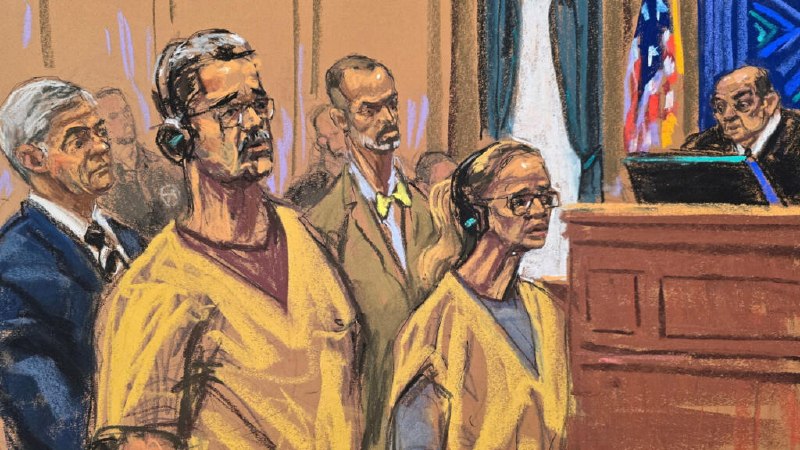
Nicolas Maduro and his wife Cilia Flores stood before US District Judge Alvin Hellerstein in Manhattan on 15 October 2026 and pleaded not guilty to new US charges of conspiring to torture political opponents. The plea, reported in dispatches from France 24's English service and OANN between 19:28 and 20:04 UTC, marks a fresh legal move in a politically charged prosecution whose earlier phase France 24 and OANN's coverage describes as a narco-trafficking case.
What changed on Thursday is the legal theory now in play. France 24's dispatch characterises the new counts as torture-related and distinct from the narco-trafficking indictment. OANN's parallel dispatch uses the same framing. Read together, the two wire feeds point to a layered structure: an existing narco case now sits underneath a fresh torture indictment, widening what a jury could be asked to convict on without replacing the older case. How those two tracks will be tried, together or separately, is the question the court calendar will answer.
The Manhattan arraignment
The courtroom sits in Lower Manhattan, the same venue where the narco-trafficking case against Maduro has been winding through the docket. The two source feeds on Thursday's hearing name Hellerstein as presiding judge. The source items do not specify whether cameras were permitted in the courtroom, nor the exact words Maduro used in open court beyond the plea itself. What the wires do carry is Maduro's post-arraignment characterisation: that the charges are what France 24's headlines render as "false accusations."
The OANN dispatch frames the new counts narrowly as a conspiracy to torture Maduro's political opponents. France 24's dispatch adds that the alleged victims included "US citizens," broadening the universe of plaintiffs the prosecution will likely cite. The available source items do not specify the exact statutory subsections invoked, the number of counts on the superseding indictment, or the names of any co-defendants beyond Maduro and Flores. Readers should treat specifics about the indictment's text as outside what the two available feeds establish.
The torture theory versus the narco theory
France 24's piece on the plea distinguishes the new torture counts from the existing narco-trafficking prosecution as a matter of legal substance, not just pleading paperwork. The two feeds converge on the sequence: a narco case already in progress, a superseding indictment adding torture counts, and a not-guilty plea entered on the same day the new charges were arraigned. That sequence is the verifiable spine of the public record as captured by the two wire services on Thursday.
What the wires do not establish is the precise relationship between the two tracks. Whether the Justice Department intends to try them together, try them sequentially, or hold the new counts in reserve while the narco case proceeds is not specified in the available source items. Monexus assessment: the layering itself is the news. The strategic question is whether the torture counts expand the jury's exposure enough to give prosecutors additional leverage in plea negotiations, or whether they sit dormant as an escalation lever until the narco trial produces a result. France 24's own framing of the new counts as "distinct" from the older case supports the read that prosecutors are widening, not substituting, the theory of the prosecution.
Caracas's posture on the superseding indictment
Maduro and his defence team frame the new charges, in line with their line on the older case, as politically motivated. France 24's dispatches record Maduro calling the charges "false accusations," a posture consistent with a defendant contesting legitimacy rather than engaging the underlying facts. The available source items do not specify whether Caracas's current authorities have issued any formal statement on the superseding indictment; that detail falls outside what the two wire feeds on Thursday's arraignment establish, and this article has not independently confirmed it.
What the wires also do not specify is whether any foreign government has raised diplomatic objections to the prosecution. That matters because extraterritorial indictments against sitting or former heads of state have, in previous US practice, generated formal protests from the governments whose nationals are charged. The source items available for this article do not record such a protest in the Maduro case. Whether one has been lodged through channels the wires chose not to report is a question the public record as captured here cannot answer.
What comes next on the docket
Procedural milestones will now matter more than headlines. The source items on Thursday's arraignment do not specify hearing dates, scheduling orders, or the timetable for any defence motion on jurisdiction or venue. They establish only that the plea was entered and that the new counts were arraigned on the same day. Monexus assessment: the next genuinely consequential event in the public record will be the court's scheduling order, because that order will determine whether the torture and narco tracks proceed together or fragment. Until a date is published, the case sits at the plea-bargaining stage where leverage, not testimony, determines outcomes.
The political stakes extend beyond the docket. Caracas's current authorities are watching the trial, and the available source items do not specify whether they have publicly aligned themselves with the US prosecution or stayed silent. The new counts will, at minimum, lengthen the legal horizon for any former Maduro-era official whose exposure is now defined by both drug and torture theories. The available reporting does not establish how broadly the superseding indictment reaches beyond Maduro and Flores, nor whether it names additional defendants by category or by name.
Where the evidence thins
The verifiable core of this story is narrow and concrete. Maduro and Flores pleaded not guilty. The new charges are torture-related, filed as a superseding indictment. The case is being heard in Manhattan federal court before Judge Hellerstein. The prosecution is layered on top of an existing narco-trafficking case. Maduro has publicly called the charges "false accusations." Everything beyond those facts is either procedural forecast, which the source items do not specify a timetable for, or Monexus's analytical reading.
Several specifics that a reader might expect are not in the source feeds. The exact wording of the superseding indictment, beyond the torture designation, has not been published in the available reporting. The number of co-defendants beyond Maduro and Flores is unspecified. Whether the defence intends to file jurisdictional motions, and whether the court will sever or consolidate the two tracks, are questions the available reporting does not answer. Treat any further specificity as outside what the two source feeds on Thursday's arraignment establish.
Desk note: Monexus framed this as a layered prosecution, narco plus torture, rather than as a single-drug case. We have labelled forward-looking procedural steps as Monexus assessment where they appear, and we have not asserted any detail about the indictment's text beyond what the two available feeds contain.
Wire provenance
This editorial synthesis draws on the following public wire/social posts:
- https://t.me/OANNTV/17743
- https://t.me/france24_en/19021
- https://t.me/france24_en/19020
- https://f24.my/CDtn.g
- https://f24.my/CDsp.g