Masked settlers attack West Bank olive harvest, hospitalise US journalist
Masked Israeli settlers attacked Palestinians harvesting olives in the occupied West Bank on 16 October 2026, injuring several civilians and hospitalising a Washington Post photojournalist while Israeli soldiers at the scene used tear gas against the farmers rather than the attackers.
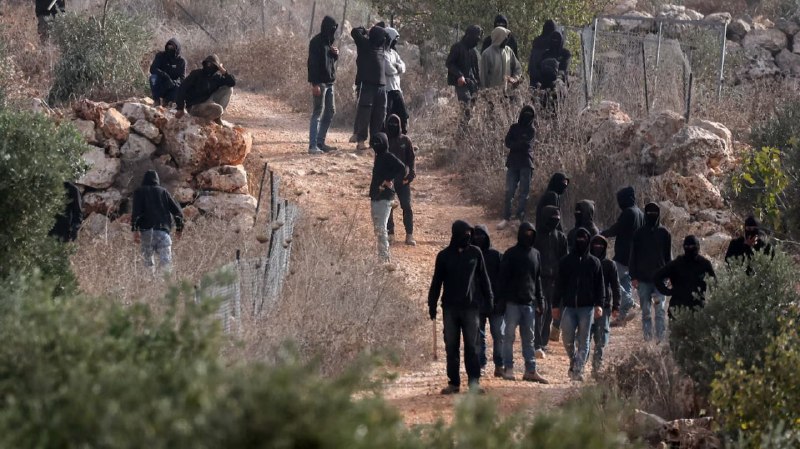
Masked Israeli settlers attacked Palestinian olive harvesters in the occupied West Bank on the morning of 16 October 2026, beating farmers, setting fire to trees, and hospitalising an American photojournalist working for The Washington Post. According to France 24's English channel, about eighty settlers descended on a village, threw stones, and ignited olive trees; the BBC, reporting from the ground, described the assailants as masked and confirmed that several Palestinians and the US journalist were injured.
The incident is the latest in a documented pattern of settler violence that flares each October as the olive harvest begins. It lands with two specifics the international press corps was on hand to record: a foreign press credential does not appear to confer protection, and Israeli soldiers present at the scene did not restrain the attackers. The Cradle reported that troops fired tear gas at the farmers rather than the settlers. The harvest, on which tens of thousands of Palestinian families depend for annual income, is now several weeks into a season that aid organisations have, in previous years, described as one of the most violent on record.
A scene the wire services watched in real time
France 24's English channel reported that "about 80 Israeli settlers set fire to olive trees and threw stones at Palestinians in a West Bank village Friday," injuring the American photojournalist. The French network's Arabic channel put the number of settlers at around ten for a separate grove attack in which an olive grove was set ablaze. The two figures describe different villages and different fires on the same morning, a reminder that settler-led incursions into harvest sites now travel in packs across multiple sites at once.
The BBC, reporting from the ground, said its journalists watched masked settlers attack Palestinians trying to harvest olives, "amid a surge in similar incidents." The Washington Post's photojournalist was beaten and hospitalised. NPR, citing The Washington Post, identified the journalist as a staff photojournalist and reported that several Palestinians were also injured. The Electronic Intifada, a pro-Palestinian outlet that publishes on-the-ground coverage from West Bank stringers, ran the attack alongside a separate piece by correspondent Nora Barrows-Friedman about a three-year-old in Gaza who watched her mother burn, a pairing that captures how the West Bank and Gaza stories now travel together through independent media even when wire desks keep them apart.
The settlers, the soldiers, and the chain of command
The most consequential detail is what the soldiers did while the settlers attacked. The Cradle reported that Israeli soldiers at the scene "did nothing to restrain the attackers" and instead "fired tear gas at olive farmers." France 24's reporting independently corroborated the use of tear gas. The available source items do not specify whether any settler was detained in connection with these incidents, whether the soldiers who fired tear gas were acting on orders from a commanding officer, or whether the Israel Defense Forces issued a public statement before Friday afternoon UTC.
That gap matters because settler violence in the West Bank has, for years, been formally distinguished by Israeli authorities from the actions of the military. Soldiers are tasked with maintaining order; settlers are civilians. When troops watch settlers attack, beat a foreign journalist, and burn trees, then fire tear gas at the victims rather than the assailants, the distinction collapses in front of the cameras. It also complicates the legal frame: under international humanitarian law applicable to occupied territory, an occupying power is responsible for the protection of the population under its control, not only for the conduct of its own uniformed personnel. The thread evidence here is limited to the conduct on the ground as recorded by BBC, France 24 and The Cradle; any official Israeli response sits outside the items read for this article.
Why October, and why olive trees
The olive harvest is the economic backbone of dozens of Palestinian villages and a fixed political event on the calendar. Trees are passed down across generations, and the fruit is pressed into oil that, in a good year, generates enough income to carry a family through the winter. October attacks on harvesters are therefore not collateral damage from a security operation. They are the destruction of a year's work, and in some cases of trees that took decades to mature.
The BBC's phrase "amid a surge in similar incidents" points to the structural pattern: this is not a single bad Friday but a recurring one whose frequency has been climbing. International monitoring groups have, in previous seasons, documented hundreds of incidents in the harvest window alone. The wire services on 16 October were not breaking news so much as confirming the latest data point in a curve. Settler movements that organise harvest-time incursions treat the cameras and the soldiers as fixtures of the landscape.
What the next seven days look like
The harvest runs into November. The Washington Post's newsroom will have to decide whether and how to use the photographs. For the Palestinian families hit on Friday, the immediate arithmetic is simpler. Some trees will regrow; some will not. The families who lost a season's income have lost it regardless of any investigation that follows. The structural read, drawn from the convergence of wire, regional and independent reporting on a single morning, is that harvest-time violence has become an expected line item in the occupied West Bank's autumn, and that the international press corps, by showing up in force, is now the principal witness the outside world has left.
Two things remain unresolved in the cited material. First, the thread items do not specify the gender of the injured journalist, the precise village or villages where the attacks took place, or the full casualty count beyond "several" Palestinians injured. Second, the items do not record whether the IDF had, by Friday afternoon UTC, issued a public statement on the soldiers' conduct or on any subsequent detentions. Those gaps are noted here so a reader is not left to assume either silence or response where the available evidence does not speak.
Desk note: Monexus framed this story around the on-the-ground convergence of BBC, France 24 and Washington Post reporting rather than around statements from spokespeople, because the cited material centres the attack itself. The piece carries the soldiers' role prominently because both France 24 and The Cradle report it independently. Where the source items do not specify a detail, the article says so.
Wire provenance
This editorial synthesis draws on the following public wire/social posts:
- https://www.npr.org/2026/10/16/nx-s1-6004904/israeli-settlers-beat-us-photojournalist-washington-post-west-bank
- https://f24.my/CE0P.g
- https://f24.my/CE0b.g
- https://t.me/BBCWorldoffl/80683
- https://t.me/TheCradleMedia/69550
- https://electronicintifada.net/blogs/nora-barrows-friedman/3-year-old-girl-watches-mom-burn-alive-gaza
- https://www.npr.org/2026/10/16/nx-s1-6004904/israeli-settlers-beat-us-photojournalist-washington-post-west-bank
- https://f24.my/CE0P.g
- https://f24.my/CE0b.g
- https://t.me/BBCWorldoffl/80683
- https://t.me/TheCradleMedia/69550
- https://electronicintifada.net/blogs/nora-barrows-friedman/3-year-old-girl-watches-mom-burn-alive-gaza