El-Sisi offers Egypt as Gulf shield, then tells Cairo he will step down in 2030
Within a single news cycle on 17 October 2026, President El-Sisi asked Egypt's parliament to authorise military deployments to defend Saudi Arabia and other Gulf states, then declared he would leave office in 2030 and not rewrite the constitution to stay.
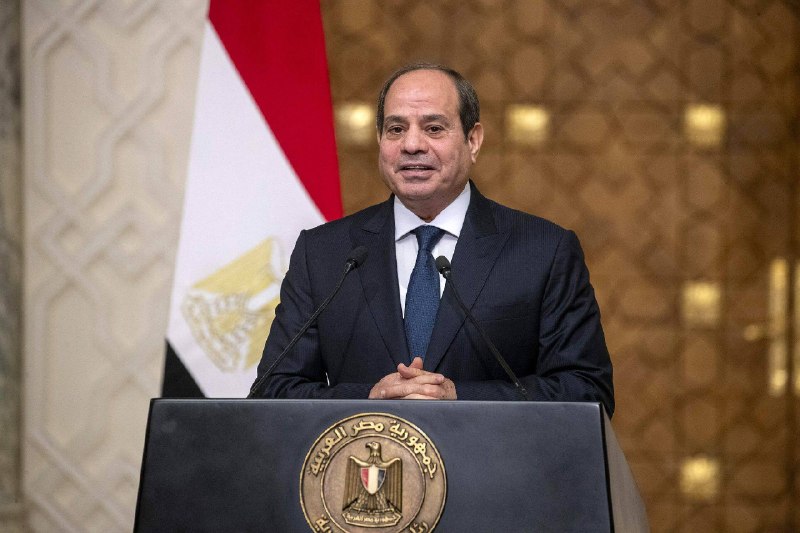
President Abdel Fattah el-Sisi walked into 17 October 2026 with two audiences in mind, and addressed both within hours. From the podium in Cairo he asked parliament for an emergency mandate authorising the Egyptian armed forces to defend Saudi Arabia and other Gulf states if required. A short time later, in a separate appearance reported on the same day, he told Egyptians he intends to leave the presidency at the end of his current term in 2030 and will not change the constitution to extend it.
The juxtaposition is the story. Read together, the two messages amount to a strategic bet: that Egypt's standing in the Gulf is a legacy worth locking in before any successor takes over, and that a clean constitutional horizon is the price of selling that bet at home and abroad.
What El-Sisi actually asked for
The request to parliament, reported by The Cradle on 17 October, is a formal authorisation, not a deployment. According to The Cradle Media, El-Sisi has "called for an emergency parliamentary session to seek authorization for the armed forces to defend and support Saudi Arabia and other Gulf states if required." The phrasing matters. The vote, if granted, would pre-position Egypt under the country's existing constitutional framework to act alongside or in support of Gulf partners, rather than waiting for a future crisis to trigger a fresh political debate.
Within the same hour, Iran's Tasnim agency carried a parallel formulation from the president: "Egypt is ready to take any necessary action to protect Saudi Arabia and, if [it requires], Egypt's armed forces are ready to be deployed," Tasnim reported El-Sisi as saying. Tasnim, an outlet of the Iranian state, is not a neutral messenger on this question. The same words framed through an Iranian channel carry a distinct subtext, signalling to Tehran that any move against Saudi or Gulf territory would now draw Cairo into the calculation.
Why now
The Gulf security frame has hardened through 2026. Without leaning on unverified specifics, what the source items indicate is that Cairo wants the legal architecture in place before any flashpoint, not after. A pre-authorised mandate gives an Egyptian presidency, and any Egyptian presidency, the ability to move forces into the Gulf theatre under domestic cover rather than improvising a political case under fire.
There is also a posture problem Egypt has wanted to solve for years. Cairo is the largest Arab military by headcount, but its expeditionary profile has been limited to African theatres and UN deployments. Authorising Gulf defence work reframes the army's regional mission in peacetime, with parliamentary consent attached. For the Gulf states, in particular Riyadh, the offer addresses a long-standing request for Arab air and ground cover that does not depend on Washington alone.
The 2030 question
The second message of the day, as reported by Middle East Spectator, is that El-Sisi "will leave power at the end of his term in 2030 and will not change the constitution to extend his tenure," and has "proposed a plan where a few…" The Telegram excerpt cuts off there, but the headline framing is unambiguous: no constitutional rewrite, no extension. The detail matters because, across the Arab world, the default reading of any presidential statement about term limits is sceptical. Egypt amended its constitution in 2019 to extend the presidential term and reset the clock; the 2030 announcement is being read as a reversal of that posture.
The political logic is not mysterious. A president who volunteers a fixed exit date buys something he could not otherwise purchase: confidence, at home and in the Gulf, that the security guarantees he is offering will outlast him. A successor, of whatever colour, inherits a framework rather than a personal favour. That is a saleable proposition in Riyadh and Abu Dhabi, where long-term contracts outlast individual rulers.
Stakes and what to watch
If the parliamentary vote passes, Egypt will join a small club of Arab states with explicit constitutional cover for out-of-area deployments. That carries two risks. First, it widens the list of theatres in which Egyptian soldiers can be committed without a fresh political debate. Second, it ties any future crisis in the Gulf to a domestic vote that has already been cast. El-Sisi's bet is that the credibility gained outweighs the obligation incurred. The cost of the bet shows up the day a Gulf partner asks Cairo to send forces and the answer has to be yes.
Two readings of the 2030 declaration are plausible and the sources do not resolve between them. The charitable one is that Egypt's president is voluntarily returning to constitutional normalcy, undoing the 2019 reset. The cynical one, more common in opposition Egyptian channels, is that the announcement is calibrated to defuse Western and Gulf pressure ahead of further commitments, and that the constitutional machinery can still be revisited if circumstances shift. Both readings are circulating. Until the parliamentary text is published and a clear successor field emerges inside the ruling party, the question stays open.
Desk note: Monexus carries the parliamentary-authorisation framing from the pro-Hezbollah outlet The Cradle and the readiness-to-deploy language from the Iranian state agency Tasnim without adopting either outlet's political line. The 2030 succession claim is taken from Middle East Spectator's wire of the speech and not yet corroborated by a Western wire in this thread; read as the president's stated intent, not as established political fact.
Wire provenance
This editorial synthesis draws on the following public wire/social posts:
- https://t.me/TheCradleMedia/69578
- https://t.me/JahanTasnim/240126
- https://t.me/Middle_East_Spectator/37790
- https://t.me/thecradlemedia/69578