A Yemeni warning calls Aramco “no longer secure.” Its $100 billion figure links to no document
A Yemeni military source, speaking to Saba, warned investors that Aramco is “no longer secure,” and Telegram channels carried a claim of more than $100 billion in losses, described as market value. None of the entries links to a primary document.
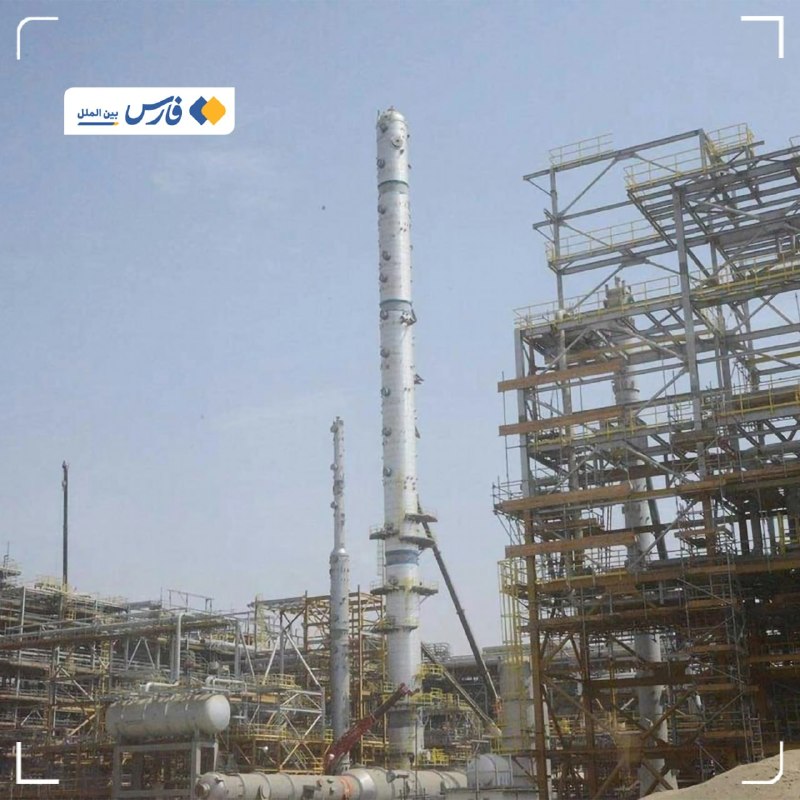
At 12:24 UTC on 26 October 2026, the Tasnim Telegram channel posted a claim that Saudi Aramco had lost more than $100 billion. Sixteen minutes later, the Mehr News channel carried the same figure. By 12:53 UTC, The Cradle Media had turned the story into a headline: a Yemeni military source, speaking to Yemen's Saba News Agency, had warned investors that Saudi Aramco is “no longer secure.” The thread holds five entries from four outlets, and one of them appears twice under two channel addresses. Every entry attributes the warning to the same unnamed source. The thread contains no Saba transcript, filing or market series.
This publication reads the episode as geopolitical messaging with a financial payload. A warning routed through a news agency and carried across Telegram channels is not, on its face, a market event. It becomes one only if the numbers underneath it can be tested, and the central figure has so far arrived without a stated period or calculation method. On the evidence in the thread, the sensible treatment is to hold it as an attributed claim until a party with a disclosure obligation confirms it.
A warning with no price attached
The warning is brief and built for a headline. FarsNews rendered it as a claim that Aramco shareholders would suffer losses from continued investment in the company. Mehr's entry, citing the Saba report, has the source calling on “all investors in Saudi Arabia” to monitor financial indicators. Tasnim's entry says Aramco is “not secure.” The thread does not identify the military source by name or unit, and it does not specify which indicators the source had in mind.
The one piece of guidance in the set is also the least specific. Investors are told to watch financial indicators, but the thread does not name one, give a threshold, or say over what period a change would matter. The set contains one figure, the $100 billion loss, and the thread does not tie it to any indicator the source names. The warning asks investors to watch numbers it never identifies.
The $100 billion figure and how it travelled
The figure is the most consequential sentence in the thread and the least documented. Mehr's entry and Tasnim's both describe the loss as one in market value, and The Cradle Media's entry uses the same framing. None of the entries says over what period that value fell, against what starting point, or how it was estimated. The thread also does not establish whether the entries drew on identical Saba text.
The core warning shifts from outlet to outlet. Mehr has Aramco “not safe,” Tasnim has it “not secure,” and The Cradle Media has it “no longer secure.” These read as renderings of one statement, and the differences carry weight. Monexus analysis: “no longer” implies a change in condition, a before and after, which “not safe” does not. A reader who saw only the Cradle headline would take away a different message from one who saw only the Mehr text.
The speed of circulation is part of the story. The timestamps run from 12:24 to 12:58 UTC, a 34-minute window in which the claim passed through four outlets across five entries. Monexus analysis: that pace rewards repetition over documentation, and the claim gained reach without gaining new evidence between one entry and the next.
Our assessment of a signal aimed at investors
Monexus analysis: the warning reads less as a forecast than as an attempt to shape how a particular audience thinks about risk. A military source addressing investors through a news agency, rather than through a company filing or a government statement, is speaking to readers who price risk through headlines as much as through disclosures. The thread carries no market data, so it cannot say whether Aramco's shares moved on 26 October 2026, and this article has not independently established any move.
Monexus analysis: the close wording of the Mehr and Tasnim items suggests a shared origin, but the thread cannot confirm it. Energy companies sit where state policy meets private capital, and their shareholder base can be reached by messages that never mention a barrel. A claim that a company is “no longer secure” does not have to be verified to carry a cost. It has to be repeated by enough outlets and read by investors who already wonder whether the risk they priced is the risk they hold. That mechanism works independently of whether the $100 billion figure is ever substantiated, and it is the part of the episode most likely to outlast the headline.
The available source items do not specify whether Aramco has commented on the warning.
There is a plausible alternative reading. The warning could be routine messaging tied to the attacks the entries describe, with no operational content, and the $100 billion figure a rhetorical device. Both readings produce the same headlines. They diverge on one point, which is whether the figure ever appears in a document that the company or a securities regulator is obliged to produce.
What would settle the question
The entries agree on the core warning and the $100 billion figure, and they differ mainly in wording. Each relays one unnamed military source, and none of them links to a primary document. Testing the claim would require three things the thread lacks: the Saba report itself, a stated period and method for the figure, and any disclosure or trading record covering the period the figure describes.
The entries do describe the context in general terms. The Cradle Media entry refers to “targeted strikes conducted by the Yemeni Armed Forces,” and the Mehr and Tasnim entries refer to “repeated attacks by Yemen's armed forces on the company's facilities.” The available source items do not specify dates, locations or damage assessments for those attacks, and this article has not independently established them.
For investors, the practical question is narrower than the rhetoric around it. The relevant test is not the source's politics but whether any figure they already hold has changed. A warning that does not move a number in a filing is a warning about sentiment, and the thread offers none of the numbers that would make it more.
The stakes run in both directions. If the figure were accurate and documented, it would matter to every holder of Aramco shares and to investors weighing Gulf energy exposure against regional risk. If it is not, the cost falls on readers who treated a headline as though it were a balance sheet, and on the outlets that carried it without a stated basis.
The next thing to watch is whether the number appears in a document someone is legally required to sign. Until it does, investors are holding a headline, not a loss.
Where a wire desk would lead on the $100 billion number, Monexus treats it as an attributed claim and applies the same scrutiny to the warning's wording as to its money figure.
Wire provenance
This editorial synthesis draws on the following public wire/social posts:
- https://t.me/FarsNewsInt/264594
- https://t.me/TheCradleMedia/70006
- https://t.me/thecradlemedia/70006
- https://t.me/mehrnews/426132
- https://t.me/JahanTasnim/241711