Jim James Announces Memoir One Wonders
Pitchfork reports that Jim James has written a memoir titled One Wonders, and quotes him saying that it’s okay to ask for help.
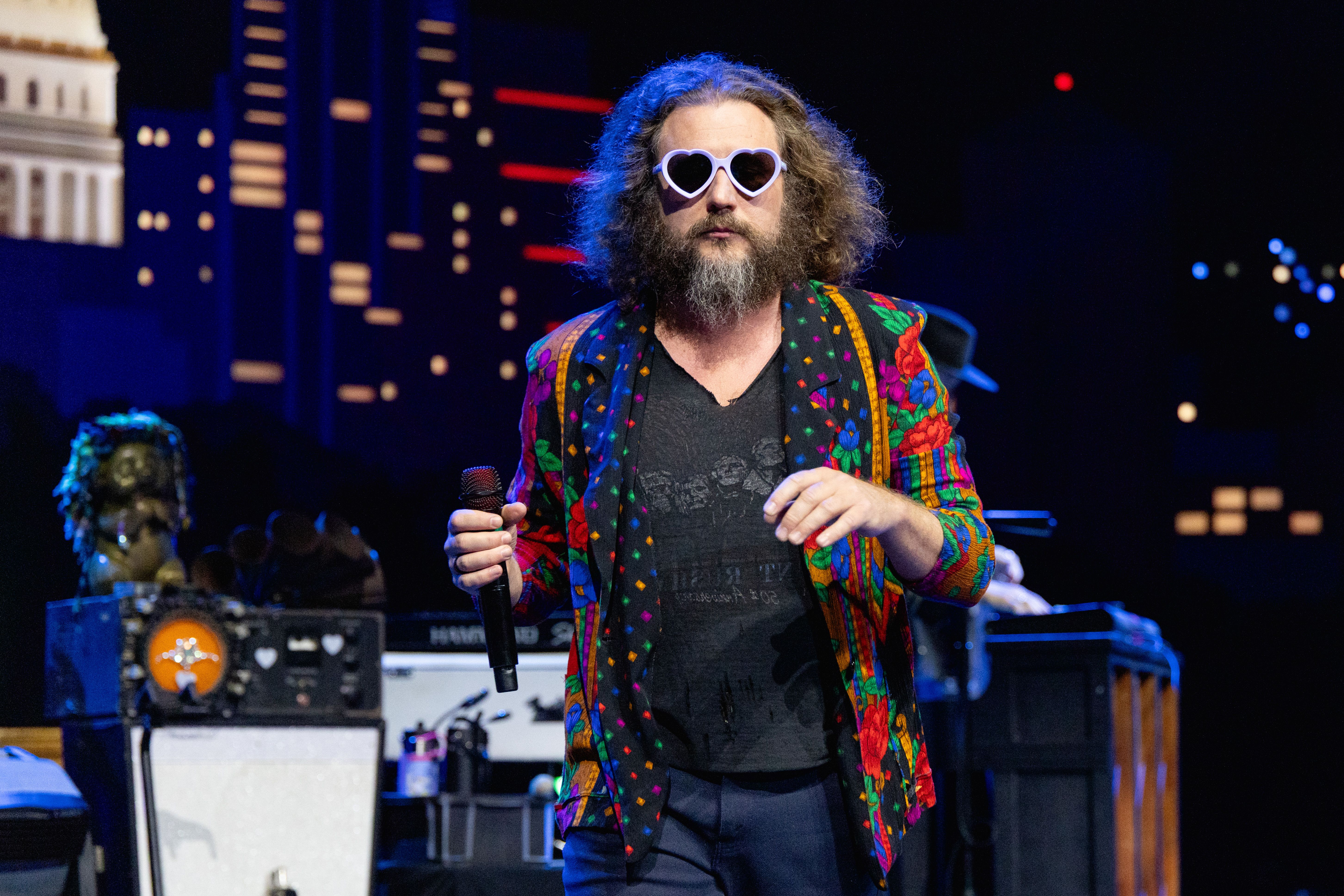
On 28 October 2026, Pitchfork announced in a brief news item that Jim James has written a memoir called One Wonders. The RSS entry is timestamped 17:47 that day, and Pitchfork’s Telegram channel relayed the report at 18:39 (times as recorded in the source thread). The item is short. It gives the title, one quotation from the author and a link to the full story, and nothing in the thread says who publishes the book or when it reaches readers. The sentence Pitchfork chose to quote is the one worth reading: the main thing James hopes a reader takes from the book, in the words the outlet reports, is that “it’s okay to ask for help.”
The announcement is thin on logistics and fuller on intent. An artist who frames a memoir around a practical message, rather than the anecdotes a music memoir often leans on, is making a claim about what the work costs and who carries that cost. This article reads the line as a deliberate choice of emphasis. It does not treat the quotation as a summary of unseen pages, because the source items contain the announcement and the quotation, and nothing more.
A title, a quote and very little else
The primary text in this thread is Pitchfork’s own report, and the thread carries it in two forms. One is a Telegram post from Pitchfork’s channel, which sits alongside a short link. The other is the RSS entry at pitchfork.com. Both point to the same announcement, so every claim in this article about what was said traces back to one outlet’s reporting of one quotation. The headline reads “Jim James Announces Memoir One Wonders.”
The headline is plain by design. It names the artist, the verb and the title, and nothing more. For a publication, that restraint is a choice too. A headline promising a confession or a reckoning would have set a different expectation for the reader, and the thread shows no such framing.
The quotation runs in full as follows: “I hope the main thing someone takes away from this book (aside from learning more about the joys and challenges of being a working artist and musician) is that it’s okay to ask for help.” The parenthetical does real work. Before the advice arrives, the sentence names two things a reader might learn: the joys of the job and its challenges. It frames the subject as the life of a working artist and musician, which puts labour rather than celebrity at the centre of the picture.
The source items do not specify the memoir’s publisher, release date, length or chapter structure, and this article has not independently established those details. What the feed offers is a thesis without a table of contents.
The skeptical reading
The cynical reading deserves a hearing. A memoir announcement is a marketing event as well as a literary one, and a sentence built to sit under a headline travels further than a paragraph built to be read in context. “It’s okay to ask for help” is the kind of line that suits a feed. A reader could take it as a message engineered for the launch, and nothing in the thread rules that out.
The counter-argument is that the line is an odd choice for a promotional lead. Announcements built purely to sell a book usually foreground the story, the hook or the author’s accomplishments. Here the stated takeaway is a claim about dependence, which sits awkwardly with the self-presentation that many public figures cultivate. Monexus analysis: a sentence about needing help is less obviously flattering than one about achievement, and an author who foregrounds it is making a small, deliberate choice. That is a signal about emphasis, not proof of sincerity.
Both readings can be true at once. A memoir can be timed for a market and still be personally meant, and the thread gives no way to separate those motives. Sincerity and promotion are not opposites, and a feed cannot tell them apart.
Why the help line reads as structure
The phrase “working artist and musician” places the work, not only the fame, in view. An author who says so in an announcement invites readers to think about the conditions around the art as well as the art itself. Monexus analysis: whatever the book contains, a memoir that foregrounds the labour of making music is making an argument about what the public should see when it looks at a musician.
The second structural point concerns how the message is delivered. Asking for help is presented as a lesson a reader can carry out of the book. That turns the memoir into something closer to advice than to a record of events, and it raises the bar for the text. A lesson is easy to announce. The harder test is whether the book shows what asking for help looked like in practice, who was involved and what it cost.
A sentence like this can outlast the press cycle that carried it, provided the book gives it something to stand on. Public figures often speak about resilience and self-reliance, and an artist who says that seeking support is acceptable adds a different register to that conversation. The claim is modest, one line in a press item, but it is the kind of modest claim readers tend to test against their own lives.
What the desk will watch, and what it cannot yet say
For readers of James’s work, the memoir will be read as a personal account of a career. For the wider arts press, the announcement is a reminder that the most quotable sentence in a launch is often the one the author chose to foreground, and that such a sentence can shape how a book is read before its first page is turned.
The thread supports a few narrow conclusions. It establishes that Pitchfork reported on 28 October 2026 that Jim James has written a memoir titled One Wonders, and that the report quotes James on the value of asking for help. It does not establish the book’s publisher, release date, contents or reception. Both items in the thread are relays of one report, so the thread contains no independent confirmation of the quotation. The thread also contains no publisher statement or independent review, and this article has not independently established whether either exists.
The desk’s forecast is that the launch materials will supply the basic facts in the period after this announcement. That expectation is a forecast, not a reported schedule, and it should be tested against whatever the book’s publisher and the author actually release. The questions to put to the book are simple. Does the text describe asking for help as something that happened to James, or only as something James now recommends? Who appears beside James in the account? Those answers will show whether the feed’s most quotable line summarises the book or is laid over it like a slogan.
The line about help was written to be quoted. Whether the book earns the quotation will be decided on the page.
Desk note: Where a wire item would report the title and stop, this piece stays with the one sentence the feed actually supplies and labels its own reading of it.
Wire provenance
This editorial synthesis draws on the following public wire/social posts:
- https://pitchfork.com/story/jim-james-announces-memoir-one-wonders/
- https://t.me/pitchfork/29726
- https://ift.tt/L2Rd0y9