Port Strike Against Arms Shipments to Israel, as The Cradle Reports
According to The Cradle Media's Telegram posts, dockworkers at more than 100 ports across Europe, West Asia and North Africa struck on Friday against arms shipments to Israel, a claim this article has not been able to confirm independently.
At 11:31 UTC on Friday, 30 October 2026, The Cradle Media posted to Telegram that dockworkers spanning more than 100 strategic ports across Europe, West Asia and North Africa had launched a historic global strike to blockade arms shipments. Thirty-seven minutes later, a second post recast the same action as a strike against arms shipments to Israel, carried out by dockworkers across Europe and the Mediterranean. Both items are relays of one outlet's Telegram channel. Neither is independent confirmation of the stoppage, and this article treats the reach and effect of the action as The Cradle's claims until port-level records or other reporting can test them.
Monexus reads this as a story about chokepoints rather than slogans. Weapons, like other heavy cargo, pass through a small set of harbours, and the people who work those harbours hold a veto that governments seldom factor in until it is used. The thread is thin, so the particulars of the action cannot yet be established from it. The structural argument does not depend on them. When labour leverage reaches the loading dock, the dispute stops being only about policy in capitals and becomes a question about the legal, commercial and moral obligations of the infrastructure itself.
The Friday The Cradle counted
The first alert carried the headline “historic global strike across 100 ports to blockade arms shipments.” Its text describes dockworkers “spanning more than 100 strategic ports across Europe, West Asia, and North Africa.” The headline rounds that figure down to 100 while the body says more than 100, a small gap that matters when one number carries most of the claim about scale. The same post names the CGT ports federation in France, Italy's USB and Greece's ENEDEP, and says operations were halted or severely disrupted at Marseille, Le Havre, Genoa, Trieste and Piraeus.
Those are The Cradle's assertions about what happened at the quay. The thread offers no second account of the same terminals, and the posts are the only material this article can check directly. They are short, and they are not full reports.
The second post moves the target into view
The 12:08 UTC post changed the emphasis. Its headline described a strike against arms shipments to Israel by dockworkers across Europe and the Mediterranean, and its text says the strikes were launched on Friday as part of an international campaign. The post attributes the action to trade unions, carries a joint union statement as The Cradle presents it, and lists unions from France, Italy, Greece, Spain, Turkiye and Morocco. It also repeats the organisers' claim that more than 100 ports had joined the mobilisation.
Monexus analysis: the earlier post tells readers how far the action reaches, and the later one says what it is aimed at. The later post is more specific about who acted, yet it leans harder on the organisers' own count, because the reach figure now sits beside a list of countries rather than a set of named terminals.
What the record does not establish
The available source items do not specify how many workers took part, how long any stoppage lasted, or whether the terminals named in the first post stayed closed through the day. They do not name the cargo, the vessels, the shipping lines or the terminal operators involved, and they do not set out the legal basis for any stoppage or whether participating workers face sanctions. A figure of more than 100 ports is a claim about reach. Reach is not the same as verified stoppage.
Independent searches surfaced headlines from other outlets on the same action, with port counts that differ from The Cradle's figure and dates that need checking. This article could not open those items from the thread and does not rely on them. Reconciling those numbers is work this article has not done.
Any honest account holds two facts together. Israel's security concerns are first-order and deserve to be stated plainly rather than dismissed. Civilian harm in the wider conflict is equally first-order, and any serious account of arms transfers has to weigh it with the same seriousness. The strongest case against the action, which the thread does not itself make, is that it asks private workers to adjudicate a sovereign government's defence purchases, and that its reach extends to cargo far from any battlefield. Monexus analysis: the strongest case for it is simpler. The people who physically load a hull are the last point in the chain where someone can refuse, and a refusal at the quay is one that licensing regimes cannot fully replace. Both arguments turn on legitimacy, and neither can be settled by a headline.
The available source items also do not specify how Israeli authorities justify the transfers in question, or what position European governments, port authorities or shipping companies have taken on the action.
Why the loading dock is the pressure point
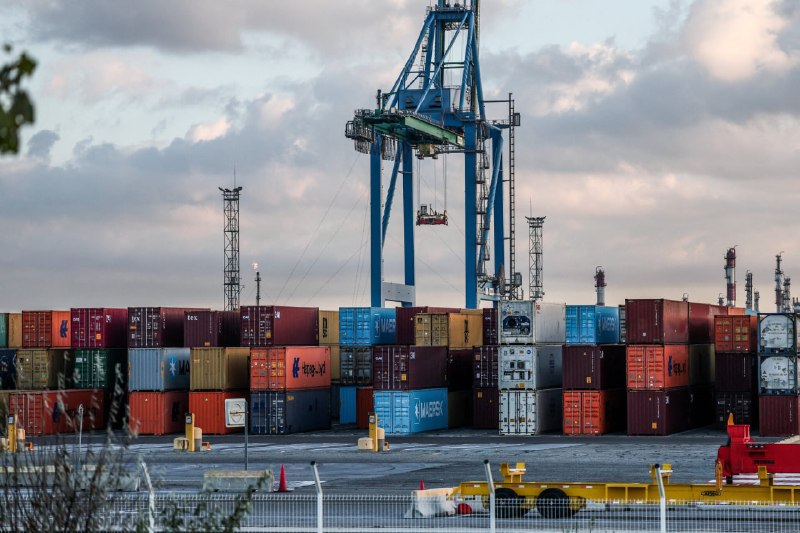
Monexus analysis: arms transfers are usually described in the vocabulary of contracts, approvals and end-use assurances, language that makes them sound like paperwork. Paperwork still needs a berth, a crane and a crew. Ports are where a document meets a hull, and they sit at the junction of several legal systems. That is why a campaign that cannot change a parliamentary vote can still make a terminal manager pause over a manifest. The Cradle's account, which places the named terminals on French, Italian and Greek quays and describes a mobilisation reaching North Africa and West Asia, implies exactly that multi-jurisdictional problem.
A cargo can be lawful on paper in one capital and still be held up on a quay. The delay is itself a political message, whether or not anyone intends it as one.
Such pressure travels only as far as the workers who carry it are willing and able to go. In each port the answer depends on local union rules, employment contracts and whether management lets a stoppage stand. The source items do not specify those variables for any of the ports named. That is why this desk treats the reach claim as the campaign's own claim until documents, local reporting or port-level statements confirm it.
The assessment: what to watch if the stoppage holds
Monexus assessment: the next credible test is documentary, not rhetorical. If the campaign operates at the scale The Cradle describes, named ports, named unions and identifiable cargoes should begin to appear in local and national reporting in the days that follow. If they do not, the 100-port figure remains a campaign claim rather than a measured fact, and the story shrinks to a labour dispute at a handful of harbours. That is this desk's forecast, and it will be revised if the record changes.
The stakes are uneven. For dockworkers, the risk is employment and legal exposure, which the source items do not describe. For port operators, a sustained stoppage raises the cost of every contract touching a disputed cargo and forces a choice between policing a labour action and negotiating with it. For European governments, the question is whether labour leverage at the quay is treated as a legitimate industrial dispute or as political obstruction to be managed by other means. For Israel and its suppliers, the source items do not specify how any delay would be absorbed.
The question this Friday poses to Europe is less about any one shipment than about what a port is. Infrastructure is easy to describe as neutral until someone on the quay asks what it is carrying. If The Cradle's count holds, workers asked that question at more than 100 places at once, and the answer will show up in manifests and port logs before it shows up in communiqués.
Desk note: Monexus has framed this as a labour and logistics story set inside an armed conflict rather than as a conflict update, because the thread's sources are Telegram posts from a single outlet, and the piece keeps its claims about the stoppage within what those posts can support.
Wire provenance
This editorial synthesis draws on the following public wire/social posts:
- https://t.me/TheCradleMedia/70226
- https://t.me/thecradlemedia/70226
- https://t.me/TheCradleMedia/70233
- https://t.me/thecradlemedia/70233