Bank of England raises interest rates to 4%, the first increase for more than three years
The Bank of England lifted its benchmark rate to 4% on 5 November 2026, a quarter-point rise a week after the budget. Investing.com's headline reports that the bank says more may come.
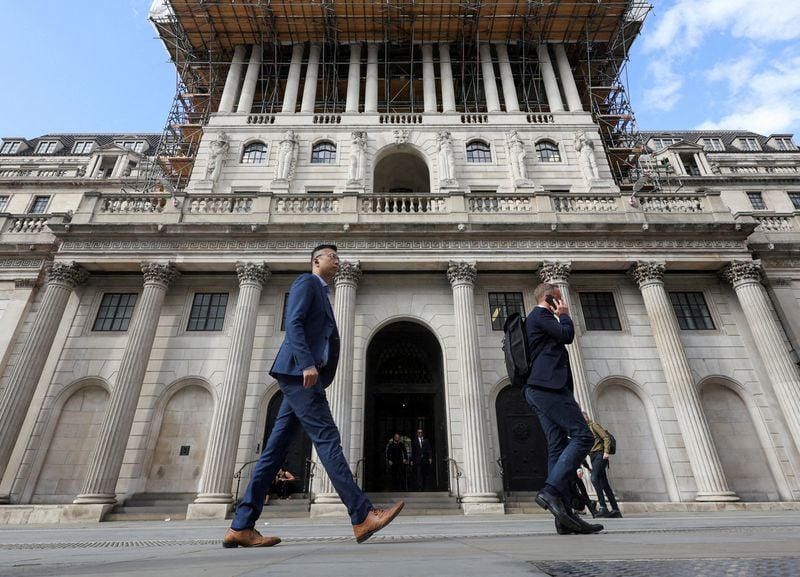
On 5 November 2026, the Bank of England raised its benchmark interest rate to 4%, its first increase in more than three years, according to the Guardian's live business report. The Guardian gives the move as a quarter-point rise, from 3.75% to 4%. The decision came a week after the budget, and the Guardian places it against a backdrop in which the Iran war continues to push up energy costs. Investing.com's wire headline is shorter: the bank says more may come. For a household with a variable-rate mortgage, that second clause may matter more than the first.
This publication reads the decision as a central bank leaning against a price shock that originated outside its own economy, and accepting the familiar costs of doing so: dearer borrowing, a harder market for jobs and a changed calculation for savers. The source items do not reproduce the Monetary Policy Committee's reasoning, so the argument below rests on the structure of the decision rather than on quoted deliberation. Monexus analysis: the central question is not whether a rate rise can be defended on paper, but whether a tool aimed at domestic demand can reach a cost that is set on world markets.
A hike into an energy shock
The core facts agree across the items, though the items are thin. Investing.com's two Bank of England reports were stamped 12:12 and 12:13 UTC on 5 November 2026, and its headline on the hike is the one most of this analysis draws on. CNBC, filing at 12:04 UTC, describes the move as the first since the Iran war. The Guardian's report, at 12:00 UTC, dates it to the first increase in more than three years and sets the move at a quarter point. The source items do not give the vote split on the committee or the inflation reading the committee weighed, and this article does not supply those figures.
The dating deserves a second look. Investing.com's headline measures the gap to 2023, the Guardian measures it as more than three years, and CNBC measures it from the start of the Iran war. Both framings can be accurate if the war began after the last increase, but the items do not establish when the war began, so the frames are better read as different emphases than as a single timeline. One counts the policy cycle; the other counts the shock.
The energy link is the Guardian's central frame, and it is the one that carries the analysis. A country that buys much of its energy on world markets faces a war-driven price rise as a supply shock: costs climb without any surge in domestic demand. The textbook response to such a shock is to look through it, unless it begins to spread into wages and into what households and firms expect inflation to do next. A decision to raise rates anyway suggests the committee judged that spread to be the larger danger. That reading is Monexus analysis. The items do not quote the committee on this point.
The case for leaning in, and the case against
Investingcom's headline carries the bank's own signal, as Investing.com reports it: more may come. Forward guidance of that kind does two things at once. It tells financial markets the hike is not a one-off, and it tells households and employers that the price of credit has a direction of travel. The argument for pressing ahead runs as follows. Energy-driven prices can seep into pay settlements and price-setting, and once expectations shift they are costly to shift back. A central bank that waits too long, on this account, ends up tightening harder later.
The counter-argument is just as coherent. A rate rise does nothing to lower the price of a barrel or a unit of gas. It works by cooling demand, and in an economy already absorbing a war-driven cost increase, demand may be the more fragile half of the equation. Monexus analysis: tightening into a supply shock can add a second source of pain to the first, delivered through the monthly mortgage statement rather than the fuel pump. The items do not describe the state of UK demand, so this article cannot say which side of that judgement the data favours.
The sequencing adds a complication. The decision came a week after the budget, which means fiscal and monetary choices were landing in close succession. The items do not describe the budget's contents, and this article does not assume what its effect on demand or prices would be. Readers who want to test the argument will need the budget documents and the committee's own statement, neither of which the source items reproduce.
Our assessment of who carries the rate
The BBC's consumer explainer, stamped 12:02 UTC, sorts the consequences into three areas: jobs, loans and savings. The sorting is useful because it shows where the burden lands. Monexus analysis: borrowers on variable-rate deals usually feel a policy move quickly in their monthly payments, while borrowers on fixed deals are insulated until they renew. Savers can benefit when rates rise, although returns usually adjust unevenly and with a lag. Workers and employers are exposed through a slower channel. Higher borrowing costs can cool investment and hiring, and the effect tends to show up in employment decisions well after the announcement. The BBC summary does not quantify any of these effects, and neither does this article.
Put together, the arrangement is unusual. The energy shock that prompted the caution originates in a war the bank neither started nor controls. The response is aimed at the domestic economy, and its costs fall according to balance-sheet position rather than according to responsibility for the original shock. The household with a variable mortgage pays. The household with savings may gain. The employer whose hiring plans depend on credit adjusts. A blunt instrument distributes its pain according to who owes money, not according to who caused the price rise. That is not an argument against the decision. It is a reason the decision will be judged on its distribution as much as on its inflation outcome.
What the next meetings have to show
The desk expects the argument to shift from the decision itself to the forward guidance. The items say more may come, but they do not say under what conditions or on what calendar, and a reader looking for a date for the next decision will not find one in them. Our expectation is that the next round of policymaker remarks will matter more to markets and borrowers than the 4% headline, because those remarks will settle whether this was a single recalibration or the opening of a cycle. Two things to watch: whether the energy price path that the Guardian ties to the Iran war eases or hardens, and whether the bank keeps linking further moves to incoming conditions rather than to a fixed schedule.
Where the evidence thins. Every claim here rests on headlines and short summaries. The full Bank of England statement, the committee's minutes and any inflation or labour-market data they cite are not among the source items. The Guardian report is a live feed and the Investing.com items are brief. The items also do not say whether the decision was unanimous, which bears on how firmly the committee holds the view that more may come. The causal link between energy prices and the decision is the Guardian's framing, and this article has not tested it against the committee's own text.
The hike is the easy part to report. The harder test is whether, a year from now, the committee can explain why it tightened against a cost it did not create, and whether the households that absorbed the adjustment were the ones it expected to carry it.
Desk note: Monexus built this piece from wire headlines and short summaries rather than the full Bank of England statement, and it presents the energy-cost link as the Guardian's framing, with the structural reading labelled as Monexus analysis.
Wire provenance
This editorial synthesis draws on the following public wire/social posts:
- https://www.investing.com/news/economy-news/bank-of-england-raises-rates-for-first-time-since-2023-says-more-may-come-5003538
- https://www.investing.com/news/economy-news/bank-of-england-policymakers-set-out-views-on-rates-outlook-5003537
- https://www.cnbc.com/2026/11/05/interest-rates-inflation-uk.html
- https://www.bbc.co.uk/news/articles/cx4g1q3vlp62o?at_medium=RSS&at_campaign=rss
- https://www.theguardian.com/business/2026/nov/05/bank-of-england-raises-interest-rates-first-increase-for-more-than-three-years
Follow the event.
These dated source records provide context. They do not retrospectively verify this archive article.
Separate what the nuclear watchdog reported from what it could not determine after the June 2025 strikes.
- https://www.investing.com/news/economy-news/bank-of-england-raises-rates-for-first-time-since-2023-says-more-may-come-5003538
- https://www.investing.com/news/economy-news/bank-of-england-policymakers-set-out-views-on-rates-outlook-5003537
- https://www.cnbc.com/2026/11/05/interest-rates-inflation-uk.html
- https://www.bbc.co.uk/news/articles/cx4g1q3vlp62o?at_medium=RSS&at_campaign=rss
- https://www.theguardian.com/business/2026/nov/05/bank-of-england-raises-interest-rates-first-increase-for-more-than-three-years