The Strait of Leverage: Why America's Hormuz Blockade Is a Foreign-Policy Blunder Wearing a Navy Hat
Washington's naval chokehold on one of the world's most critical oil corridors is not strategy — it is a gamble with global consequences that the market's shrug should alarm us all.
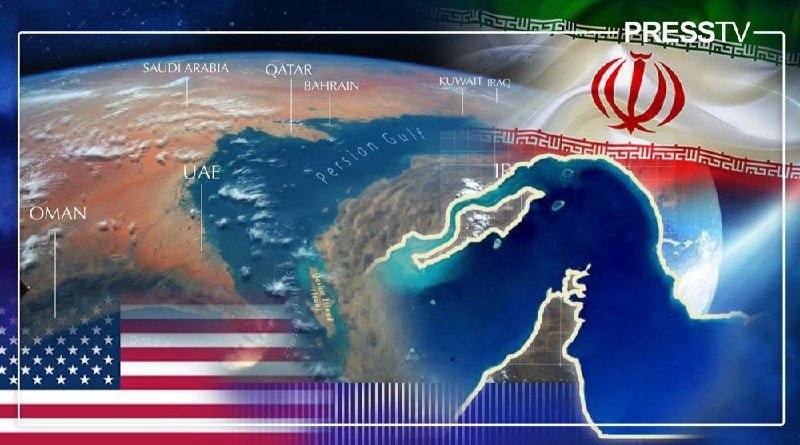
There is a particular kind of diplomatic recklessness that dresses itself in the language of strength. The United States Navy's ongoing interdiction posture in the Strait of Hormuz fits that description precisely. As of 2 May 2026, prediction markets place the odds of the blockade being lifted before month's end at roughly one in three — a figure that functions simultaneously as a forecast and a verdict. The market is not confident Washington knows what it is doing.
The strait, squeezed between Oman and Iran on the Persian Gulf's only exit to the open ocean, carries approximately one-fifth of the world's oil shipments. It is not a corridor any major power treats casually. The fact that the current American administration has chosen to station naval assets there in an interdiction posture — effectively a blockade by another name — tells us more about the ideological contours of this White House than it does about any coherent strategy toward Tehran.
A Straitjacket on the Global Economy
The immediate casualty of this posture is not Iranian regime behavior. It is the predictability of global energy markets. Shipping insurers, tanker operators, and commodity traders have spent decades building route optimization models that treat Hormuz as a known variable — a chokepoint that occasionally spikes in cost but does not spontaneously close. The American naval presence in interdiction mode collapses that predictability. Every vessel that transits now carries a non-trivial probability of being detained, boarded, or delayed by a force operating under an ambiguous legal mandate.
The economic literature on maritime chokepoints is unambiguous: unpredictability is more damaging than blockage. A closed strait is a crisis; an unreliable strait is a permanent premium surcharge on every barrel that moves through it. That surcharge is paid by importers in Asia and Europe, not by the American consumer. The geopolitical weapon is aimed at Iran, but the economic shrapnel scatters indiscriminately.
The Domestic Radicalization Frame
Al Jazeera's reporting on the texture of political discourse inside the United States provides a useful companion picture. When a superpower signals that coercive statecraft — the kind that strangles foreign economies and disrupts civilian shipping — is the preferred instrument of diplomacy, that signal reverberates inward. The normalization of economic warfare as a routine policy tool does not leave domestic political culture untouched. It calibrates expectations about what is permissible, what is patriotic, what is simply "how great powers behave."
The question is not whether Iran hasprovoked American ire. It is whether the response — an act that impinges on international waters and civilian commerce — operates by rules the administration itself would accept if deployed by a rival power against American-flagged vessels. The answer, obviously, is no. Which means the blockade is not a principle; it is a convenience.
Multipolar Hypocrisy and Its Costs
Washington's position on freedom of navigation has historically been a cornerstone of its international credibility — the argument that American naval power keeps the sea lanes open for all. The Hormuz posture inverts that logic. It weaponizes American naval dominance to restrict, rather than secure, transit. Every month the interdiction continues, Beijing, Moscow, and the broader Global South acquire another data point in their argument that the rules-based order is selective, that sovereignty norms apply only when they align with American interests, and that developing nations are expected to absorb costs that great powers exempt themselves from.
This is not abstract theorizing. It is the specific mechanism by which hegemonic legitimacy erodes — not in a single dramatic rupture, but in a accumulating ledger of exceptions, one for each instance where the enforcer of international law exempts itself from it. The Hormuz blockade joins a growing list.
The Polymarket odds are, in this sense, beside the point and precisely the point. They suggest the market cannot determine whether American policy is deliberate or drifting — a distinction that, in itself, is the story. The world's most powerful navy has reduced its Hormuz posture to a coin flip, and the market's uncertainty is the most honest metric available.
What Comes Next
If the blockade lifts, the immediate economic disruption subsides but the precedent survives. The capability has been demonstrated, the legal arguments have been tested, and a future administration — perhaps with less appetite for the diplomatic costs — may find the tool already assembled. If it continues, the costs compound: energy premiums, diplomatic alienation, and an Iran that has every incentive to accelerate its own hedging strategy, whether nuclear or economic, toward partners less invested in the current architecture.
The administration has described this posture as pressure. Pressure toward what, exactly, remains unspecified. The assumption appears to be that sufficient pain will produce capitulation. History offers a humbler curriculum. Economic strangulation strategies typically harden targets before they break them, and the Strait of Hormuz is not a domestic population that can be isolated from its leadership — it is a global arterial passage whose disruption registers everywhere simultaneously.
The market, famously, is not sentimental. It registers probability, not principle. But when its odds on American foreign-policy continuity cluster around thirty percent, it is not making a prediction. It is expressing doubt. That the world's indispensable power now inspires that particular form of skepticism, over a naval blockade in a strait that the entire planet depends on, should give anyone invested in international stability — which is to say, everyone — considerable pause.
Wire provenance
This editorial synthesis draws on the following public wire/social posts:
- https://t.me/aljazeeraglobal/2049404247557726208