Hezbollah Fires Mortar Shells at IDF Positions in Southern Lebanon, Military Reports No Casualties
Hezbollah claimed thirteen operations and three destroyed Israeli vehicles on 7 May 2026. The IDF reported incoming mortar fire and no casualties. Both records are now the baseline.
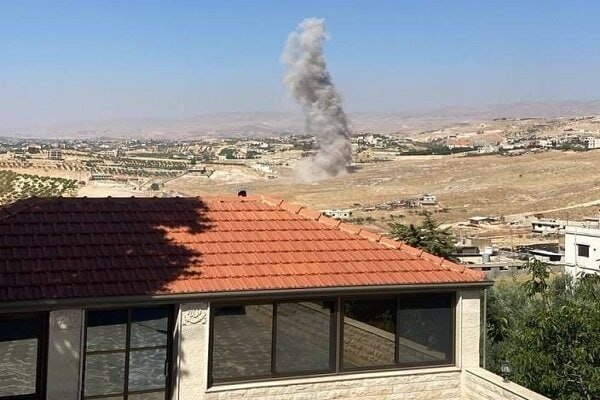
At 22:11 UTC on 7 May 2026, the Iranian-aligned Al-Alam Arabic channel reported that Hezbollah had carried out thirteen operations against Israeli positions in southern Lebanon during the previous twenty-four hours, framed as retaliation for ceasefire violations and civilian casualties. Three Israeli military vehicles had been destroyed and burned, according to a separate social-media post citing battlefield footage circulated at 22:08 UTC. The IDF's official channel, read against the barrage of Hezbollah-aligned dispatches, told a quieter story: mortar shells fired from Lebanon landed near Israeli positions, and no soldiers were reported wounded.
The asymmetry between the two narratives is itself the story. One side claims thirteen operations, three vehicles reduced to burning metal, and a campaign that is now in its second week of post-ceasefire salvos. The other side, the IDF, reports incoming fire without casualties. Both can be true. The northern border has settled into a low-grade firing regime in which Hezbollah reconstitutes its deterrent posture one salvo at a time, and the IDF absorbs each round as an administrative line item. For the civilians who live inside the geometry of those rounds, neither narrative offers much comfort.
A ceasefire that never quite took
The November 2024 arrangement that was supposed to end hostilities along the Israel-Lebanon frontier has, by 2026, become more of a scheduling convention than a binding commitment. Hezbollah's own framing, delivered through Al-Alam Arabic and amplified by Iranian outlets including Tasnim, makes the point explicit: the operations are a "response to the enemy's violation of the ceasefire." That phrasing assumes a baseline agreement still in force, breached repeatedly, and requiring calibrated punishment.
What the Israeli side calls violations, the Lebanese side calls enforcement. The 22:06 UTC report of an Israeli airstrike on Majdal Zoun, followed at 22:12 by Israeli artillery fire on the Al-Mansouri and Al-Siyad homes south of Tyre, and again at 22:19 UTC by another raid on Majdal Zoun, traces a familiar rhythm: Hezbollah fires, Israel returns with air and tube artillery, Hezbollah claims the next day's tally of operations. Each cycle resets the count to zero and starts again. No Israeli political leader had commented publicly on the 7 May exchanges at the time of writing.
The thirteen-operations claim, examined
The thirteen-operations figure deserves scrutiny before it calcifies into the day's headline. It comes from Hezbollah-aligned media, not from an independent monitoring mission, and there is no embedded UNIFIL presence detailed enough in the available record to corroborate or contest it operation by operation. UNIFIL's public situation reports are not part of the source set here, so the claim has been recorded as Hezbollah's stated count rather than as an independently verified tally.
The "three Israeli vehicles destroyed and burned" footage carries the same caveat. The visual record circulating on social media at 22:08 UTC appears consistent with Hezbollah claims, but the IDF has not publicly confirmed any vehicle losses in the 7 May cycle, which only highlights how wide the gap between the two reporting ecosystems has become. One side publishes a daily operational scorecard. The other reports no casualties and moves on.
Why the IDF is reading the room differently
By the late evening of 7 May, Israeli military radio, relayed through channels monitored at 22:22 UTC, was carrying an assessment that the broader exchange between Iran and the United States had ended, with both sides having ceased their attacks. The framing matters. If the Iranian-American track is read in Jerusalem as de-escalated, then the Hezbollah track along the Litani is treated as a residual irritation rather than the opening move of a wider round. Hezbollah's thirteen operations become, in that reading, a finite irritant that can be answered with targeted firepower.
That calculation is not without risk. Hezbollah's stated objective, framed through Iranian state-aligned outlets, is to convert the ceasefire into something closer to a structured tit-for-tat: each Israeli airstrike answered by a defined Hezbollah response. It is an attempt to draw Israel into a tempo of engagement that bleeds attention and stockpiles without producing the kind of decisive Israeli ground operation that would, in Hezbollah's strategic doctrine, vindicate the resistance narrative.
What the southern Lebanese civilian record shows
What neither side is quantifying is the cumulative cost on the Lebanese side of the exchanges. The 7 May dispatches name Majdal Zoun twice in ninety minutes and the residential areas south of Tyre once. The pattern suggests artillery falling on identifiable homes, not on empty fields. The IDF's briefings, framed for an Israeli domestic audience focused on soldier safety, do not catalogue the inverse damage in Lebanese villages.
There is no reliable casualty figure for the Lebanese side in the 7 May cycle within the available sources. Hezb-allied channels frame the Israeli fire as aggression; Israeli channels frame the Lebanese fire as breach. The civilian ledger between the two announcements is the line item neither side wants to total.
The regional read
Outside the immediate frontier, the 7 May cycle sits inside a wider environment that includes a major Ukrainian drone attack on the Yaroslavl oil refinery in western Russia, and a large fire at a shopping plaza in Los Mochis, Mexico, with reports of trapped civilians. The juxtaposition is not editorial flourish. It is a reminder that the news cycle on any given evening in early May 2026 is running multiple distinct emergencies in parallel, each competing for column inches and each carrying its own escalation logic.
For northern Israel and southern Lebanon, the question is whether the thirteen-operations salvos become the new normal or the prelude to something sharper. The IDF's no-casualties report suggests the current rhythm is being absorbed. Hezbollah's continued publication of an operational scorecard suggests the rhythm is being cultivated. Both readings have been true for long enough that the next reading is overdue.
What to watch
The 22:22 UTC Israeli military radio assessment that the Iran-US exchange has ended is the single most consequential line in the day's record, because it removes the strategic umbrella that might otherwise have escalated the Lebanese front. If that assessment holds through the next IDF briefing cycle, Hezbollah's thirteen-operations tempo will likely continue as the controlled-lethality pattern of late spring. If it does not hold, and the Iran-US track reopens, the southern Lebanese salvos would be re-read in Jerusalem as a coordinated opening rather than a residual.
For now, the published record is what it has been for weeks: Hezbollah announces, the IDF absorbs, the civilians on both sides of the Blue Line absorb the rest. The numbers will be re-tallied tomorrow.
Sources
- https://t.me/alalamarabic, Al-Alam Arabic (Iranian state-affiliated Arabic channel), urgent dispatch on Hezbollah's thirteen operations, 7 May 2026, 22:11 UTC
- https://t.me/alalamarabic, Al-Alam Arabic, Israeli airstrike on Majdal Zoun, 7 May 2026, 22:06 UTC and 22:19 UTC
- https://t.me/alalamarabic, Al-Alam Arabic, Israeli artillery on Al-Mansouri and Al-Siyad homes south of Tyre, 7 May 2026, 22:12 UTC
- https://t.me/idfofficial, IDF Official Telegram channel, mortar attack reports and no-casualty statement, 7 May 2026
- https://x.com/sprinterpress, social-media footage of three Israeli military vehicles reportedly destroyed in southern Lebanon, 7 May 2026, 22:08 UTC
- https://t.me/tasnimnews_en, Tasnim News (Iranian state-affiliated English outlet), Hezbollah operation coverage, 7 May 2026
- https://t.me/JahanTasnim, Tasnim News (Persian), regional situation coverage, 7 May 2026
- https://t.me/osintlive, open-source intelligence channel relaying Israeli military radio assessment on Iran-US exchange status, 7 May 2026, 22:22 UTC
Desk note: Monexus anchored this piece to the IDF's published record for Israeli-side facts (mortar fire, no casualties) and used Al-Alam Arabic and Tasnim only as Hezbollah-aligned counter-claim material, with sourcing caveats explicit in every paragraph. The thirteen-operations figure and the three-vehicles claim are recorded as Hezbollah statements, not as independently verified facts.
Follow the event.
These dated source records provide context. They do not retrospectively verify this archive article.
Separate what the nuclear watchdog reported from what it could not determine after the June 2025 strikes.