Iran's Hormuz Gambit Is Not a Gimmick — It's Statecraft
Tehran's decision to establish a new authority overseeing the world's most critical oil chokepoint deserves scrutiny beyond the usual regime-hostile framing. The proposal may be coercive, but it is not irrational — and treating it as purely illegitimate plays into a selective morality that has long governed Western analysis of Middle Eastern flashpoints.
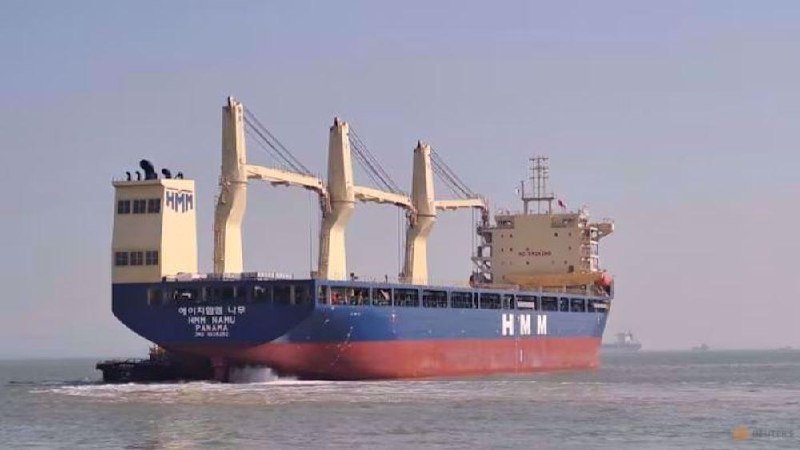
On 6 May 2026, Iran launched a new website and regulatory authority designed to oversee and monetize vessel traffic through the Strait of Hormuz — the 21-mile-wide passage through which roughly a fifth of the world's oil flows daily. The move, reported by the New York Times, signals Tehran's intention to charge commercial ships for safe passage. A Wall Street Journal memorandum cited by open-source monitoring channels indicates the draft document only urges Iran to loosen restrictions, leaving the deeper sovereignty question unresolved. Iran is expected to deliver its response to a US proposal aimed at ending the ongoing war on the same date.
The Western response will be predictable: condemn the scheme as unlawful extortion, invoke freedom of navigation norms, and warn of secondary sanctions on any vessel or flag-state that complies. That response is not wrong, exactly. But it is incomplete — and the selective outrage it encodes tells us more about the architecture of great-power signaling than it does about the legitimacy of Iran's position.
The Passage Was Never Neutral
The Strait of Hormuz has been, since the 1979 revolution, a permanent lever in Iran's geopolitical toolkit. Tehran has fluctuated between bluster — threats to close the passage entirely — and the more sophisticated tactic of managed intimidation: enough disruption to keep oil markets nervous, not enough to trigger a US military response that would itself be catastrophic for regional stability and global supply chains.
The new authority is neither a closure nor a mere threat. It is an attempt to institutionalize Iran's geographic advantage — to convert a de facto capacity into a de jure revenue stream. If ships must pay a fee to transit safely, Iran gains both income and a structural claim over the passage's governance. This is not piracy. It is the kind of coercive statecraft that major powers have practiced for centuries, and that smaller states adopt when they lack conventional deterrence but possess something equally valuable: location.
The US and its allies have operated the same logic through different instruments. Dollar-denominated oil markets enforce a financial chokepoint far more comprehensive than any tollbooth. SWIFT exclusion weaponizes the global payments architecture. The US Navy's presence in the Persian Gulf is itself a toll — one enforced at gunpoint, not through invoicing. The principle that geography confers leverage runs in both directions; only the institutional packaging differs.
What the War-Negotiation Context Changes
The timing of the Hormuz authority's launch is not coincidental. Iran is simultaneously expected to respond to a US proposal aimed at ending the current conflict — a fact reported across multiple monitoring channels on 7 May 2026. This creates a structured negotiation environment in which both sides hold cards: Washington can offer sanctions relief and diplomatic normalization; Tehran can point to Hormuz as the cost of continued hostility.
This is how Iran has always negotiated. It does not have the conventional military capacity to defeat a US-led coalition, so it operates through asymmetric leverage — proxy networks, nuclear ambiguity, and chokepoint control. The Hormuz fee is not a tantrum. It is a signal in a structured conversation about what ending the war actually requires.
The WSJ memo's framing — urging Iran to loosen restrictions without resolving the underlying dispute — suggests the document was drafted to preserve diplomatic space, not to deliver a settlement. Both parties appear to be using the Hormuz question as a pressure point within a larger negotiation, not as a standalone crisis.
The Structural Pattern Beyond Iran
What is happening in Hormuz is not sui generis. It is one instance of a broader trend: the gradual weaponization of global infrastructure by states that lack the conventional power to compete directly with the United States but possess critical geographic or technological choke points. Russia's threats against Arctic shipping routes, China's de facto control over port infrastructure across the Indian Ocean and South China Sea, and now Iran's assertion of Hormuz authority all reflect the same logic — that in a multipolar world, control over movement is itself a currency.
The Western narrative typically frames these moves as violations of international norms. That framing has merit: freedom of navigation is a genuine legal principle, not merely a cover for American naval dominance. But the selective application of that principle — which has tolerated Saudi coalition blockades of Yemeni ports, Israeli restrictions on Gaza maritime access, and the systematic exclusion of Iranian shipping from global financial networks — makes it difficult to present the Hormuz fee as purely a law-enforcement question.
International law is not a fixed architecture. It is a contested terrain, and states that lack the power to reshape it through diplomacy and military capacity will attempt to reshape it through faits accomplis. Iran's new authority may be illegitimate under current treaty interpretation; it may also be the opening gambit in a renegotiation of who gets to profit from the world's most important waterway.
The Stakes, Fairly Assessed
If Iran succeeds in establishing even a partial fee mechanism — one that some flag states accept and others resist — it normalizes the principle that transit through Hormuz requires Tehran's acquiescence. The US and its partners face a choice: enforce freedom of navigation militarily, at significant risk of escalation with a Tehran that has its own response ready; or absorb the new reality and incorporate it into a negotiated settlement that gives Iran something beyond mere survival.
Neither option is clean. Military enforcement risks triggering the very war the current diplomatic process is attempting to forestall. Accommodation risks rewarding coercive statecraft and encouraging similar moves from other chokepoint holders. The stakes, concretely, include global oil prices — already sensitive to supply disruption — and the credibility of a US diplomatic process that reportedly expects Iran's response on 7 May 2026.
What remains genuinely uncertain is whether Iran will push the fee aggressively or use it as a bargaining chip in the ongoing negotiations. The sources reviewed do not specify the proposed tariff rate, enforcement mechanism, or which flag states Tehran expects to comply. That information will determine whether the authority is a serious revenue project or a negotiation prop. Until those details emerge, both the threat and the Western response deserve more careful scrutiny than the reflexive condemnation currently dominating the wire copy.
Monexus covered the Hormuz authority launch as a geopolitical signal embedded in a live negotiation; the wire led with the headline provocation of Iranian "extortion." The framing matters.
Wire provenance
This editorial synthesis draws on the following public wire/social posts:
- https://twitter.com/unusual_whales/status/1920784352945868801
- https://t.me/osintlive/4527
- https://t.me/osintlive/4530