Israeli Push for Iranian Energy Infrastructure Strikes Puts Pentagon Calculus in Sharp Relief
Israel has asked Washington to put Iran's energy infrastructure in the target set for any renewed round of fighting. The Pentagon is now being asked to absorb a price shock it has so far refused to own.
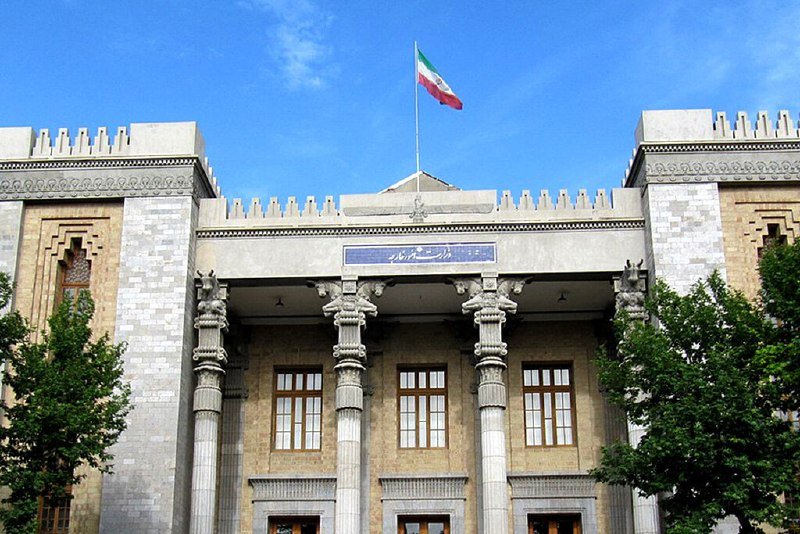
Israel has told Washington that any return to fighting with Iran must include strikes on Iran's energy infrastructure, the Israeli outlet N12 reported on 9 May, an escalation in scope that, if executed, would push the regional conflict into territory the United States has so far held off the table. The reporting, carried by War and Frontline Witness on Telegram citing N12, said Israel remains on high alert and that Israeli planners believe Tehran's oil, gas and refining capacity is a legitimate target in any renewed round. No on-the-record confirmation from U.S. or Israeli officials had been published at the time of writing, and the message has the texture of a negotiating demand dressed as battlefield doctrine.
The demand lands on a Pentagon already juggling an energy shock of its own making. According to Fars News, an explosion and fire ripped through an American refinery as the United States absorbed what Iranian state media described as "an unprecedented energy crisis and a sharp increase in fuel prices." Iranian outlets are not a neutral source on the conflict, but the framing of the message is what matters here: Tehran is signalling that American domestic fuel costs are now part of the calculation. Combine that with the Wall Street Journal figure, relayed through the same Telegram channel, that more than 20,000 seafarers and 800 vessels are stranded near the Strait of Hormuz, and the picture stops looking like a contained air campaign. It looks like a contest over who absorbs the next price shock first.
What Israel is asking for
N12's reporting, as paraphrased on Telegram, is specific in scope. Israel wants energy infrastructure in the target set: the refineries, the gas plants, the export terminals that keep the Islamic Republic financially solvent. The list is not theoretical. Iran's refining heartland sits in the southwest, around Abadan, where one of the world's oldest and largest oil refineries has been a strategic asset since the British built it, and around Bandar-e Mahshahr and the wider Khuzestan province. Striking that system is not a message. It is a multi-month reconstruction project inflicted on the target.
The Israeli calculus is legible without any insider sourcing. Energy exports are the lever that funds Hezbollah's reconstitution in southern Lebanon, where the IDF said on 9 May it had struck more than 85 Hezbollah targets in the preceding 24 hours using heavy artillery, warplanes and drones. They also underwrite the missile and drone production lines that have driven the multi-front exchange. Cut the revenue, in this reading, and the proxies shrink. The problem is that the same infrastructure is the single largest variable in global crude supply, and the same lever that hurts Iran also hurts every importer that buys from the Gulf, including, in a tight market, Israel itself.
What the U.S. is being asked to absorb
Washington's hesitation has never been moral. It has been arithmetic. Striking Iran's energy grid invites retaliation against Gulf state facilities, an Iranian closure or partial closure of the Strait of Hormuz, and a sustained price spike that would land on American consumers in a year when, by Iranian state media's own framing, U.S. fuel prices are already climbing sharply. The Pentagon does not need to be told that Hormuz matters. The strait has been the central nervous system of Gulf energy exports for decades, and the chokepoint geography has not changed.
What the WSJ figure suggests, if accurate, is that the disruption is already operational rather than threatened. Twenty thousand seafarers aboard eight hundred vessels near the strait is not a fleet in transit. It is a fleet held in place, with crews facing conditions that are not being publicly detailed. Insurance rates, port-state logistics, and crew-rotation schedules do not survive that kind of pause. Each week the stand-off continues, the global tanker market tightens in ways that take months to unwind. Israel is asking the United States to absorb an additional shock to that system. That is the political transaction sitting underneath the N12 report, even if neither government has confirmed the request.
The school in Minab and the cost of the current register
Iranian state outlets, including Press TV, carried footage this week from the aftermath of a strike on the Shajareh Tayyebeh school in Minab, in southern Iran, framed as a "US-Israeli massacre" of schoolgirls and accompanied by calls from an EU parliamentarian for an investigation. The framing is hostile and the imagery is partisan-distilled; it is also the visual register that any expansion to energy infrastructure will multiply by an order of magnitude. Striking a refinery in daylight does not look like striking a school. But striking a refinery at night, with civilian shift workers on site, looks exactly like it.
Iran has spent the last forty years pre-positioning its information environment for that moment. PressTV, IRNA, Fars and the wider state-aligned ecosystem are not candid observers, but they are prolific, multilingual and experienced at converting a strike on a piece of infrastructure into a story about civilian harm. A coalition expanding the target set to energy should expect the Minab template to be applied to every subsequent strike, and the diplomats should expect the European parliament to be lobbied in those terms.
Lebanon and Gaza are already at saturation
The northern front is not quiet. The Cradle reported intensive Israeli artillery, air and drone operations across southern Lebanon from the early hours of 9 May, targeting the outskirts of several towns. The IDF's own statement tallied more than 85 Hezbollah positions struck in the prior 24 hours. Hezbollah has spent the past year weakened, but it has not been disarmed, and a strike campaign against Iranian oil infrastructure would invite a retaliatory opening from the northern border that Israel would then have to answer on a third front.
In Gaza, civil defence reported nine injured in an Israeli strike on a house in the west of the city, with extensive damage to surrounding structures. The figures originate with the Gaza Relief and Rescue spokesperson and are not independently verified. They sit inside a campaign that is already exhausting Western publics and squeezing Israeli coalition politics. A decision to widen the war to Iranian energy would arrive on top of that saturation, not in place of it.
The Pentagon's actual decision
If the N12 report is accurate, the Pentagon is being asked a question that has no good answer. Decline, and Israel retains the autonomy to act on its own target list, possibly with a unilateral strike package that draws retaliation anyway. Accept, and the United States owns the global price consequences of a deliberate campaign against the world's fourth- or fifth-largest oil producer, in a market already absorbing the Hormuz stand-off. The third option, a partial yes that green-lights some facilities while sparing others, is the most likely and the least stable: it produces a partial shock, leaves the surviving infrastructure as a documented target list for the next round, and guarantees another round.
The strategic logic of the Israeli ask is coherent. Iran's energy base is the load-bearing pillar of its regional posture. Knock it out and the proxy network loses its oxygen supply for years. The strategic logic of the U.S. hesitation is equally coherent. Knock it out and the global economy, including the American consumer who is already visible in the Fars coverage of U.S. fuel prices, pays the bill in real time, in a polling cycle. Both sides are right. That is the problem.
What to watch between now and the next round
Three signals will tell us which way the decision is going. First, any formal Israeli security-cabinet statement that names energy infrastructure in its published target framework. Second, CENTCOM force-posture changes in the Gulf, particularly around tanker-escort routing. Third, the language out of Riyadh and Abu Dhabi; a Gulf state quietly urging restraint is a tell that the price channel is open, a Gulf state publicly endorsing escalation is a tell that the oil backstop is in place.
The Israeli message, as reported by N12, is the demand that the United States accept the cost now rather than absorb it in instalments over the next year. Whether Washington agrees will not be read in statements. It will be read in the next set of targets, and in the next session of oil futures, and in whether the eight hundred ships near Hormuz start moving again.
Sources
- https://t.me/wfwitness (N12 relay, 9 May 2026)
- https://t.me/FarsNewsInt/18492 (Fars, refinery fire framing, 9 May 2026)
- https://t.me/farsna (Fars, U.S. energy crisis framing, 9 May 2026)
- https://x.com/sprinterpress/status/1921472583744200905 (war coverage, 9 May 2026)
- https://en.wikipedia.org/wiki/Iranian_oil_sanctions
- https://en.wikipedia.org/wiki/Strait_of_Hormuz
- https://en.wikipedia.org/wiki/Abadan_Refinery
- https://t.me/wfwitness (WSJ Hormuz stranding relay, 9 May 2026)
- https://t.me/presstv (Minab school aftermath, 9 May 2026)
- https://t.me/TheCradleMedia (southern Lebanon operations, 9 May 2026)
- https://t.me/idfofficial (IDF Hezbollah strikes tally, 9 May 2026)
- https://t.me/alalamfa (Gaza civil defence casualty report, 9 May 2026)
Desk note: Monexus treated the N12 report as a credible but unconfirmed Israeli-side demand, weighted it against WSJ's Hormuz figures and Iranian state-media framing of U.S. fuel costs, and held the line that Israeli security concerns and Iranian civilian harm are both first-order facts. The wire services led; the editorial work was in not letting any single source set the frame.
Follow the event.
These dated source records provide context. They do not retrospectively verify this archive article.
Separate what the nuclear watchdog reported from what it could not determine after the June 2025 strikes.