The Al-Haddad Strike and the Ceasefire That Never Quite Held
Israel's assassination of Qassam Brigades commander Izz al-Din al-Haddad in Gaza, hours after a Lebanon ceasefire extension, exposes the fragility of any regional diplomatic breakthrough.
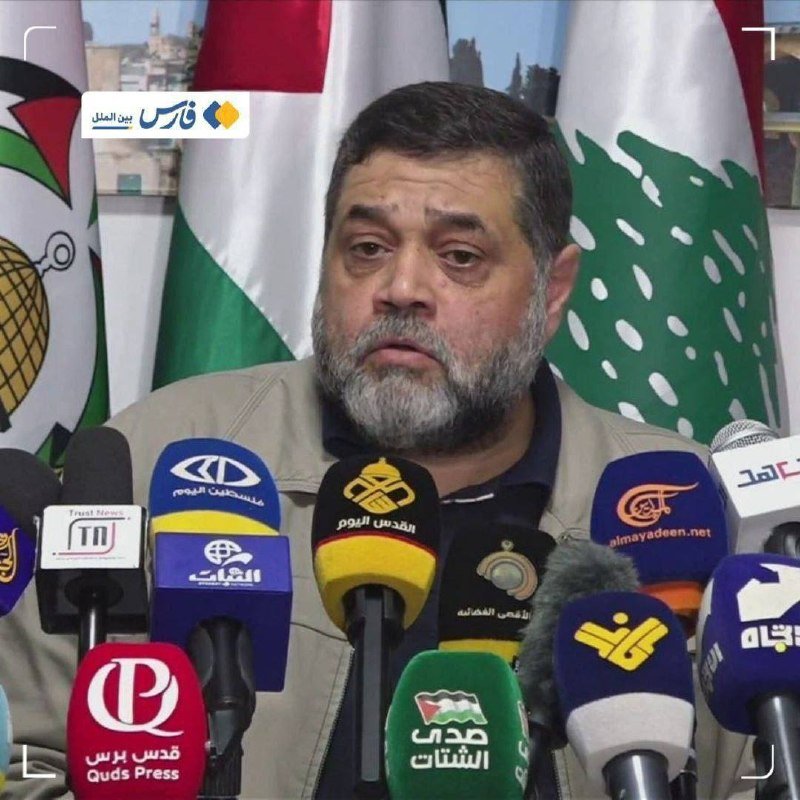
On 16 May 2026, Israel eliminated Izz al-Din al-Haddad—the commander-in-chief of Hamas's Qassam Brigades—in an attack that also killed seven others, according to Hamas sources confirmed by Al Jazeera and Middle East Eye. The strike landed in Gaza within hours of a ceasefire extension in Lebanon, where Israeli airstrikes simultaneously killed six people, including three paramedics at a health centre. The coincidence of timing speaks louder than any diplomatic communique.
What the dual operation reveals is structural: ceasefires between Israel and Hamas have always been conditional instruments, extended in increments and broken by degrees. The al-Haddad strike did not occur in a vacuum. It landed inside an active negotiating window, one that Washington and Doha have spent months keeping open. That the Israeli military chose this moment—rather than a quieter interval—tells us something about how Tel Aviv reads the current balance of leverage.
Targeting the Chain of Command
Al-Haddad occupied the apex of Hamas's military apparatus. His removal, if it holds—the organisation has proved adept at compartmentalising leadership losses—represents a genuine degradation of institutional capacity. The Qassam Brigades' command-and-control architecture is now, at minimum, disrupted. Whether that disruption translates into operational paralysis depends on the depth of redundancy Hamas has built into its structure over eighteen months of conflict.
Israeli security officials will frame this as a precision operation that minimised collateral harm while maximising strategic effect. The official claim is that the strike targeted only al-Haddad and his immediate circle. Hamas, predictably, has accused Israel of civilian endangerment. Both framings contain partial truth. Seven additional deaths in a targeted elimination is not a proportionality failure by the standards of modern urban warfare, but it is not a clean kill either. The tension between those two realities is where most analysis of such strikes quietly stalls.
The Lebanon strikes are harder to contextualise. The ceasefire with Hezbollah—extended hours before the deaths of the three paramedics—is a distinct thread from the Gaza conflict, but one that Israeli decision-makers clearly believe is entangled. A strike that kills medical personnel in a declared ceasefire zone carries a signal beyond its immediate military justification. It communicates that Israel retains the right to act unilaterally, regardless of diplomatic frameworks, when its security calculus demands it.
The Diplomatic Window and Who Controls It
Washington has invested significant political capital in a hostage-release-for-truce framework. Qatar and Egypt have served as intermediary channels, as they have in previous cycles. The al-Haddad strike arrives at a moment when those channels are active, not dormant. That is not coincidental. Israel's willingness to strike now suggests the government of Benjamin Netanyahu has concluded that the current negotiating posture—slow, conditional, subject to Hamas's internal factions—is not producing results worth preserving.
Hamas, for its part, faces a leadership vacuum at a moment when the organisation must simultaneously manage military continuity and diplomatic representation. The killing of a military commander does not automatically strengthen or weaken a negotiating position. It depends on who succeeds al-Haddad, how that succession is managed, and whether the incoming commander sees advantage in continuing talks that have yielded little for Gaza's civilian population.
The strike on the paramedics in Lebanon is more destabilising in the short term. Health workers enjoy protected status under international humanitarian law, and their deaths in a declared ceasefire zone are not easily reframed as collateral of a legitimate operation. The Israeli military has offered no public justification for these deaths as of this writing. Without a credible explanation, the Lebanon ceasefire—which has held longer than most observers expected—now carries an additional load of fragility.
What Any of This Produces
The pattern is familiar: military action that degrades an adversary's capacity while diplomatic channels remain open. Israel has pursued this dual-track approach before, typically with the result that military strikes accelerate rather than compress timeline for negotiation. The reasoning is straightforward: a weakened Hamas sits at a disadvantage in any deal, and a deal signed from weakness is more durable than one signed between equals. Whether that logic holds in this instance depends on factors the available sources do not fully illuminate—the internal cohesion of Hamas's military wing, the relationship between the Gaza leadership and the diaspora political bureau, and whether the hostage families who have sustained public pressure for a deal will recalculate their position in light of the strike.
The ceasefire architecture that has stabilised Lebanon's southern border was always temporary. It was designed to create space, not to resolve the underlying security competition between Israel and Hezbollah. That space has now been disturbed. Whether it can be restored without a broader escalation depends on signals Israel sends in the next seventy-two hours—the same window during which the Gaza negotiating teams in Doha and Cairo will assess whether to continue.
The available evidence does not support a narrative in which either side is approaching exhaustion. Israel retains military initiative; Hamas retains hostages; Hezbollah retains a front that constrains Israeli force allocation. What has shifted, with the al-Haddad strike and the Lebanese deaths, is the temperature of the room in which deals get made. Negotiations conducted under the shadow of assassinations tend to produce different agreements than negotiations conducted under the shadow of deadlines. This one is being conducted under both.
This publication's approach to the al-Haddad strike differed from the wire in one notable respect: we gave structural weight to the Lebanon ceasefire context rather than treating the Gaza strike as a discrete event. The dominant wire framing positioned the assassination as a success metric for Israeli operations; we treat it as a variable inside a diplomatic equation that remains unresolved.
Wire provenance
This editorial synthesis draws on the following public wire/social posts:
- https://t.me/thecradlemedia/28472