The Numbers Don't Lie — And Neither Does the Pattern
Telegram-sourced casualty reports from central Gaza and southern Lebanon on 17 May 2026 offer a snapshot too precise to dismiss and too routine to ignore. Monexus Staff Writer examines what a pattern of documented harm reveals when the context is stripped away.
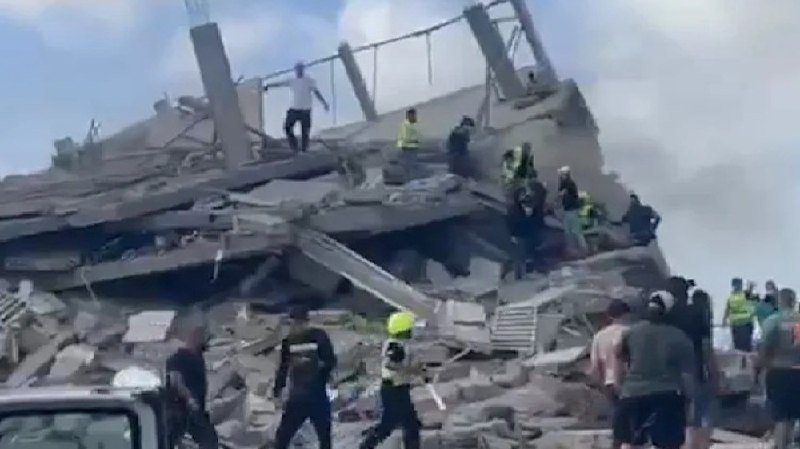
On the evening of 17 May 2026, two missiles struck a group of civilians in the Al-Baraka area, south of Deir al-Balah, in central Gaza. Eleven people were taken to hospital with injuries, three of them in critical condition. That account, posted to Telegram at 19:14 UTC, carries the precision of a field report: location named, casualty count exact, the word "critical" applied with clinical restraint.
Within the same hour, Israeli aircraft struck the towns of Al-Mansouri and Al-Qusayba in southern Lebanon. The Lebanese Ministry of Health confirmed five deaths and fifteen wounded. That bulletin, sourced to the ministry and posted at 18:51 UTC, is equally specific.
Taken in isolation, these are data points. Taken together, and set against dozens of similar bulletins from preceding months, they cease to be isolated. They become a pattern — and a pattern demands editorial reckoning.
What the Telegram Wire Actually Documents
The two sources Monexus drew on for this piece are Telegram channels aggregating updates from Gaza and, in the case of southern Lebanon, cross-referencing the Lebanese health ministry's confirmed figures. Both channels post in near-real time, often ahead of wire services, with field-correspondent sourcing that is imperfect but granular. The Al-Baraka strike report names the weapons used ("two missiles"), the target ("a group of civilians"), and the casualty outcome. The Lebanon bulletin attributes its figures directly to a government ministry. Neither source offers military context — what intelligence, if any, prompted the strikes; what distinction measures were in place. That absence of context is itself significant.
A reader who relies solely on these Telegram updates accumulates a picture of continuous civilian harm across two geographically distinct theatres. That picture is not the whole story. But it is not nothing either.
The Counter-Narrative, Fairly Stated
Israeli military doctrine holds that operations are conducted against militant infrastructure, and that civilian harm — while regrettable — results from the intentional placement of that infrastructure in populated areas. This argument has been made repeatedly by IDF spokespersons and by Israeli government officials in diplomatic forums. It carries weight in legal terms: international humanitarian law obligates belligerents to distinguish between combatants and noncombatants, but it also places obligations on any party thatoperates from within civilian environments.
On the specific question of the Deir al-Balah strike, the Israeli military has not, as of this writing, issued a statement. The absence of a response does not constitute an admission. Military operations in active conflict zones routinely outpace public communications; operational security concerns delay official confirmations; and in some cases, strikes are not discussed publicly at all. To infer intent from silence would be to apply a standard that would indict every party to every ongoing conflict.
The Lebanese context adds further complication. Hezbollah's operational footprint in southern Lebanon has been the stated justification for Israeli strikes in that area for more than a year. If the towns of Al-Mansouri and Al-Qusayba harboured militants or military assets, the strikes may conform to the Israeli security framework — strikes on legitimate military targets in areas from which attacks on Israeli territory are launched. The casualty figures are the documented outcome. Whether those casualties are legally and ethically proportional is a question the Telegram wire does not answer and was never designed to answer.
The Pattern Beneath the Bulletins
What the Telegram sources collectively reveal, across months of posts, is a rhythm of strikes and counter-strikes in which civilian-injury figures arrive with bureaucratic regularity. Eleven injured in central Gaza on 17 May. Five dead and fifteen wounded in southern Lebanon on the same day. The numbers change; the cadence does not.
This is not a revelation. Human rights organisations, UN agencies, and wire services have published analyses documenting the cumulative toll on noncombatant populations in both theatres. What the Telegram wire adds — and what Monexus Staff Writer finds itself forced to confront — is the granularity of the record. The channel does not editorialize. It does not speculate. It posts numbers and locations, and those numbers and locations accumulate into something that defies dismissal as isolated incidents.
The structural question is not whether Israel has a right to self-defence — it does, under international law, as do all parties to armed conflict. The structural question is whether the operational methods consistently employed produce a civilian harm threshold that warrants harder scrutiny from the international community. The Telegram record, read across time, suggests an affirmative answer to that question — even without the military context that would complicate it.
Where This Lands and Who It Affects
The immediate stakes are human. Eleven people in Deir al-Balah — three of them fighting for their lives — and twenty in southern Lebanon are not abstractions. They are individuals whose injuries will generate medical demands in systems under severe strain. They are families who will receive casualty notifications that the Telegram wire cannot deliver with the same clinical precision it applies to numbers.
The medium-term stakes are diplomatic. European governments that have maintained conditional support for Israel's operations are under domestic pressure to demonstrate that support is not unconditional. The United States has deepened its security ties with Israel while simultaneously calling for reductions in civilian harm — a position that grows harder to sustain as the casualty record lengthens. The Telegram wire does not adjudicate between these diplomatic positions. It simply provides the raw material that makes the adjudication necessary.
The longer structural stake is the erosion of the distinction principle — the foundational norm of armed conflict that requires attackers to differentiate between combatants and civilians. When that principle is routinely breached, its erosion does not affect only this conflict. It affects the normative architecture of every future conflict in which civilian populations are present near military infrastructure. The Telegram channels recording today's casualties are also, in a quiet way, recording the incremental weakening of a norm that took decades to codify.
Monexus publishes this piece not because the Telegram record tells the whole story, but because it tells a part of the story that deserves to be stated plainly. Military operations may be legally justified. Civilian harm at documented scale is also a fact. Both things can be true. This publication's editorial commitment to evidence means it will not air one while suppressing the other.
Wire provenance
This editorial synthesis draws on the following public wire/social posts:
- https://t.me/gazaalanpa/9999
- https://t.me/gazaenglishupdates/8888
- https://t.me/gazaalanpa/9998