Israeli Airstrikes Hit Deir ez-Zahrani in Southern Lebanon, Iranian-State Media Report Civilian Casualties
Iranian-state adjacent channels reported large-scale destruction and civilian casualties in the southern Lebanon town of Deir ez-Zahrani on 31 May 2026; independent verification of the extent of harm remains limited.
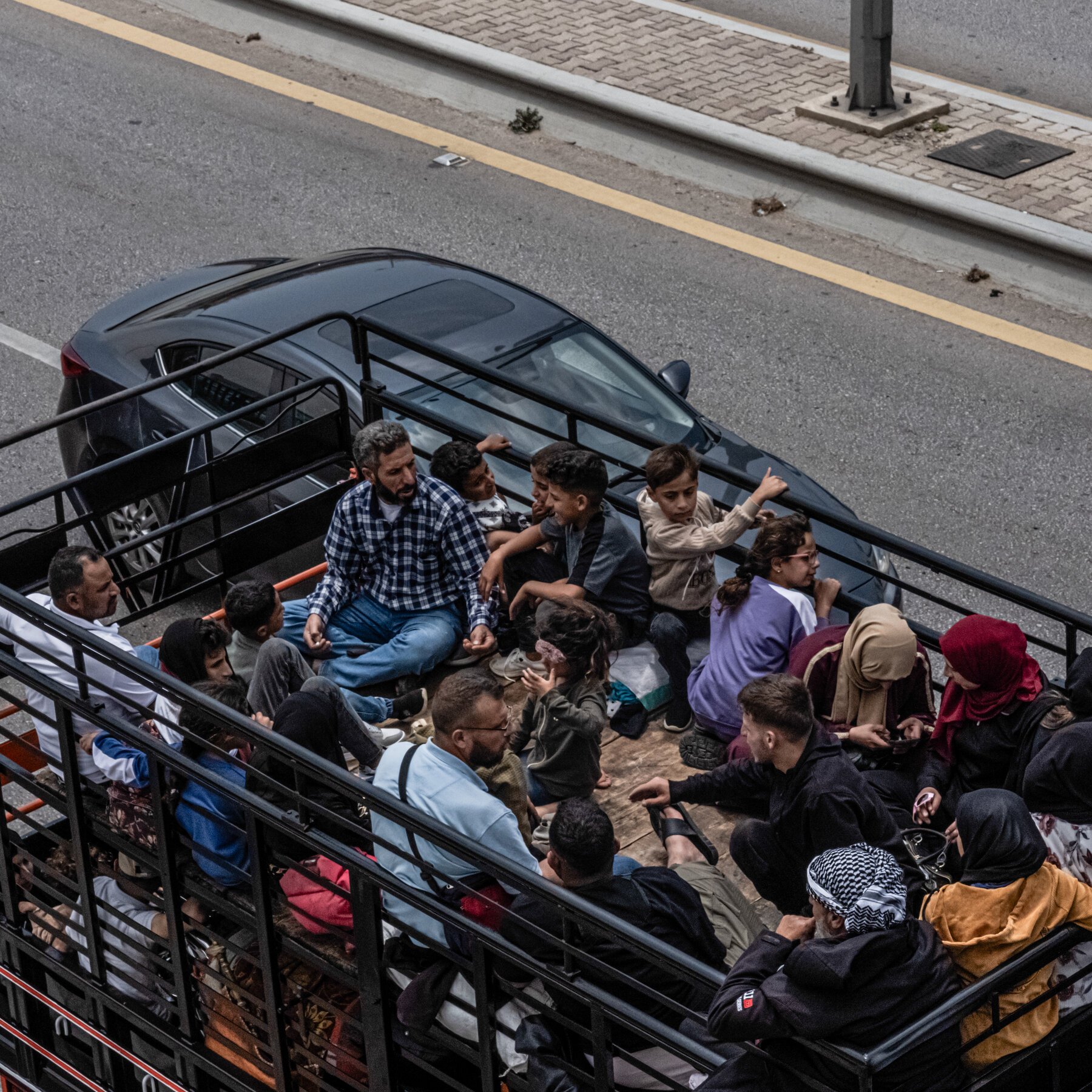
On the final day of May 2026, the southern Lebanon town of Deir ez-Zahrani was struck by a series of Israeli airstrikes, according to multiple reports circulating in the early morning hours. Iranian-state adjacent channels — including Tasnim News and The Cradle Media — published footage and casualty claims within minutes of the incident, describing widespread destruction across the Al-Arb neighbourhood and accusing the Israeli military of targeting residential structures while residents were asleep.
What the reporting cannot yet confirm is the full scope of harm. The sources describing civilian casualties have not been independently corroborated by Western wire services or international monitoring organisations as of the time of this article's filing. That gap matters — both for the people of southern Lebanon and for the diplomatic temperature along a border that has not stabilised since October 2023.
What the channels reported
Tasnim News, an English-language service affiliated with Iran's Islamic Revolutionary Guard Corps, described the Israeli military as having "bombarded Deir al-Zahrani town with successive airstrikes," producing what it termed "the widespread destruction of the town." The channel distributed video footage showing structural damage across multiple blocks, though no independent assessment of the date or provenance of that footage has been published.
The Cradle Media, a platform with a track record of pro-resistance framing, went further, asserting that "a massacre has been reported in the Al-Arab neighbourhood of Deir al-Zahrani, where Israeli warplanes struck residential homes at dawn while residents were asleep, according to" sources it did not name. No international body — not the United Nations Interim Force in Lebanon, not the International Committee of the Red Cross — had issued a public statement on the incident as of 31 May 2026.
Israeli military spokespeople had not issued a public statement on the strikes by mid-morning UTC. The IDF typically confirms or contextualises operations after a verified operational window; that silence is not itself confirmation or denial.
The border context
Southern Lebanon has been under sustained Israeli military pressure since the Hezbollah-Israel ceasefire agreement that took effect in late January 2026. That agreement, brokered with US and French diplomatic involvement, was intended to create a buffer zone and halt cross-border strikes. It has not held cleanly. Israeli forces have conducted repeated operations in the south, and Hezbollah-aligned groups have fired sporadically into northern Israel — though at dramatically reduced intensity compared to the pre-ceasefire period.
Deir ez-Zahrani sits roughly 15 kilometres north of the ceasefire line. It is not a Hezbollah strongpoint by the terms of the ceasefire understanding, but it is in an area the IDF has designated a military exclusion zone — meaning any structure in the area can be treated as a potential threat target. That legal architecture is what allows the Israeli military to strike without the granular target-level confirmations that civilian harm advocates argue should be standard.
The strikes follow a pattern the IDF has established over the first five months of 2026: targeted operations against infrastructure it characterises as Hezbollah-affiliated, conducted rapidly, with public information released after the fact — or, in many cases, not at all.
The information warfare dimension
Iranian-state adjacent channels moved fast on this story. Within twenty minutes of the reported strikes, English-language accounts were distributing footage, casualty figures, and editorial framing. The speed is not accidental. The Iran-aligned media ecosystem treats civilian harm in Lebanon as a specific communications leverage point — an opportunity to reframe Israeli operations as indiscriminate and to pressure the ceasefire architecture.
That does not make the reports false. But it does mean the framing is not neutral. When a channel's editorial interest aligns with a certain interpretation of events, its reporting tends to converge on that interpretation quickly. The footage may be genuine; the characterisation of it as a massacre rather than a targeted strike is not a neutral fact.
Western wire services — Reuters, AP, the BBC — had not published on the Deir ez-Zahrani strikes as of 31 May 11:00 UTC. That is not unusual for incidents in this corridor; the wire services depend on a combination of IDF briefings, local correspondent access, and UNIFIL contacts, all of which take time to coordinate. The absence of wire coverage is not evidence that nothing happened. It is evidence that the facts are not yet confirmed.
What happens next
The immediate question is whether the ceasefire line holds. The strikes, if confirmed as Israeli, represent a clear — if still undefined — violation of the January agreement's terms. Hezbollah's political leadership in Beirut has so far been restrained in its public responses to Israeli operations, aware that a full breakdown of the ceasefire would bring American and French diplomatic pressure down on the Lebanese government. That restraint has limits. If casualty reports from Deir ez-Zahrani are confirmed, the political cost for Hezbollah's domestic position rises sharply, and with it the pressure on the group to respond.
Israeli military planners have been clear in recent months that they view the ceasefire as temporary and conditional. The stated position is that operations will continue until the threat from Hezbollah is sufficiently degraded — a threshold that has not been publicly defined. If that threshold is being applied to infrastructure in Deir ez-Zahrani, the strikes are not an aberration. They are the agreement in practice.
The deeper question is whether the ceasefire architecture has any structural resilience left. The January agreement was fragile from the start — brokered under pressure, accepted by both sides as the least-bad option, and dependent on enforcement mechanisms that neither party fully controls. Each Israeli strike in the south, each Hezbollah artillery exchange into northern Israel, erodes the mutual assumption that the other side will hold.
For Lebanese civilians in the border towns, the strikes are not a geopolitical abstraction. Whether the destruction in Deir ez-Zahrani was surgical or catastrophic, the effect on a town already depopulated by a year of conflict is the same: more homes gone, more people displaced, more reason to believe the ceasefire line is a fiction.
This publication's coverage of the Deir ez-Zahrani strikes differs from the Iranian-state adjacent channels' framing primarily in its refusal to characterise the incident as a confirmed massacre before independent verification is available. We report what was asserted; we do not adopt the characterisation as fact.
Wire provenance
This editorial synthesis draws on the following public wire/social posts:
- https://t.me/tasnimnews_en/67842
- https://t.me/TheCradleMedia/12391
- https://t.me/sprinterpress/4891
- https://t.me/thecradlemedia/12391
Follow the event.
These dated source records provide context. They do not retrospectively verify this archive article.
Separate what the nuclear watchdog reported from what it could not determine after the June 2025 strikes.