Trump Declares 'Very Close' to Iran Nuclear Deal as Negotiations Enter Critical Window
The president said on Fox News that an agreement with Tehran is imminent, but American officials tell Axios the final timeline remains unresolved despite apparent progress in back-channel talks.
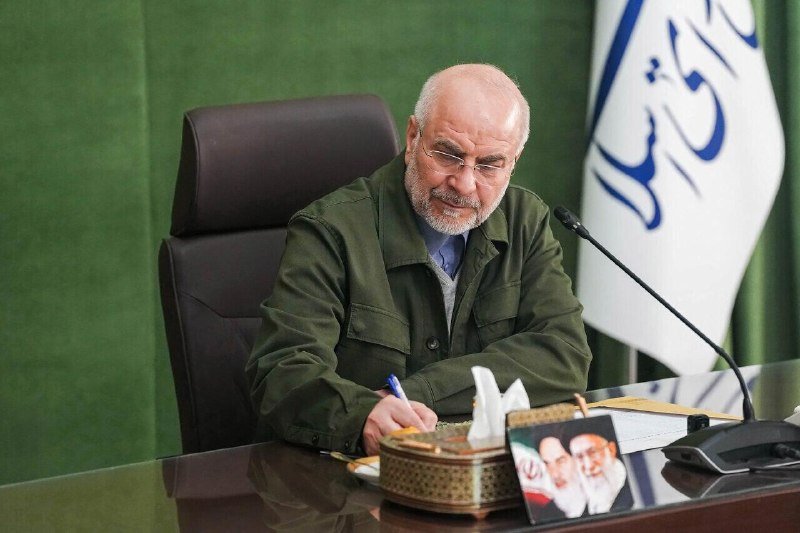
President Donald Trump said on 31 May 2026 that the United States is "very close to a very good agreement" with Iran, projecting confidence that a comprehensive nuclear deal — the central aim of his administration's maximum-pressure campaign — is within reach after months of indirect negotiations. The statement came in a Fox News interview that has since become the primary frame through which American and regional audiences are processing the administration's Iran policy.
American officials cited by Axios confirmed that Tehran has been given approximately three days to respond to the latest proposal put forward by Washington. One official, speaking on condition of anonymity, offered a characteristically blunt assessment of the Iranian negotiating posture: "they're literally in caves, they don't use email." The remark, while anecdotal, captures the friction between the two governments' operational cultures — and underscores the challenge of conducting structured diplomacy with a counterpart whose institutional habits and internal decision-making chains remain opaque to American analysts.
A separate American official quoted by Axios struck a more calibrated note: an agreement will happen, the official said, but the date of its conclusion remains unresolved. The tension between Trump's public optimism and the more cautious internal assessment defines the central ambiguity of this moment.
The gap between public confidence and private uncertainty is not unusual in high-stakes diplomacy, but it carries particular weight here. Trump's critics on the left have long argued that his administration's Iran posture was built on theatrical escalation rather than strategic patience. His supporters argue that the pressure campaign — sustained sanctions, designation of the Islamic Revolutionary Guard Corps as a foreign terrorist organization, and repeated threats of military action — is precisely what brought Tehran to the table. The deal, if it materializes, will be read by both camps as validation of their respective positions.
Tehran's state media, for its part, reported Trump's claim without the triumphant framing one might expect from a negotiating counterpart that believes it holds the stronger hand. PressTV and Tasnim, both state-affiliated channels, carried the Fox News remarks with factual brevity: the president said he is close to a deal, the deal is described as "very good," and no substantive details of the proposed terms were made public in the interview. Iranian officials have consistently insisted that any agreement must guarantee both the lifting of sanctions and the preservation of Iran's right to peaceful nuclear activity under the Nuclear Non-Proliferation Treaty. Whether the current proposal meets those criteria remains contested in the limited reporting available.
The geopolitical stakes extend well beyond the bilateral relationship. A revived nuclear deal would reshape the regional balance across the Middle East. Saudi Arabia and Israel — both of which have publicly expressed concern about Iranian nuclear capability and both of which participated in informal deconfliction discussions with Washington during the peak escalation period — would face fresh strategic calculations. A deal that leaves Iran with a credible civilian nuclear program but without weapons-grade enrichment capacity may reassure Riyadh while leaving Jerusalem unconvinced. The framework that eventually emerges from these negotiations will therefore be read not just as a non-proliferation instrument but as a statement about the limits of American leverage in the region more broadly.
The media dimension of this episode is itself significant. Trump's post-interview remarks included attacks on American news organisations for their coverage of Iran's capabilities, suggesting the administration is aware that the domestic political terrain around any Iran deal is contested. Polling in the United States shows durable public skepticism toward the Joint Comprehensive Plan of Action — the 2015 agreement that Trump exited in 2018 — with significant portions of both parties expressing doubt that any Iranian commitment is verifiable. An administration that secures a deal will simultaneously inherit the political burden of selling it to a Congress and public that has been told for eight years that Iran's government cannot be trusted.
Several structural questions remain open. The sources do not disclose the specific terms of the proposal currently before Tehran, nor do they indicate whether the three-day response window refers to a formal reply or to a preliminary signal. The Iranian side has not confirmed receipt of the proposal through official channels; what exists in the public record is an American account of its own outreach and an expectation of a reply. Whether that reply comes as a detailed counter-proposal, a request for clarification, or a rejection remains to be seen. The Axios reporting suggests that American officials believe a deal will happen — but the same officials acknowledge that the date is not settled. That is a meaningful distinction.
The Trump administration's approach to Iran has been defined from the outset by the declared intent to strike a better deal than the one signed in Vienna in 2015. What "better" means in practice — whether it requires zero enrichment on Iranian soil, intrusive inspections, missile limitations, or some combination — has never been fully articulated in public. The eventual deal, if one is reached, will be measured against that aspiration. If it resembles the original JCPOA more than the maximalist理想, the political cost inside the United States will be considerable. If it is genuinely more restrictive, it will have required concessions from Tehran that many analysts consider implausible without a fundamental change in the Iranian government's strategic calculus — a change the current round of negotiations has not purported to explain.
Monexus covered this development as a live diplomatic story, tracking the Axios reporting on the internal timeline alongside the administration's public positioning. The Fox News interview provides the official frame; the Axios sourcing provides the operational texture. Regional wire outlets carried the story with varying emphasis — some foregrounding the deal optimism, others the unresolved date — reflecting the genuine uncertainty that characterizes the current moment rather than a settled narrative.
Wire provenance
This editorial synthesis draws on the following public wire/social posts:
- https://t.me/Middle_East_Spectator/12438
- https://t.me/alalamarabic/9921
- https://t.me/tasnimnews_en/18120
- https://t.me/tasnimnews_en/18118
- https://t.me/JahanTasnim/9107
Follow the event.
These dated source records provide context. They do not retrospectively verify this archive article.
Separate what the nuclear watchdog reported from what it could not determine after the June 2025 strikes.