Trump's Iran Gambit Collides With Israeli Escalation in Lebanon
The White House's confidence in sealing a nuclear accommodation with Tehran within days is being tested by a simultaneous Israeli ground operation in Lebanon — pushing Iran to threaten the Strait of Hormuz, the world's most critical oil chokepoint.
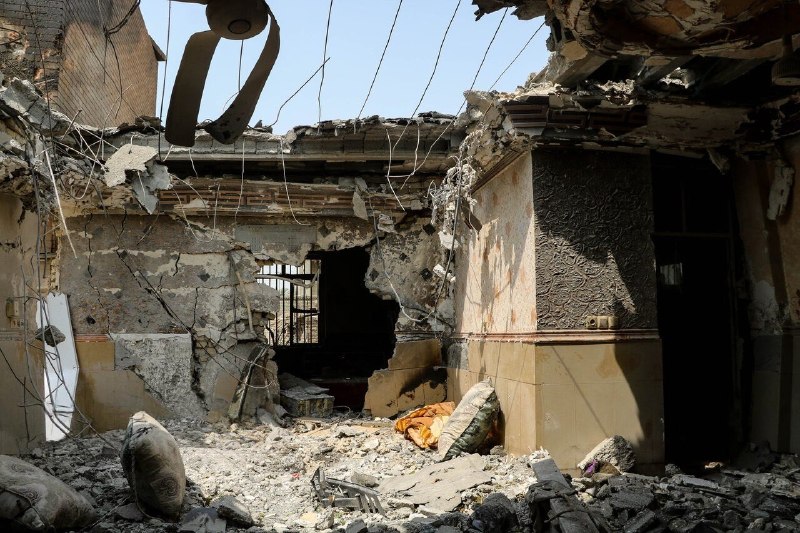
The Strait of Hormuz is eight miles wide at its narrowest. Roughly a fifth of the world's oil passes through it. On the morning of 1 June 2026, Iranian officials told Washington — through back-channels still running, however faintly — that if Israeli forces pressed deeper into Lebanon, they would close it. By the evening, the White House was publicly insisting a nuclear deal with Tehran was days away.
That contradiction defines the most acute diplomatic crisis of the summer so far.
The One-Week Bet
President Trump told ABC News on Monday that he expected an agreement with Iran to extend the ceasefire and reopen the Strait of Hormuz "over the next week." Earlier in the day, the White House announced that talks with Iran were continuing "at a rapid pace." The framing was deliberate: a US president who built much of his foreign-policy brand on dealmaking, signalling that the most consequential diplomatic handshake of his second term was within reach.
The substance of that deal centres on Iran's nuclear programme. In exchange for sanctions relief, Tehran would cap enrichment, submit to expanded IAEA inspections, and — critically for the Gulf monarchies and for Israel — commit to a structured wind-down of its civilian nuclear infrastructure. The Strait of Hormuz, partially disrupted in recent months, would fully reopen. The oil markets that have been pricing in chronic Persian Gulf risk would get relief.
By mid-afternoon on 1 June, that narrative was under severe stress.
The Lebanon Problem
Iran's demand, delivered through diplomatic channels still technically open, was unambiguous: a ceasefire on all fronts, including Lebanon. According to reporting confirmed by multiple Telegram channels citing OSINT sources, Iranian officials warned they would halt message exchanges with Washington and move to block the Strait of Hormuz if Israeli operations in Lebanon continued.
Israeli forces have been conducting ground operations in southern Lebanon — an escalation that has put enormous pressure on the fragile architecture of existing ceasefire arrangements. Iranian-backed Hezbollah, which shares a border with Israel and a patron in Tehran, has been drawn into the orbit of any Israeli push northward.
The result is a diplomatic paradox for the White House: the administration that has moved most aggressively to negotiate with Iran is simultaneously allied with a government conducting operations that Tehran treats as a casus belli for blocking the strait.
The Expletive-Laden Call
On Monday evening, Axios reported — with sourcing that multiple Telegram aggregators confirmed within minutes — that President Trump confronted Israeli Prime Minister Benjamin Netanyahu in a phone call that three sources described as heated. According to the Axios account, Trump told Netanyahu: "You're fucking crazy. You'd be in prison if it weren't for me. I'm saving your ass."
The bluntness is notable. It suggests a White House that sees its Iran diplomacy as the centrepiece of its second-term legacy — and that views Israeli actions in Lebanon as an active threat to that objective. Trump separately told reporters that Israel would not attack Lebanon, according to a Polymarket-linked wire post, which directly contradicts the scenario Iran is demanding concessions over.
The Polymarket odds reflect the uncertainty. Markets on 1 June were pricing a 16 percent chance Israel withdraws from Lebanon by the end of the month, and a 30 percent chance Trump publicly insults Netanyahu before 30 June — the latter already feeling less like a market curiosity and more like a probability weighted by the evening's reporting.
Stakes at the Chokepoint
The Strait of Hormuz is not an abstraction. The United States Energy Information Administration estimates that roughly 21 million barrels of oil per day transit the waterway. A partial or complete closure — even for days — would send shockwaves through global energy markets already jittery about supply disruptions.
Iran has made this threat before. The 2019 Hormuz incident, when Revolutionary Guard vessels approached British油轮 and the US deployed additional forces to the Gulf, showed that Tehran is willing to weaponise the strait as a deterrent signal. What is different in 2026 is that Iran is making the threat in the context of active nuclear diplomacy — using the leverage not as an end in itself but as a pressure point to extract concessions on Lebanon.
The Gulf monarchies — Saudi Arabia, the UAE, Qatar — are watching with barely concealed alarm. They have invested in the normalisation of US-Iranian relations as a mechanism for regional de-escalation that benefits their own economic planning horizons. A Hormuz closure would be catastrophic for them regardless of which party they blame.
Israeli officials have offered no public comment on the Axios reporting about the Trump-Netanyahu call. The Israeli military has described its operations in Lebanon as defensive, targeting infrastructure used by armed groups along the northern border. Whether that framing holds with an American administration that is telling Tehran a deal is days away is the central unresolved question of the week.
This publication led with reporting on the Hormuz ultimatum rather than the ceasefire extension narrative that dominated the wire services. The divergence reflects a structural editorial judgment: that a chokepoint threat to global energy is a more consequential fact than a diplomatic timeline — particularly when that timeline is being actively disrupted by the ally the US is trying to keep onside.
Wire provenance
This editorial synthesis draws on the following public wire/social posts:
- https://t.me/osintlive/48291
- https://t.me/osintlive/48310
- https://t.me/bricsnews/8912
- https://t.me/insiderpaper/14408
- https://t.me/osintlive/48284
Follow the event.
These dated source records provide context. They do not retrospectively verify this archive article.
Separate what the nuclear watchdog reported from what it could not determine after the June 2025 strikes.