Tehran's False-Flag Claim and a 15-Year Freeze: Two Hours That Reset the Iran File
Within two hours on 9 June 2026, Iran accused the US of staging a drone strike on Kuwait International Airport while Washington waited on a 15-year enrichment offer. The two moves belong to the same negotiation.
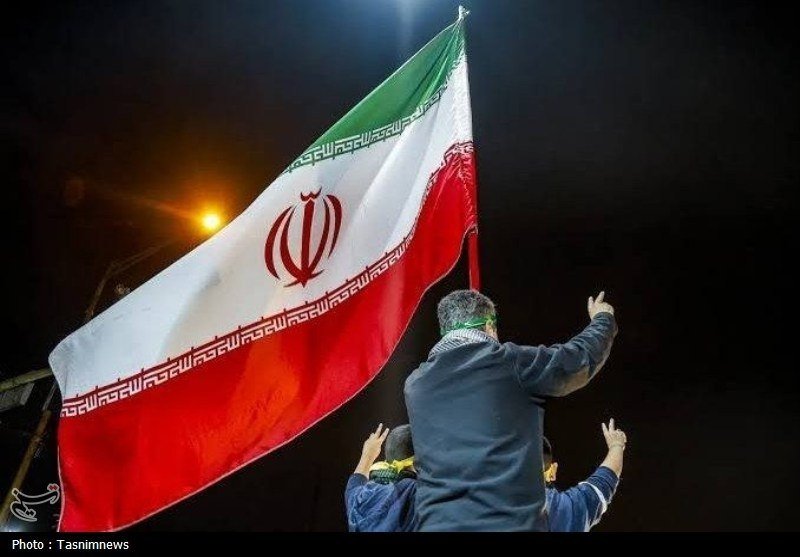
At 18:46 UTC on 9 June 2026, Iran's government claimed that a drone attack on Kuwait International Airport earlier in the day was a false-flag operation staged by the United States military. The accusation was published via the BRICS News wire on Telegram, citing Tehran directly, and stood in open contradiction to the joint US-Kuwaiti account that Iran itself had launched the strike. Less than forty minutes earlier, at 18:08 UTC, the same channel had relayed a New York Times report that Washington expects Iran to accept a fifteen-year halt to uranium enrichment as the centrepiece of a wider deal. A separate market signal, posted at 17:26 UTC via a Polymarket account, sharpened the gap: US officials believe a fifteen-year pause is achievable, while Iran has so far offered only five.
The two stories, taken together, are the negotiation. The drone accusation and the enrichment offer are not parallel news items; they are pressures applied on the same timeline by a state that has learned, over four decades of sanctions diplomacy, that kinetic incidents and arms-control offers are best released into the same news cycle.
The strike and the counter-narrative
The Kuwait International Airport incident, as reported through the BRICS News wire on 9 June, was initially attributed by US and Kuwaiti officials to Iranian-launched drones. Iran's counter-claim — that the attack was a US-orchestrated false flag — is the kind of move that costs nothing if ignored and gains leverage if amplified. Tehran benefits twice over: domestically, the framing of an external aggressor props up the security state; externally, it introduces a competing attribution that complicates any coalition response. Western wire reporting will, predictably, treat the false-flag framing with the dismissal it deserves factually while under-weighting the signal it sends about Iran's negotiating posture. Both readings can be true at once.
The fifteen-year gap
The New York Times report relayed at 18:08 UTC is the more substantive item. US officials, per the wire, expect Iran to accept a fifteen-year moratorium on uranium enrichment. The Polymarket-sourced market colour at 17:26 UTC makes the gulf explicit: Iran has reportedly tabled a five-year suspension. The arithmetic matters. A fifteen-year freeze, monitored by the IAEA, would carry the Iranian programme past the political shelf-life of at least two US administrations and the entire remaining term of the current Iranian government. A five-year window, by contrast, is a pause rather than a settlement — a face-saving interval after which the centrifuges can be restarted under whatever diplomatic weather prevails in 2031.
What the dual track reveals
The pattern is familiar from the JCPOA era and its collapse. Iran's leadership has repeatedly used crisis — assassinations, tanker seizures, proxy escalations — as bargaining fuel rather than as a substitute for bargaining. A drone strike on a Gulf state's airport, if Iranian-attributed, is a signal that Tehran can reach sovereign infrastructure of US allies at will; if US-attributed, the same incident is a signal that Washington is willing to escalate. Either way, the enrichment track moves because the security track moves. To read the two stories separately is to miss the architecture.
The structural reality is that Iran holds a stronger bargaining position in 2026 than it did at the height of the "maximum pressure" campaign. Oil revenues have recovered, the BRICS clearing arrangements now provide off-dollar rails for a meaningful share of Iranian exports, and the regional deterrent network — built over years of proxy investment — remains intact. Washington's expectation of a fifteen-year freeze is therefore a wish dressed as an assessment, not a forecast grounded in Iranian behaviour to date.
Stakes and the next ten days
If a deal lands, the winners are clear: oil markets receive a credible supply signal, Gulf states gain a measurable de-escalation, and the IAEA retains inspection access. If it collapses, the losers are equally legible: the Kuwaiti civilian population remains a potential target in a duel between two militaries that both maintain a presence in the Gulf, Iranian currency holders absorb another round of rial pressure, and the precedent of a public false-flag accusation from Tehran lowers the threshold for the next attribution fight. The Polymarket position, taken at face value, prices the fifteen-year outcome as the less likely of the two — a useful corrective to the bullishness in the official-channel reporting.
What remains genuinely uncertain is whether the Kuwait strike was a unilateral Iranian action, a proxy action Tehran is prepared to disown, or, as Iran claims, something else entirely. The sources available to Monexus on 9 June do not resolve that question, and the editor of any desk that claims to know is selling certainty they have not earned. What can be said with confidence is that the next substantive movement on the enrichment file will arrive inside the same news cycle as the next kinetic event. Treat the two as one story.
Desk note: Monexus read the Kuwait strike and the enrichment-track reporting as a single bargaining event, in line with the Iran-file framing used since the JCPOA's collapse — and declined the convention of treating Iranian attribution claims as decoration rather than data.
Wire provenance
This editorial synthesis draws on the following public wire/social posts:
- https://t.me/s/bricsnews
- https://t.me/s/bricsnews
Follow the event.
These dated source records provide context. They do not retrospectively verify this archive article.
Separate what the nuclear watchdog reported from what it could not determine after the June 2025 strikes.