Israel pounds Tyre as Iran warns of resumed strikes: a southern Lebanon offensive enters a new, more dangerous phase
Israeli warplanes struck the historic southern Lebanese city of Tyre on 9 June 2026 after ordering residents to evacuate, drawing an Iranian warning that any continued offensive will be met with resumed attacks on Israel.
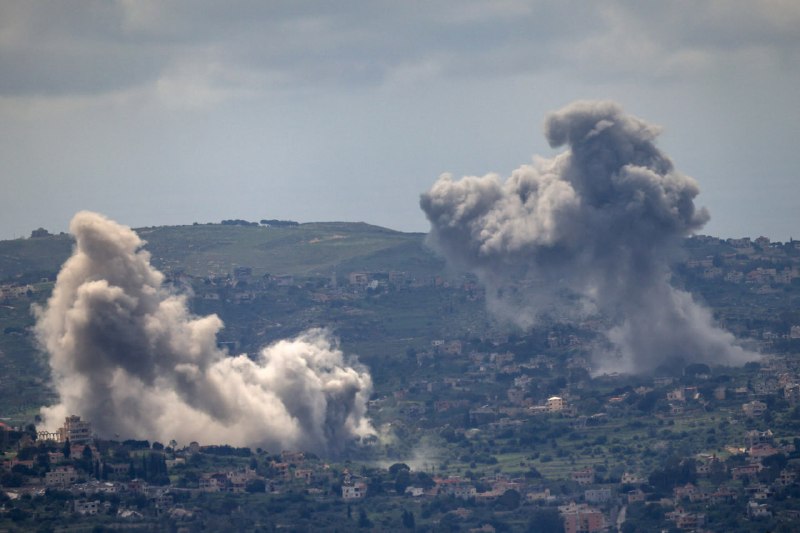
At roughly 11:40 UTC on 9 June 2026, Reuters reported that Israel had launched deadly strikes on the southern Lebanese city of Tyre, hours after the Israeli military ordered all residents of the city to leave. The blasts marked the most dramatic escalation in the southern Lebanon campaign since the war reignited, and they came one day after Tehran publicly warned that any continuation of the Israeli offensive would be met with resumed Iranian strikes on Israel. By early afternoon, the death toll in Tyre was already being described as "deadly" by wire correspondents on the ground, and the diplomatic choreography between Jerusalem, Beirut and Tehran had shifted into a recognisably more dangerous register.
The pattern is not new, but the scale is. Israeli airstrikes on Tyre — a city of perhaps 200,000 people and one of the oldest continuously inhabited places on the Mediterranean coast — have become the single most legible signal of how far north the air campaign is willing to reach. The 9 June order to evacuate the entire city is, in effect, a declaration that the ground operation against Hezbollah's southern flank is being widened into something closer to a siege. Tehran's response, delivered through Foreign Ministry statements and amplified by Hezbollah-aligned media, is the predictable counterweight: an explicit promise of resumed fire on Israel if the campaign continues. What was, until this week, a grinding, localised fight in the border villages has now pulled in two regional capitals and a historic UNESCO-listed city in a single news cycle.
What happened on the ground in Tyre
Reporting from multiple outlets converged on the same sequence. Early on 9 June 2026, the Israeli military issued an evacuation order covering all of Tyre, telling residents to leave the city. Within hours, Al Jazeera's breaking news feed and a Deutsche Wette bulletin both confirmed that Israeli airstrikes had hit Tyre despite a public warning from Iran the previous day. Reuters, in a wire carried at 11:40 UTC, described the strikes as "deadly," a word that wire services use with care and that signals civilian casualties have been confirmed by reporters on the ground. Press footage distributed through social channels showed columns of smoke over the southern suburbs and convoys of civilians moving north on the coastal highway toward Sidon and Beirut — the same corridors used in the 2024 displacement.
The Reuters dispatch, the Al Jazeera alert, and the Deutsche Welle bulletin together make one thing plain: the evacuation order and the strikes were not separated by the customary interval that Israel has used in previous campaigns, when warnings of hours or days preceded bombing of specific neighbourhoods. The compressed timeline — order, then bombing, in the same morning — is itself a policy choice, and it tells readers that the Israeli command believes it can no longer afford the latency that shaped the 2024 phase of the war.
The Iranian warning, and the Hezbollah read-out
Tehran's threat to resume strikes on Israel if the Lebanon offensive continues was not made through back channels. It was delivered openly, in a warning issued on 8 June 2026, the day before the Tyre strikes, and it was framed as a deterrent — an attempt to price the Israeli campaign above whatever its authors are willing to pay. The day after the warning, a Hezbollah-aligned channel on Telegram, citing Hezbollah's own political bureau, characterised Iran's posture as a "commitment to defending the Lebanese people" and praised the Iranian leadership for "backing Lebanon," while dismissing accusations against Iran as harmful to the regional cause. That statement, distributed via the PressTV-affiliated feed, is the public face of an Iranian-Hezbollah coordination that has, since the autumn of 2024, been conducted almost entirely through declaratory language rather than through visible joint operations.
The read-out matters because it is the most explicit Hezbollah articulation in months of a renewed coupling with Tehran's strategic deterrent. It also illustrates the structural problem facing analysts: the same event — Iranian warnings and Israeli escalation — is being narrated in two completely different registers by Western wire correspondents (deadly strikes, forced evacuation, humanitarian crisis in the making) and by Hezbollah-aligned channels (steadfastness, regional commitment, defending the Lebanese people). Both descriptions are operating on the same facts. They are reading those facts in opposite directions.
The southern Lebanon theatre, in plain prose
What is being built in southern Lebanon is recognisable from earlier rounds of this conflict, but with sharper edges. The Israeli military has, across roughly twenty months of renewed fighting, incrementally pushed its operations north of the Litani River, the line that the 2006 UN Security Council resolution identified as the relevant boundary for armed presence in the area. Tyre sits well north of that line. Its inclusion in the evacuation order is, on a map, the most consequential expansion of the declared combat zone since the war resumed. The infrastructure that has been hit — civilian residential neighbourhoods, the coastal road, the historic core — suggests the operation is not narrowly targeted at launch sites or weapons depots but is operating on a much wider definition of legitimate military objective.
Two structural features of this phase are worth naming in plain language. First, the war is being fought through displacement as much as through fire. The order to evacuate an entire city is, in itself, a weapon: it tears up the social and economic fabric of the area without the international legal exposure that follows a high-casualty strike on a populated centre. The displaced population becomes a political fact that outlasts the military operation. Second, the deterrent exchange between Jerusalem and Tehran has, for the moment, collapsed into a posture in which each side is openly stating the conditions under which it will strike the other's territory. That is the kind of rhetoric that, in previous rounds, has preceded a direct exchange — and the diplomatic back-channels that might have moderated it are, by all visible signs, largely quiet.
What the two narratives agree on, and what they do not
There is, despite the tonal gulf between Western wire coverage and Hezbollah-aligned reporting, a small but important area of agreement. Both sides acknowledge that the Israeli campaign is now reaching historic Lebanese cities north of the traditional border zone. Both sides acknowledge that Iran has publicly tied the question of resumed strikes on Israel to the continuation of that campaign. Both sides acknowledge that civilians in Tyre and along the coastal corridor are bearing the immediate cost. The disagreement is over the meaning of those facts.
The Western wire framing treats the strikes as a response to continued Hezbollah presence and rocket capability in the south, and frames the Iranian warning as an attempt to deter an operation that Israel regards as legitimate self-defence against a non-state actor embedded in civilian areas. The Hezbollah framing treats the same strikes as an unprovoked assault on a historic Lebanese city, frames the Iranian warning as a legitimate defence of a sovereign neighbour, and frames the overall trajectory as a regional aggression coordinated with Western acquiescence. Neither frame is internally incoherent. Both are incomplete. The hard analytical work lies in resisting the gravitational pull of either one and reading the facts in the order they actually happened: an evacuation order was issued, the order was not universally observed in time, strikes followed, casualties resulted, and an Iranian threat was reiterated.
Stakes, on a clock measured in days, not months
If the Israeli campaign continues at the present tempo and Iran follows through on its stated warning, the next inflection point is not a diplomatic communiqué but a flight time. The most direct test will come within days: either Iran reopens a direct strike cycle against Israel, with the corresponding Israeli response, or it does not, and the deterrent exchange reverts to a slower, more manageable rhythm. Either outcome is consequential. A renewed direct exchange would draw in the US carrier presence in the Eastern Mediterranean in a way that the war has, so far, managed to avoid at the level of direct state-on-state fire. A reversion to the slower rhythm would confirm, again, that Iran's declaratory posture is wider than its operational one — a finding that has held in every previous round of this conflict and that Israeli planners are plainly betting against this time.
The human stakes are concrete and on a much shorter clock than the strategic ones. Tyre's population, the surrounding villages, and the displaced who are already moving north on the coastal road are the population that absorbs whatever the next seventy-two hours bring. The wire coverage has so far used the word "deadly" without attaching a specific number, and the discrepancy between Reuters' restrained language and the more emphatic framing on Hezbollah-aligned channels is itself a tell: the full casualty figure is not yet confirmed by independent reporting. The historical pattern, however, is that the cost of an evacuation order issued in the morning and strikes in the afternoon is paid in the evening's body count, and the diplomatic fallout is read in the following week's read-outs from Washington, Tehran, Beirut, and the UN compound in New York.
What remains uncertain
The open questions, on the evidence currently in hand, are several. The Reuters wire and the Al Jazeera alert confirm the strikes and the evacuation order; they do not yet specify the precise casualty count or the specific military infrastructure hit. The Iranian warning, reported in summary form, has not been reproduced in full text from a primary Iranian government source in the items available; the verbatim wording matters because it shapes whether the warning is best read as a deterrent, a conditional threat, or a public posture for a domestic audience. The Hezbollah statement distributed through PressTV is a political read-out, not a confirmed operational update, and Hezbollah's actual force disposition in the Tyre pocket — whether fighters are holding in place, withdrawing north, or dispersing into the civilian population — is not visible in the open reporting. Readers should treat all casualty figures and operational claims as preliminary until corroborated by independent wire correspondents on the ground, and should treat the diplomatic choreography as a posture contest in which the gap between declared intent and actual movement is, historically, the variable that determines whether the next seventy-two hours are a crisis or a catastrophe.
This publication frames the escalation through the verifiable sequence of evacuation order, strikes, and Iranian warning reported by wire services on 9 June 2026, and reads the competing narratives — Western wire framing and Hezbollah-aligned framing — as competing interpretations of the same factual record rather than as descriptions of different events.
Wire provenance
This editorial synthesis draws on the following public wire/social posts:
- http://reut.rs/4ehMhjr
- https://t.me/presstv/
- https://t.me/Reuters/
- https://t.me/AJABreaking/
- https://t.me/dwnews/
- https://en.wikipedia.org/wiki/Tyre,_Lebanon
Follow the event.
These dated source records provide context. They do not retrospectively verify this archive article.
Separate what the nuclear watchdog reported from what it could not determine after the June 2025 strikes.