Israeli strikes hit Tyre and Nabatieh as southern Lebanon toll mounts
Lebanon's Civil Defense says eight people were killed in strikes on Tyre's Masaken al-Shaabiya district, as Israeli raids wound two first responders near Sharqiya in Nabatieh — the latest in a weeks-long pattern of escalation across southern Lebanon.
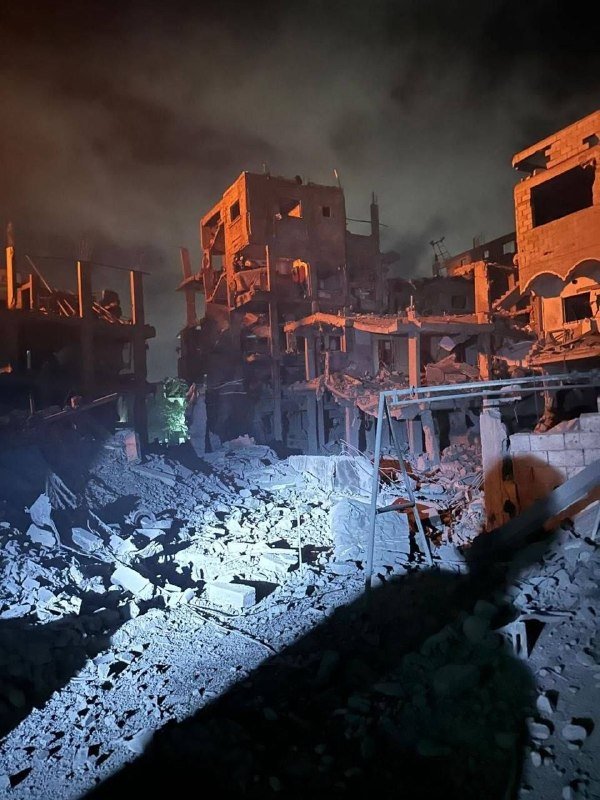
Lebanon's Civil Defense said on 9 June 2026 that eight people had been killed in Israeli airstrikes that struck the Masaken al-Shaabiya area of the southern city of Tyre, according to a wire carried by The Cradle Media at 08:35 UTC. A separate Lebanese National News Agency report, distributed by al-Alam at 08:38 UTC, said two members of the Civil Defense were wounded in two Israeli raids on the town of Sharqiya, south of Lebanon, in the vicinity of the al-Husseini Club in Nabatieh District. The two dispatches, posted within minutes of each other, point to a single morning of intensified air activity along the Tyre–Nabatieh axis.
What is unfolding in southern Lebanon is the operational surface of a much longer campaign: a months-long Israeli air campaign against what the Israeli military describes as Hezbollah infrastructure and weapons stores, layered on top of a residual presence the Iran-aligned movement has spent two decades building in the districts south of the Litani. Civilian harm accumulates in step with the air tempo, and the early-June episode shows the pattern that has hardened since the November 2024 ceasefire took effect: a stream of daily strikes punctuated by sharper days in which the casualty count jumps.
The Tyre strike
The Civil Defense's Tyre statement, relayed by The Cradle Media, names the Masaken al-Shaabiya neighbourhood. Masaken al-Shaabiya sits on the southwestern edge of Tyre, the Mediterranean port that has been one of the most heavily struck cities in southern Lebanon since the campaign broadened in late 2023. Eight fatalities in a single morning is a heavy toll by the reporting of 2026, even in a theatre where daily strikes have become routine. The Cradle's English wire does not specify whether the dead were combatants, displaced families, or residents, and the outlet's editorial line is sympathetic to the so-called Axis of Resistance; the casualty count itself, however, originates with Lebanon's Civil Defense, an institution that operates as a first-responder body under the country's Interior Ministry.
Israeli military spokespeople have not yet, as of the time of writing, offered a detailed explanation of the Tyre strike, and the specific target the air force was aiming at is not stated in the publicly available wire. The neighbourhood is not, on the surface, a frontline forward position; that is part of what gives the raid its weight.
The Sharqiya raids
The Nabatieh-area raids produced a different kind of headline: wounded first responders. According to the National News Agency, two Israeli raids hit the vicinity of the al-Husseini Club in Sharqiya, in the Nabatieh district, and two Civil Defense members were injured. The al-Husseini Club is a long-standing community institution in the southern town; the targeting of buildings adjacent to or associated with such institutions tends to be the kind of incident that international human rights monitors flag.
Israel has in past statements said that strikes near civilian infrastructure in southern Lebanon are aimed at embedded weapons caches, command rooms, or transport links used by Hezbollah, and that the air force takes precautionary steps. Whether that framing applies to the Sharqiya strike, and whether the Civil Defense personnel were the direct target or collateral, is something the morning's wires do not settle.
What the reporting does — and does not — establish
Three things can be said cleanly. The first is the deaths: eight people, named by Lebanon's Civil Defense in Tyre. The second is the wounded: two Civil Defense members, named in the NNA wire from Sharqiya. The third is geography: both events sit inside the historically Hezbollah-organised south, and both are inside the area covered by the November 2024 ceasefire understanding between Israel and the group.
Three things the morning's wires do not establish. They do not identify the specific military target of the Tyre strike, nor do they confirm the status of those killed. They do not specify whether the Sharqiya raids involved precision-guided munitions or unguided ordnance, which matters for civilian harm assessments. And they do not record an Israeli military statement for the Tyre event on the same day — only a longer running commentary that, in past weeks, has described a campaign of attrition against an opponent the Israeli government says has not yet disarmed north of the Litani.
The structural frame
The pattern on display is a familiar one in the post-2024 southern Lebanon theatre. Israel retains the right, under its reading of the ceasefire, to strike targets it deems Hezbollah-related. Hezbollah retains the political will, even as its military capacity has been degraded, to re-establish presence in villages of the south. The ceasefire is therefore not a frozen line so much as a contested operating space in which Israeli airpower enforces a permeable boundary. The Litani demarcation, drawn up in 2006 and re-anchored in 2024, sits at the centre of that contest: each day, strikes further north of the line, and the absence of a robust international monitoring force, raise the price of a return to full-scale war without quite triggering it.
The structural question is not whether Israel has the right to strike Hezbollah infrastructure — Israeli security concerns in the north are real, the hostage and rocket threats of recent years were real, and the IDF's published campaign aims treat those threats as first-order. The question is the model: a low-intensity, high-cadence air campaign, in which civilian harm accumulates faster than political resolution, and in which each side holds the other responsible for the breakdown. That model has now run, in various forms, for more than a year.
What is at stake
For Lebanon, the price is being paid in the south. Tyre and Nabatieh are not Beirut; they are the districts least covered by the international press and the most exposed to repeated air activity. Civil Defense, the country's only widely distributed first-response body, is also visibly under fire in this morning's report — a fact that will reverberate through every first-responder crew in the south, and through donor conversations about equipment and protective gear. For Israel, the price is the legitimacy cost of striking, again, near community institutions in a country that has been, at least officially, in a ceasefire period. For Hezbollah, the price is the slow bleed of what remains of the south's confidence that the movement can deliver on its claim to be a defender.
The most likely near-term outcome, in the absence of a diplomatic intervention, is continuation: more daily strikes, more wounded and killed in civilian first-responder and residential categories, and a series of days in which eight deaths in Tyre and two injured in Sharqiya are a bad morning, not a turning point. That is, in itself, the frame Monexus thinks readers should hold onto. A 2026 morning in southern Lebanon now resembles a 2025 morning, and a 2024 morning, in ways that should concern policymakers on all sides who say they want the escalation to end.
The reporting here is necessarily partial — the wires we have read are regional and Lebanese, and Israeli confirmation or denial of specific targeting for the Tyre strike has not, in the morning's filings, been on the record. The picture they paint, even with that gap, is plain: the southern front is not closed, and the human cost of leaving it open is not being absorbed by combatants alone.
Desk note: Monexus led with the Lebanese Civil Defense's casualty statement as the primary, with the National News Agency's Sharqiya filing as corroboration of a wider morning of air activity; the Israeli side's framing of the raids was not, in the wires available at the time of writing, in the public record, and we have not paraphrased it in the piece. Where the wire sources are sympathetic to the regional political axis Hezbollah belongs to, the specific casualty figures were left to the Civil Defense attribution rather than the editorial framing.
Wire provenance
This editorial synthesis draws on the following public wire/social posts:
- https://t.me/thecradlemedia
- https://t.me/alalamarabic
- https://t.me/alalamarabic
- https://t.me/thecradlemedia