OpenAI's quiet IPO and the rush to put frontier AI on the public-market balance sheet
Within ten days both OpenAI and Anthropic filed confidentially to go public, while a third AI lab, Perplexity, signalled it intends to follow in 2028 — a sequencing that recasts how the frontier-model race is being funded, priced and governed.
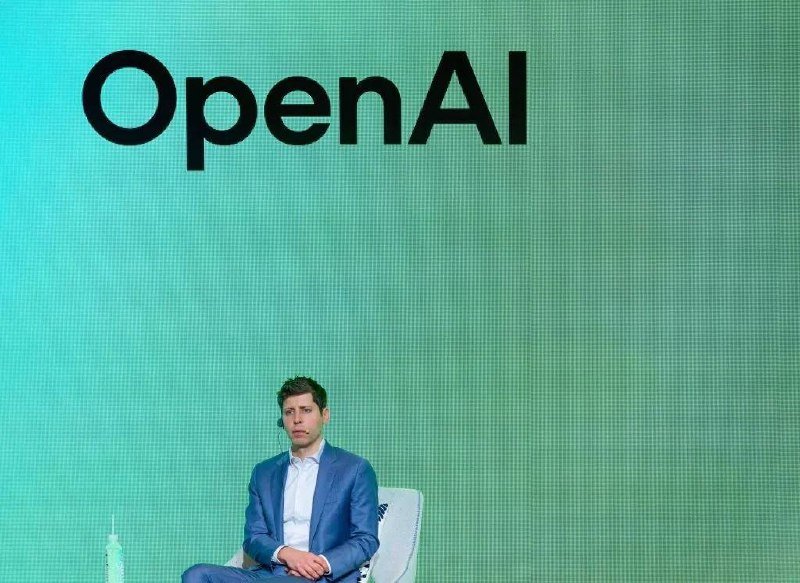
On 8 June 2026, OpenAI told the world what its backers had spent two years privately funding. The ChatGPT maker had confidentially filed paperwork for a US initial public offering, the company confirmed in a blog post on Monday, joining its chief rival Anthropic in a queue at the Securities and Exchange Commission. The Reuters wire moved the confirmation at 01:48 UTC on 9 June. BBC News framed it, in a 22:45 UTC story the same evening, as a move that "intensifies" an investment race with Anthropic, which had filed its own confidential IPO paperwork roughly a week earlier. TechCrunch, reporting at 21:29 UTC on 8 June, called the filing the clearest signal yet that the two largest US frontier-model labs are now competing for the same pool of public capital.
The subtext is larger than the filing. Two companies whose private valuations already stretch into the hundreds of billions of dollars are voluntarily subjecting themselves to quarterly disclosure, audit and shareholder litigation — at the precise moment US policy is beginning to ask whether the same companies should also accept a new layer of state coordination over how fast they can build the systems they sell.
Two filings, ten days, one capital pool
The sequencing is the story. Anthropic filed first, sometime in late May; OpenAI followed, and confirmed it on 8 June. France 24, summarising the news in a 01:18 UTC piece on 9 June, framed the two filings as a single phenomenon — a race to the public markets in which the historical advantage of being first-mover has been compressed to a single week. Reuters' short item on the OpenAI confirmation was even blunter: investors "seek exposure" to AI, and the two largest privately held US labs are now the most plausible vehicles for that exposure.
There is a third name to watch. On 9 June at 02:05 UTC, a Polymarket news account posted that Perplexity, the AI search company, reportedly plans to go public in 2028 "regardless of what happens" to Anthropic or OpenAI. The framing matters. Perplexity is positioning itself as a third path to public ownership, asserting a timeline that runs through whatever the two larger labs go through, and refusing to be acquired or shelved as a contingency.
The combined effect is that the frontier-AI sector is no longer privately held in any meaningful sense. The largest training runs, the largest foundation models, the largest revenue lines — all of them are about to live on public-market balance sheets, with all the disclosure, dilution and governance scrutiny that implies. The transition from private-paper wealth to public-paper wealth is the most consequential capital-markets event in technology since the 2012 Facebook listing, but it is happening in a more crowded room.
The coordination question that won't go away
On 9 June at 01:06 UTC, the same Polymarket feed that has been tracking the IPO race posted a separate just-in: OpenAI says the world may need a way to coordinate "slowing frontier development when needed." Read in isolation, that is a single sentence. Read alongside a confidential IPO filing from the same week, it is something stranger. A company preparing to be valued by public-market analysts is simultaneously arguing, on the record, for an external mechanism that could throttle the very capabilities its investors are paying it to scale.
This is not a new tension. AI labs have, for two years, alternated between warnings about their own products and product launches. The novelty in 2026 is that the warning is now arriving in the same news cycle as the fundraising event that will price the warning into a stock. Investors who buy into the 2026–2028 IPO class are, in effect, buying a bet that the warning can coexist with the growth — or, more pointedly, that any external coordination mechanism will be slow enough, narrow enough and negotiated carefully enough not to disrupt the revenue trajectory.
That is a plausible read. It is also a generous one. An alternate explanation is that the coordination language is itself part of the marketing — a way to pre-empt regulation by appearing to invite it, while keeping the regulatory floor high enough to protect the moat. Coverage that defers to the language of official spokespeople will tend to flatten this ambiguity. It is worth holding the two readings at once.
AGI as a corporate slogan, not a calendar
The same 9 June Polymarket feed carried the third just-in of the morning: OpenAI says it wants to give "everyone on Earth a personal AGI." The statement, stripped of the usual safety caveats, is a corporate mission restated as a market claim. AGI — the term the industry has spent a decade refusing to define — is being used, in 2026, as a deliverable.
There is a counter-narrative worth taking seriously. Serious AI researchers, including some inside the labs themselves, have argued for years that "AGI" is a slogan, not a specification, and that promising it to a public market — let alone to "everyone on Earth" — is a category error. The position is that what frontier labs actually build are increasingly capable, increasingly general-purpose tools, but that the threshold language is investor relations, not engineering. The 2026 IPO class will, for the first time, be forced to translate that slogan into quarterly revenue and unit economics, and the translation may be ugly.
There is a structural frame here that has nothing to do with AI and everything to do with capital cycles. The largest US technology companies of the 1990s went public with mission statements that read like manifestos. The markets tolerated the rhetoric as long as the growth curve was steep enough. The moment the growth curve bent, the manifestos were re-read as liabilities. The frontier-AI labs are running the same play, with the additional wrinkle that their manifestos are now being aired in the same week as their S-1 drafts.
What the next 18 months will actually show
Three things are visible from the filings and the surrounding reporting, and a fourth is not.
First, the two largest US frontier labs will, by early 2027, be reporting quarterly results. The disclosure regime will pull forward information that has, until now, been guarded by private-company opacity — revenue mix, customer concentration, the cost of training runs, the terms of the cloud-computing contracts that actually make the inference economics work. That disclosure will not be kind to the AGI-as-deliverable framing.
Second, the capital structure of the AI sector is going to bifurcate. The IPO class — OpenAI, Anthropic, and over the horizon, Perplexity in 2028 — will be the firms large enough to absorb the regulatory and disclosure overhead. Smaller labs, and the open-source tier, will face a more hostile funding environment, because the public-market narrative will pull the centre of gravity toward the two or three largest players.
Third, the policy conversation will move from the White House and the AI Safety Institute into the SEC's disclosure regime. If frontier AI is to be coordinated, slowed or licensed, the most efficient American venue for that conversation is the same 10-K that the IPO class is about to start filing. That is not a desirable outcome for the labs, but it is the path of least resistance for the regulators.
What is not visible is the demand side. None of the filings disclose who is actually paying for frontier inference at scale, or on what contract length. The Polymarket-flavoured framing of the news cycle — IPO, AGI, slowdown — is a supply-side story. The consumer and enterprise demand that will determine whether the public-market bet pays off is still, in 2026, mostly inferred. The filings will change that, which is the most important thing about them.
This publication framed the IPO filings as a capital-markets event, not a product launch. The frontier-AI story is currently being told in mission-statement language; the more useful tell is in the S-1 drafts and the demand curve that has to support them.
Wire provenance
This editorial synthesis draws on the following public wire/social posts:
- https://x.com/polymarket/status/2064100586187079680
- https://x.com/polymarket/status/2064098764123456789
- https://x.com/polymarket/status/2064096543210987654