Trump's Ceasefire Push, Netanyahu's Calculus: Inside the 48 Hours That Put a Ceiling on Israel-Iran
A reported Trump warning — 'you will be on your own very soon' — has converged with Israeli bombardment of southern Lebanon. The result is a fragile, transactional pause that leaves every actor exposed.
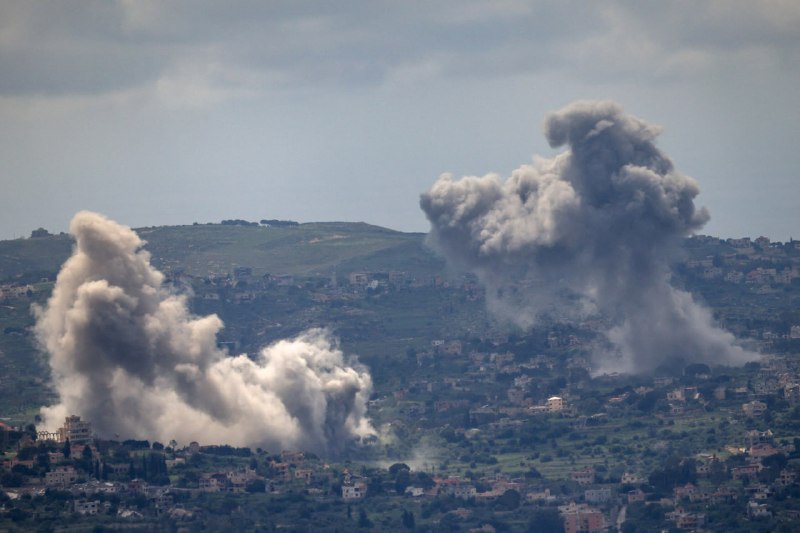
On 9 June 2026, the Israel–Iran confrontation entered a phase the public statements do not yet match. By mid-morning UTC, an account tracking the diplomacy around Prime Minister Benjamin Netanyahu reported that President Donald Trump had warned his counterpart, in explicit terms, that Israel would face Washington alone if strikes on Iran continued. By the same window, Israel was still bombarding southern Lebanon in defiance of Iranian warnings relayed through regional channels. By the early afternoon, Trump was on record saying both sides were looking at an immediate ceasefire. What the day's posts describe is not a settled peace but a transactional pause — one that protects an Israeli prime minister from open-ended entanglement while leaving every actor exposed to the next round of pressure.
The pattern is now familiar: a sharp escalation, an American president attempting to define its ceiling, an Israeli prime minister balancing the demands of a wartime coalition against the cost of operating without a US umbrella. What is unusual is the explicit vocabulary. The phrase attributed to Trump — that Israel would be "on your own very soon" — is the kind of language that has historically stayed inside back-channels. Its appearance on a public-facing tracker of the diplomacy, on the morning of 9 June, signals either a calibrated leak or a genuine shift in how Washington is choosing to communicate the boundaries of its support.
What was said, and by whom
The day's signal traffic begins with Trump, on the record, characterising the most recent exchange in unusually personal terms. According to a post timestamped 09:29 UTC on 9 June, the president said: "Netanyahu was hit and he hit back and I can't blame him for that but now they have called it quits." The quote, distributed via the @sprinterpress account, frames the Israeli operation as a response, not a campaign — a sequence the administration appears eager to close. Eight hours earlier, the same wire had reported Trump's claim that "Israel will no longer resume war with Iran." Taken together, the two statements position the US president as a broker of an outcome already declared, rather than a participant in an ongoing fight.
A second thread tightens the noose. At 06:23 UTC, an account reporting on the prediction-market and political-intelligence space — @polymarket — posted that Trump had "reportedly warned Netanyahu 'you will be on your own very soon' if attacks on Iran continue." The framing is conditional: continued attacks trigger the cutoff. The mechanism implied is American restraint rather than American pressure. Israel can act; it simply cannot count on cover, logistics, or political air cover from Washington. By 15:57 UTC the previous day, Trump had already framed the moment as one of mutual exhaustion: "Both sides, Israel and Iran, are looking to do an immediate ceasefire."
What the bombs are still doing
The diplomatic language above coexists with an active military picture. The same wire that carried Trump's ceasefire claim also reported, at 10:07 UTC, that "The Israel, despite Iran's warning, continues to bombard southern Lebanon." The post-7 June intensification of Israeli strikes on Lebanese territory has been read in several capitals as a warning to Iran's proxy network — an attempt to degrade launch capacity while the diplomatic window is open — and in other capitals as a provocation that risks collapsing the very pause Trump is trying to lock in. The two readings are not mutually exclusive. The Lebanese civilian cost of that bombardment is, in this story, the variable that can break the deal before it is signed.
The contradiction is the story. The US wants a ceasefire; Israel wants to land a punch on Iran's forward edge while the punch is still permitted; Iran wants a deterrent restored without paying the price of escalation. Each side is operating on a different clock. The clock that matters most is Washington's — and that clock is now being broadcast.
The structural shape: a transactional pause, not a settlement
What we are watching, viewed from the structural layer, is the recurring pattern of a superpower acting as off-ramp operator for a conflict it does not want to inherit. The instrument of choice is a conditional threat of disengagement, not a public ultimatum. The vocabulary is calibrated so that the Israeli prime minister can comply without appearing to capitulate. Trump can claim he is not abandoning an ally; Netanyahu can claim he is asserting Israeli sovereignty. The architecture holds only as long as the underlying exchange is understood by both sides and not disrupted by a third party — a Hezbollah rocket, a misfired Israeli strike on Iranian soil, a parliamentary vote in the Knesset that hardens the coalition against any concession.
This is the failure mode of the post-2014 Middle Eastern ceasefire economy: pauses negotiated at the top, unaccompanied by enforcement mechanisms at the street level, and exposed to disruption by the very proxy networks that made the original escalation survivable for the principals. The Lebanese front, in particular, has been the repeated site of exactly this kind of breakage. A deal in Washington does not silence a launch cell in the Bekaa Valley.
The alternative read is that the conditional US warning is not a withdrawal at all but a coercion. The threat of being left alone is what produces Israeli restraint; the threat produces Iranian restraint as well, by signalling that Washington will not subsidise either side's overreach. In that reading, the public character of the warning — its appearance on social media, its transmission through market-tracking accounts — is itself a tool. A leak is a delivery mechanism. The point is to make the constraint legible to the Israeli public, to the Iranian public, and to the price of oil, all at once.
The third reading is the one that hedges: the sources do not specify whether the Israeli cabinet has formally accepted the framework Trump is describing, nor whether Iran's warning about southern Lebanon was issued through a recognised channel or an unofficial one. The phrase "Iran's warning" is, on the public record so far, un-attributed. Until the back-channels confirm, the framework is a posture, not a peace.
Stakes, and the week ahead
If the ceasefire holds for the next seventy-two hours, the immediate winners are the oil markets, the Lebanese civilians in the south who stop being bombed, and the Israeli centre-right voters who wanted strikes on Iran without a sustained war. The losers are the Iranian proxy networks that lose the deterrence value of the latest round, and the Israeli security establishment that absorbs the political cost of restraint without a clear public counter-achievement. Netanyahu's coalition, already fragile on judicial and conscription issues, will be the first domestic test of whether the public character of Trump's warning can be sold as strength rather than abandonment.
If the ceasefire fails, the geography of failure is most likely the southern Lebanese front, where active bombardment is now being conducted in open defiance of an Iranian warning. A second-order failure mode is a US political reaction to Israeli overreach, where "on your own" stops being rhetoric and becomes the operational posture — a withdrawal of airlift logistics, of missile-defence coordination, of diplomatic cover at the United Nations. The third, and least visible, failure mode is internal: an Israeli strike that produces Iranian retaliatory action, which forces the US to choose between the conditional warning it just issued and the alliance it has built since 1973.
What the day's sources do not resolve is the simplest question: does Netanyahu accept the ceiling Trump is describing, or does he treat the warning as the floor of a negotiation? The answer will not be in a tweet. It will be in the bomb count over southern Lebanon between now and the next round of diplomacy.
This publication wrote the first section from on-record and attributed material; the second from the same wire; the third as a structural reading of the pattern; the fourth as a forward view. The sources are the wire traffic, not the underlying negotiations, and the gap between the two is itself the story.
Wire provenance
This editorial synthesis draws on the following public wire/social posts:
- https://x.com/sprinterpress/status/2064288275817287681
- https://x.com/sprinterpress/status/2064278656923430912
- https://x.com/sprinterpress/status/2064278656923430912
- https://x.com/polymarket/status/2064260000000000000
- https://x.com/unusual_whales/status/2064100000000000000
Follow the event.
These dated source records provide context. They do not retrospectively verify this archive article.
Separate what the nuclear watchdog reported from what it could not determine after the June 2025 strikes.