Live Wire
04:33ZJAHANTASNITrump says Iran agreement idea could emerge in days04:30ZBRICSNEWSUS crew rescued after helicopter went down near Strait of Hormuz04:30ZPRESSTVUS Apache Helicopter Crashes Near Strait of Hormuz04:29ZGEOPWATCHPentagon blacklists major Chinese technology firms over alleged military ties04:27ZOSINTLIVEU.S. Army AH-64E Apache Attack Helicopter Goes Down Near Strait of Hormuz04:27ZOSINTLIVEU.S. Army Apache helicopter crashes near Strait of Hormuz, both crew members rescued04:23ZJAHANTASNIGermany, France abandon joint next-generation fighter project04:22ZFARSNEWSINReport: US participated in Israeli attacks on Iran; Israeli, American accounts differ on Centcom role04:33ZJAHANTASNITrump says Iran agreement idea could emerge in days04:30ZBRICSNEWSUS crew rescued after helicopter went down near Strait of Hormuz04:30ZPRESSTVUS Apache Helicopter Crashes Near Strait of Hormuz04:29ZGEOPWATCHPentagon blacklists major Chinese technology firms over alleged military ties04:27ZOSINTLIVEU.S. Army AH-64E Apache Attack Helicopter Goes Down Near Strait of Hormuz04:27ZOSINTLIVEU.S. Army Apache helicopter crashes near Strait of Hormuz, both crew members rescued04:23ZJAHANTASNIGermany, France abandon joint next-generation fighter project04:22ZFARSNEWSINReport: US participated in Israeli attacks on Iran; Israeli, American accounts differ on Centcom role
Markets
S&P 500739.22 0.23%Nasdaq25,930 0.86%Nasdaq 10029,414 1.58%Dow508.91 0.15%Nikkei91.95 1.36%China 5034.68 0.20%Europe87.52 0.45%DAX42.14 0.07%BTC$63,266 0.79%ETH$1,684 1.47%BNB$600.83 0.74%XRP$1.17 2.10%SOL$66.92 2.00%TRX$0.3252 0.44%HYPE$61.43 1.77%DOGE$0.0859 0.95%LEO$9.43 2.42%RAIN$0.0132 0.82%QQQ$716.07 1.56%VOO$679.68 0.25%VTI$364.47 0.30%IWM$284.11 0.87%ARKK$75.88 1.87%HYG$79.54 0.14%Gold$397.27 0.26%Silver$61.58 0.02%WTI Crude$135.15 1.60%Brent$51.89 1.35%Nat Gas$11.37 2.57%Copper$38.55 1.23%EUR/USD1.1540 0.00%GBP/USD1.3363 0.00%USD/JPY159.97 0.00%USD/CNY6.7819 0.00%S&P 500739.22 0.23%Nasdaq25,930 0.86%Nasdaq 10029,414 1.58%Dow508.91 0.15%Nikkei91.95 1.36%China 5034.68 0.20%Europe87.52 0.45%DAX42.14 0.07%BTC$63,266 0.79%ETH$1,684 1.47%BNB$600.83 0.74%XRP$1.17 2.10%SOL$66.92 2.00%TRX$0.3252 0.44%HYPE$61.43 1.77%DOGE$0.0859 0.95%LEO$9.43 2.42%RAIN$0.0132 0.82%QQQ$716.07 1.56%VOO$679.68 0.25%VTI$364.47 0.30%IWM$284.11 0.87%ARKK$75.88 1.87%HYG$79.54 0.14%Gold$397.27 0.26%Silver$61.58 0.02%WTI Crude$135.15 1.60%Brent$51.89 1.35%Nat Gas$11.37 2.57%Copper$38.55 1.23%EUR/USD1.1540 0.00%GBP/USD1.3363 0.00%USD/JPY159.97 0.00%USD/CNY6.7819 0.00%
CLOSEDNYSEopens in 8h 50m
themonexus.
Vol. I · No. 160
Tuesday, 9 June 2026
04:39 UTC
  • UTC04:39
  • EDT00:39
  • GMT05:39
  • CET06:39
  • JST13:39
  • HKT12:39
← back to Saturday edition◉ LIVE ON THE WIREfollow this thread in real time
Opinion

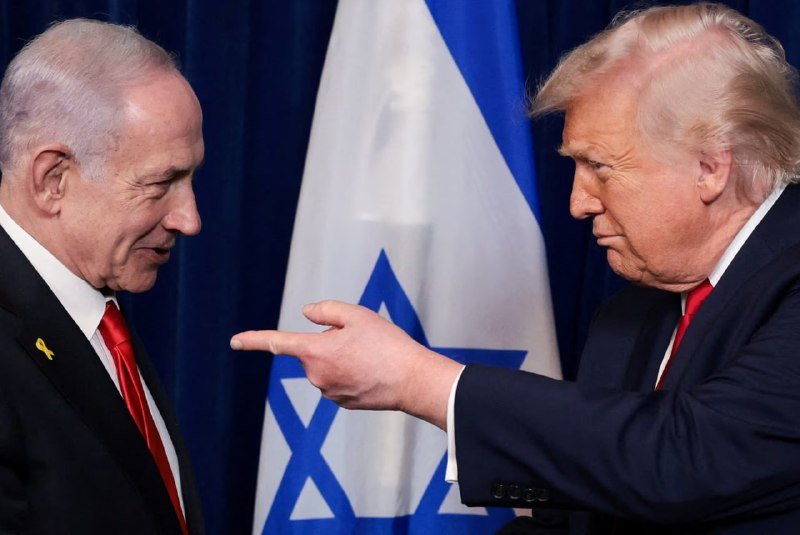
Trump's 'be careful, Bibi' warning is a US-Israel stress test, not a divorce

A public caution from the US president to an Israeli prime minister is rare, and rarer still when it concerns a live war with Iran. The message is less about rupture than about leverage.
/ Monexus News

On 9 June 2026, in the small hours of the morning UTC, the US president told the Israeli prime minister, on the record, to be careful. The words — "you better be careful, Bibi" — landed with the weight of a public dressing-down from one head of government to another, a vocabulary reserved for moments when the relationship itself is the message. According to Al Jazeera's breaking-news line, the warning is operational: further Israeli strikes on Iran risk leaving Israel isolated, with Washington stepping back. Reporting carried via The Indian Express on Telegram hours later, at 01:52 UTC, echoed the same framing.

The first reading is that a rupture is underway. A second, more useful reading is that a transactional alliance is being re-priced in public, and that the price has gone up.

What Trump actually said — and what he didn't

The US warning, as reported in the 02:41 UTC Al Jazeera bulletin, is conditional rather than absolute. The president is not threatening to abandon Israel; he is threatening to abandon the next round of Israeli strikes. That distinction matters. It preserves the strategic compact — intelligence sharing, missile defence, the underlying assumption of American backing — while reasserting presidential discretion over how, and against whom, that backing is spent.

Netanyahu, for his part, has reason to treat the caution as serious. A US president who publicly addresses him by the diminutive "Bibi" is signalling familiarity, but a US president who does so while warning of isolation is signalling something closer to a principal-agent problem: the ally is being told, in effect, that the patron reserves the right to define the mission.

The scale of the campaign is no longer abstract. The same Al Jazeera bulletin cites the Iranian Health Ministry figure of 3,637 people killed in Israeli strikes since March and 11,188 wounded. The sources do not specify the breakdown between combatants and civilians, and Iranian government casualty figures should be read with the usual caveats — but the order of magnitude, sustained across a three-month air campaign, is the political backdrop against which any ceasefire talk now happens.

The pause, and the talking shop behind it

Fighting has halted, at least on the headline. Indirect talks between the two sides are continuing. The BBC's overnight analysis, filed 23:50 UTC on 8 June, frames the lull as a stress test of Trump's grip on the file and, paradoxically, a potential strengthening of Tehran's negotiating position. Both readings can be true at once. A pause that the patron can revoke at will is not the same thing as a pause that the weaker party has earned through exhaustion.

Iran's interest in the present arrangement is straightforward. A ceasefire that freezes the aerial campaign, even provisionally, returns the conflict to the diplomatic channel — the channel in which sanctions architecture, oil revenues and nuclear-file leverage all sit. Continued Israeli strikes, by contrast, would convert the file from a negotiation into a war, with all the escalatory tail risk that implies: a wider regional mobilisation, the re-opening of the northern front with Lebanese territory, the temptation for Tehran to demonstrate the tools it has so far kept in reserve.

A hegemonic pattern in plain language

Strip out the personalities and what is on display is a familiar sequence. A dominant power backs a client whose local incentive structure pulls it toward escalation. The client's escalations impose costs — political, economic, reputational — on the patron. The patron, having absorbed those costs, recalibrates by publicly narrowing the mission and reminding the client who pays. The client, having built domestic political capital around the campaign, resists. The dance continues until the costs are high enough, or the election clock short enough, that one side concedes.

None of this requires a fancy label. It is what patron-client relationships look like when the patron has options and the client has a campaign. The novelty in 2026 is the volume. The US president is conducting the recalibration on cable news, in real time, under his own name, rather than through the usual back-channels. The audience is dual: an Israeli public that needs to know there are limits to American tolerance, and a domestic American audience that needs to know the president, not the prime minister, is running the file.

The counter-read: leverage, not rupture

A plausible counter-reading is that the warning is theatre. A US president who actually intended to leave Israel "on its own" would not say so publicly; he would simply slow deliveries, downgrade intelligence sharing and let the Israelis read the tea leaves. Public warning, on this view, is itself the act of leadership — it gives Netanyahu political cover at home to scale back without looking overruled, and it gives Trump a victory lap if the talks produce a deal.

The counter-read has weight. But it does not dissolve the underlying shift. Even as theatre, the warning sets a public reference point against which future Israeli action will be measured. The next strike, if it comes, will be read against "you better be careful, Bibi." That is a constraint, even if it is one the patron chooses to enforce loosely.

Stakes — and what remains contested

If the trajectory holds, the winners are the negotiators: Trump, who can claim a de-escalation he did not have to fight for; Tehran, which gains time and oxygen; and the oil markets, which dislike a live Israel-Iran war in the way that airlines dislike volcanic ash. The losers are the constituencies that have built political capital on continued escalation — on the Israeli right, in Iranian hardline institutions, in the diaspora commentariats of both countries. Their preference is for the war to keep producing the politics they have organised around.

What remains genuinely uncertain is whether the pause is structural or tactical. The sources reviewed here do not specify the duration of the halt, the verification mechanism, if any, or the conditions under which either side reserves the right to resume. The casualty figures, while large, carry the usual provenance caveats that attach to any ministry release in a wartime setting. The talks are described as indirect, which is the diplomatic form of contact most prone to producing communiqué without substance.

What the reporting does establish is the public shape of the relationship at this moment: a US president willing to use his own voice, in his own name, to caution an Israeli prime minister, while leaving the underlying alliance intact. That is not a divorce. It is the sound a marriage makes when one partner has decided, for the duration of this file, to do the driving.


Desk note: Monexus frames this as a stress test of a transactional alliance, not a rupture. Wire coverage has leaned on Trump's direct quote; this piece reads the quote as a public pricing mechanism for future Israeli action, with the Iranian casualty figures as the cost backdrop that makes the warning legible.

© 2026 Monexus Media · reported from the wire