Signal and Noise: Reading the U.S. Strike on Iran Without the Telegraph
Trump cancelled strikes and hailed a 'very good agreement' with Iran. Tehran denied any talks exist. The gap between those two sentences is where the next move will be made.
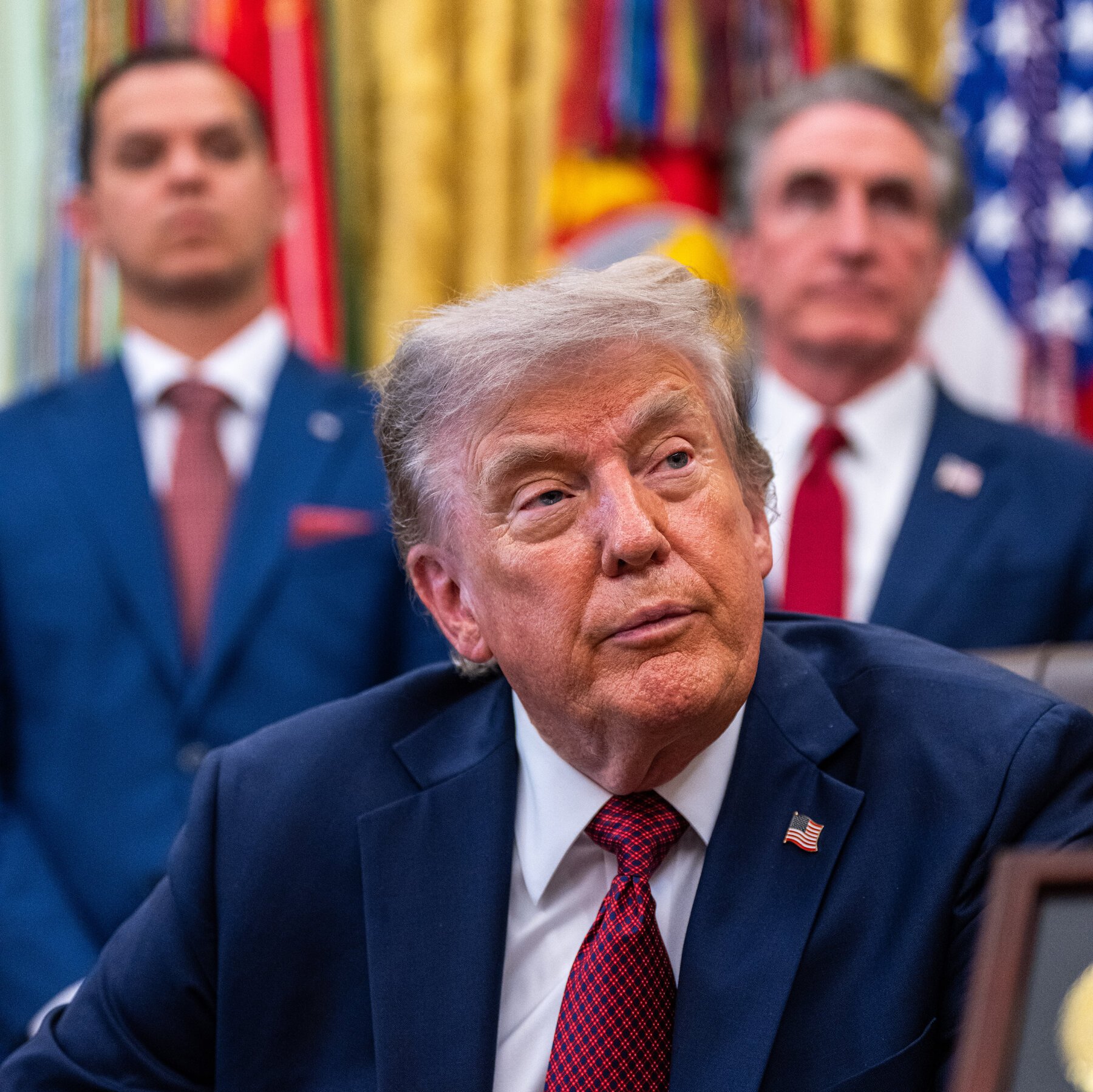
At 23:54 UTC on 11 June 2026, Iran's foreign ministry publicly dismissed reports of renewed negotiations with the Trump administration, hours after the U.S. president reversed a fresh round of strikes he had announced only that evening. Within a single news cycle, the same White House that briefed journalists on imminent escalation declared instead that a "very good agreement" was within reach. Tehran's denial landed like a flat contradiction: no communication channels, no deal, no engagement. The gap between Washington's announcement and Iran's refusal is the story.
A U.S. aircraft entered emergency procedures over the United Arab Emirates on Thursday evening, a fifth-generation F-35 reportedly transmitting a distress signal before diverting, according to posts carried by Mintpress News and Fars. Iranian air-defence systems were named by those channels as the targeting cause, a claim neither confirmed nor denied by official U.S. spokespeople. Hours later, CENTCOM told CBS News it was investigating reports that an American strike had hit a water facility in southern Iran. The commander of Iran's Khatam Al-Anbiya Central Headquarters, Major General Ali Abdollahi, framed the relationship in a single image: "the United States, on one hand, speaks of agreement and negotiation, and on the other hand, commits acts of mischief."
The deal that wasn't
President Trump's eleventh-hour cancellation of further strikes was the most consequential sentence of the night. France 24's English wire reported that the president had "cancelled strikes against Iran" and assured the public that a "very good agreement" had been reached. Reuters confirmed that Wall Street indexes jumped on the headline. Middle East Eye's live blog carried the reversal as a breaking line. Then teleSUR's English feed published the Iranian foreign ministry's flat rebuttal: no talks, no channels, nothing on the table.
The asymmetry is now the operating reality of the U.S.–Iran file. One side announces diplomacy; the other announces its absence. Both moves are themselves signals, calibrated not for the negotiating table that doesn't exist, but for the marketplaces that do. Equities bought the ceasefire headline. Crude traders, by contrast, will price the next 48 hours very differently once they read Tehran's denial.
Pressure at the chokepoint
The maritime theatre hardened in parallel. Iranian forces blocked an unnamed tanker from transiting the Strait of Hormuz late on 11 June after the vessel entered the strait area without coordination, according to Iran's Tasnim News Agency, Fars, and Mehr. The Hormozgan governorate told Tasnim that three explosions heard near Sirik were attributable to maritime activity in the strait rather than local impacts. Bloomberg-style shipping desks will recognise the pattern: harassment of commercial traffic at the world's most consequential energy chokepoint is cheap, deniable, and immediately market-moving. One tanker stopped is a signal. A second makes the pattern obvious. The next move belongs to whoever is tasked with protecting civilian shipping.
The strike that hit the water main
The CENTCOM admission, however partial, is the most analytically loaded line of the night. An investigation into reports of a U.S. strike on an Iranian water facility puts the targeting of civilian infrastructure, not a military site, into the official record. Iranian state media framed the incident as "America's war crime." Even if the strike on a water asset were unintentional, the political consequence is the same: any civilian-infrastructure strike narrows the space in which a hostile regime can claim it is acting in self-defence. It also gives Tehran a publicity frame it has spent four decades refining.
Concurrent reporting carried on Bellum Acta News, citing Iranian channels, claimed that the Shiraz Airborne Brigade base of the Iranian Regular Army (Artesh) was hit by airstrikes on Thursday evening. That claim has not been independently confirmed in the open wire. The leak-stop-leak rhythm of the past 36 hours makes independent verification a moving target.
What the markets read that Tehran didn't
The political-incentive frame, rather than the kinetic one, is what most Western commentary has missed. Equities priced a de-escalation that neither capital has signed. Iran's denial, which arrived roughly the same time as the U.S. announcement of a deal, tells traders that the headline risk premium is structurally higher than the index rally implies. If the same White House that threatened strikes at sundown cancelled them before midnight and was then publicly repudiated by the foreign ministry of the target country, then the announced "agreement" is at best a unilateral declaration and at worst a market-calibration exercise that fooled almost no one except the S&P.
The structural lesson is older than this particular episode. In coercive bargaining between powers that cannot speak directly to one another, signalling substitutes for negotiation. Trump announces, Tehran denies, CENTCOM investigates, tankers are turned around in Hormuz, an F-35 diverts to al-Udeid or al-Dhafra. Each of these is a piece placed on a board whose rules are notional. The piece the news cycle has not yet placed is the one that turns commentary into a measurable event: a sustained reduction in tanker transit through Hormuz, an Israeli retaliatory strike inside Iran, or a confirmed Iranian counter-strike on a regional energy asset. Until one of those lands, the order is to watch the silence between the announcements, because that is where the next move will be telegraphed.
Follow the event.
These dated source records provide context. They do not retrospectively verify this archive article.
Separate what the nuclear watchdog reported from what it could not determine after the June 2025 strikes.