Xi's Pyongyang return: China tightens its grip on the North Korea file as the Russia axis complicates the picture
Xi Jinping's first trip to Pyongyang since 2019 closes with vows of 'stronger ties' — but the real signal is Beijing's anxiety about a North Korea that has drifted into Russia's orbit.
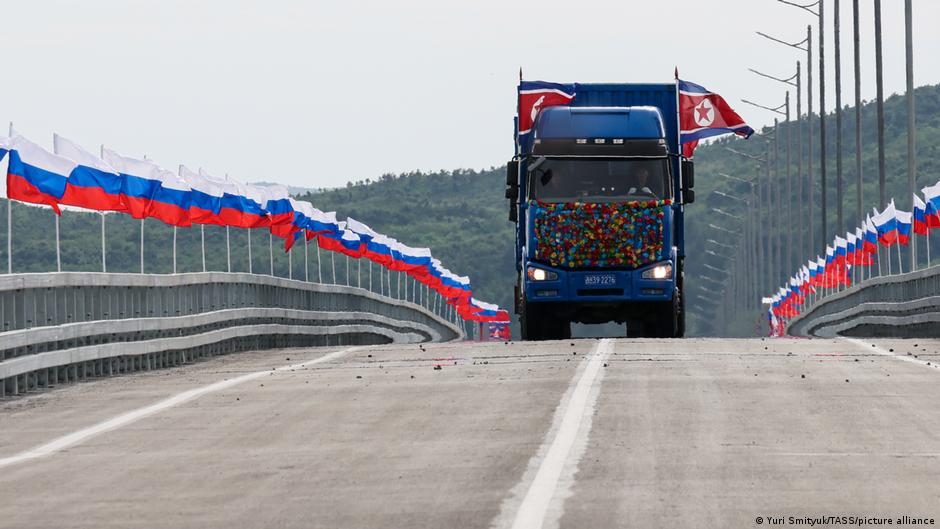
Chinese President Xi Jinping wrapped a two-day visit to Pyongyang on Tuesday, 9 June 2026, his first official trip to North Korea since 2019. The visit ended with the two leaders vowing to deepen cooperation across trade, infrastructure and what state media described as "strategic coordination" — language that, on the surface, looks like a return to the choreography of the early 2020s. The substance is more interesting. Beijing is not in Pyongyang to celebrate; it is in Pyongyang to manage risk. (Nikkei Asia, 09 June 2026, 09:01 UTC; BBC World, 09 June 2026, 07:38 UTC)
The trip is best read as a hedge. North Korea's relationship with Russia has deepened visibly over the past two years — militarily, diplomatically and, by several accounts, energetically — and that drift has produced exactly the kind of secondary-sanctions exposure and great-power juggling that Beijing dislikes. By landing in Pyongyang with a stack of signed agreements and a fresh joint statement, Xi is doing what Chinese diplomacy has done for two decades: putting a layer of managed bilateralism on top of a relationship that would otherwise be governed by someone else's gravity.
The visit, on the record
The two-day programme produced the standard set-piece deliverables. Xi and Kim Jong Un held a formal summit, signed cooperation documents covering transport, agriculture and what the joint communique called "people-to-people exchanges," and toured a showcase site together. The BBC's wrap, filed from Seoul at 07:38 UTC, framed the closing message as a pledge of "stronger ties" and noted explicitly that the trip was Xi's first official visit to North Korea since 2019. (BBC World, 09 June 2026, 07:38 UTC)
Nikkei Asia's analyst-grounded read, filed at 09:01 UTC, pushed past the ceremony. The framing there was more cautious: Xi is shoring up China's sway in Pyongyang, and is wary of the North Korea–Russia relationship. That single sentence captures the whole trip. It is not a victory lap. It is a maintenance visit by the patron who has noticed that the client has been talking to someone else. (Nikkei Asia, 09 June 2026, 09:01 UTC)
The Chinese read, as relayed through state media, emphasises continuity: the two sides are "good neighbours, good friends and good comrades," a formulation that has been recycled through Chinese diplomatic language for decades. Beijing's interest in that framing is twofold. It signals to Washington that China remains the indispensable interlocutor on the peninsula, and it signals to Moscow that Beijing expects to be consulted, not surprised, on developments that touch its 1,400-kilometre land border with the DPRK.
Why the Russia axis matters now
The reason this visit is happening in June 2026 — and not, say, in 2024 — is the North Korea–Russia rapprochement. Over the past 18 months, Pyongyang and Moscow have moved from rhetorical solidarity to operational partnership. The visible markers include high-level reciprocal visits, reported munitions and arms transfers tied to the war in Ukraine, and infrastructure projects that run counter to the UN sanctions architecture that Beijing itself co-authored. (Nikkei Asia, 09 June 2026, 09:01 UTC)
For Beijing, each of those markers carries a cost. Arms-related cooperation exposes Chinese companies and banks to secondary-sanctions risk if they are seen to be facilitating the DPRK's sanctions evasion — a risk that has material consequences given the dollar-clearing system that underwrites Chinese cross-border trade. Energy cooperation between Pyongyang and Moscow, in whatever form it takes, pulls a long-closed border corridor back into circulation, and reshapes the logistics map of northeast Asia in ways that do not necessarily route through Beijing. And politically, a North Korea that is comfortable operating inside a Moscow-led alignment is a North Korea that is less dependent on Chinese forbearance — which means less Chinese leverage, not more.
Xi's response, on the evidence of this trip, is to remind Pyongyang that the China relationship still has things the Russia relationship does not: food and fuel reliability at scale, the only real diplomatic channel to Seoul and Washington, and a UN Security Council veto that Beijing has used, intermittently but decisively, to keep the sanctions regime from collapsing. The signed documents on transport and agriculture are the visible portion of that reminder. The real work happens in the bilateral.
The structural frame: one border, three capitals, no referee
What is unfolding on the Korean peninsula is a textbook case of a regional subsystem being pulled in two directions at once. North Korea sits at the intersection of three strategic gravitational fields — Chinese, Russian and, in a residual sense, American — and for most of the post-Cold War period the Chinese field was dominant, partly because it was the only one offering engagement without regime change as a stated objective. That primacy is no longer automatic.
The deeper shift is that the international system no longer offers Pyongyang a clear hierarchy of patrons to choose between. The institutions that once sequenced that choice — the UN Security Council, the Six-Party Talks architecture, the dollar-based financial plumbing that disciplined even sanctioned economies — have all weakened as enforcement mechanisms. What replaces them is a marketplace of bilateral relationships, each with its own price list, in which the DPRK is, for the first time in a generation, a seller with multiple bidders.
In that marketplace, Beijing's card is stability and integration; Moscow's card is sanctions circumvention and military-industrial cooperation; Washington's card, such as it is, is sanctions enforcement and the residual promise of engagement. The June 2026 visit is Xi playing the integration card hard, and doing it publicly, because the quiet version of the same pitch has been losing ground.
Stakes and what to watch next
If the China-led framing holds, the next six months should produce some combination of: a visible uptick in cross-border rail traffic through the DPRK-China land ports; a renewed Chinese role in any future inter-Korean or US-DPRK channel; and quiet Chinese pressure on Pyongyang to moderate, rather than deepen, its military-industrial cooperation with Russia. The Xinhua- and Global Times-friendly read of the trip will lean on the first two; the analyst read in Nikkei and the regional press will lean on the third. Both will be partly right.
The plausible counter-read is that the visit changes less than it appears. A two-day summit, even one with a stack of signed agreements, does not by itself unwind a defence and energy relationship that has been building for the better part of two years. If Pyongyang has decided that the Russia relationship is structurally more useful — because it comes with hard-currency demand for munitions, with energy supply that does not require Chinese middlemen, and with a UNSC partner willing to block additional sanctions — then Xi's Pyongyang return is a delay, not a reversal. The signing ceremony buys time; it does not rewrite the ledger.
What the sources do not specify — and where the evidence thins — is the actual content of the energy and transport agreements signed this week. The public communique speaks in the usual language of "cooperation" and "people-to-people exchanges." The contractual specifics, the volumes, the financing arrangements, the timetables: those will surface in the months ahead, in trade data, in satellite imagery of border crossings, and in the slow drip of sanctions-evasion investigations. Until then, the trip is best read as a signal about Beijing's intentions, not as a measurable shift in the underlying balance.
The energy angle is the one to watch most closely. If China succeeds in re-anchoring the DPRK's fuel and electricity supply chain — even partially — to Chinese providers and Chinese-built grid links, the Russia-North Korea pipeline projects that have been discussed in regional reporting lose commercial gravity. If it does not, the June 2026 visit will be remembered as the moment Beijing tried, and the trip becomes a footnote in the longer story of a peninsula that stopped being China's to manage.
Desk note: Monexus frames this as a Chinese-led maintenance visit, not a triumph. The wire read emphasises ceremony; the analyst read in Nikkei emphasises anxiety. Both are accurate; the second is more useful.
Wire provenance
This editorial synthesis draws on the following public wire/social posts:
- https://t.me/NikkeiAsia
- https://t.me/nikkeiasia
- https://t.me/BBCWorldoffl