Trump presses fresh strikes on Iran as inflation climbs and Hormuz mission claims swell
On 10 June 2026 the US president vowed new attacks on Iran "today," claimed a covert Hormuz operation moved 100 million barrels of oil, and said he "loves" inflation as consumer prices posted their fastest rise in three years.
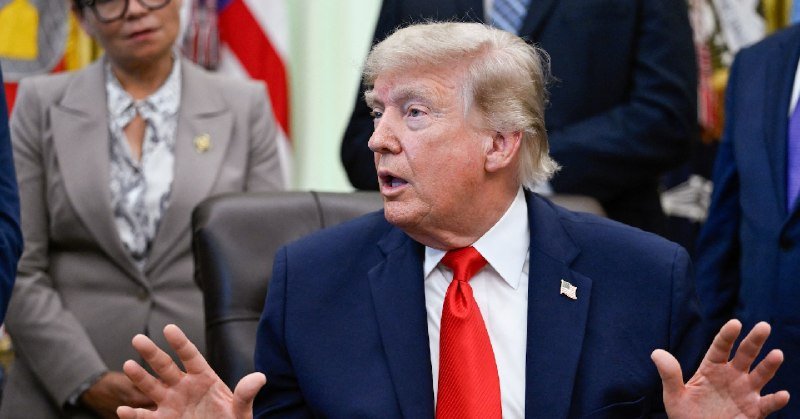
At 19:35 UTC on 10 June 2026, US President Donald Trump told reporters that the United States would launch fresh attacks on Iran "today," accusing the Islamic Republic of "playing us for suckers" on a deal to end the war. Within hours, by roughly 20:24 UTC, the BRICS News channel on Telegram reported that Trump was holding a meeting to discuss additional strikes. Iran's armed forces, speaking through their spokesman, vowed a "harsher, stronger and more crushing" response to any US threat. The exchange capped a single afternoon in which the president also claimed a covert US military operation had shepherded more than 100 million barrels of oil and over 200 commercial ships through the Strait of Hormuz, and that he "loves" rising consumer prices after new data showed US inflation at its fastest pace in three years.
The collision of those four signals — military escalation, defiance from Tehran, a self-congratulatory oil narrative, and a casual dismissal of price pressure — sets the frame for the weeks ahead. Inflation, energy security and the credibility of US deterrence are no longer running on separate tracks. They are being run by the same desk.
The Hormuz claim and what it actually says
The most striking of the afternoon's assertions came in two near-identical posts on The Cradle Media's Telegram channel at 19:50 UTC: Trump claimed a "secret US military mission" had enabled "more than 100 million barrels of oil and over 200 commercial ships" to transit the Strait of Hormuz. The figure, if accurate, would be extraordinary — 100 million barrels at recent Brent benchmarks is roughly $7–8bn of crude moved under US escort, on a waterway that normally handles close to a fifth of global seaborne oil.
The post does not specify the time window, the escort vessels, or the conditions under which the transit occurred. It also does not say whether the figure is gross tonnage, net crude loaded onto tankers, or a cumulative count since the start of an operation that has never been formally acknowledged. Without those parameters the number functions less as a metric and more as a political claim: an assertion that the US Navy is doing the quiet work of keeping a vital artery open while the diplomatic track stalls. That is a useful thing for a president to say when domestic drivers are angry about petrol prices and when allies in the Gulf are hedging their exposure.
The inflation tell
The same hour produced a more damaging admission. Asked about new data showing US consumer prices rising at their fastest pace in three years, Trump replied, "I love the inflation," according to Al Jazeera's breaking-news reporting on 10 June 2026 at 20:31 UTC. The line matters less as economic policy than as political positioning. A White House that has spent two years blaming the previous administration for the post-pandemic price surge is now being asked to defend a fresh acceleration — and is choosing, in this telling, to reframe the cost of living as a feature rather than a bug.
The structural read is uncomfortable. Energy is a first-order input into the US consumer basket, and the Strait of Hormuz sits at the narrow point of roughly a fifth of seaborne crude flows. If the Hormuz transit claim is even approximately correct, and if those flows were running at risk before the US mission, then the upward pressure on fuel and freight that the Bureau of Labor Statistics is now recording is, in part, the price of an unacknowledged war. The administration's instinct is to deny that arithmetic; the consumer-price release does the arithmetic for it.
Tehran's counter-frame
Iran's response has been calibrated to deny the White House the comfort of a clean escalation ladder. The spokesman for Iran's armed forces, cited by Press TV on 10 June 2026 at 20:19 UTC, said any US strike would meet a "harsher, stronger and more crushing" response. Iranian President Masoud Pezeshkian, in a separate Press TV report at 19:10 UTC, said the Islamic Republic "will never surrender to threats, pressure" — language designed for both a domestic audience still scarred by the June 2025 strikes and for a regional audience watching whether Tehran's restored missile and proxy inventory has teeth.
Read against the Western wire line, two stories are running in parallel. In one, the US is conducting a targeted, limited operation that has kept Hormuz open and is on the verge of forcing Iran back to the table. In the other, repeated by Iranian state media and adjacent outlets, the US is bullying a sanctions-stressed but politically unified Iran into a corner from which Tehran's only rational move is to make the cost of escalation visible. Both stories are partial. The honest reading is that the administration wants the first narrative at home and is getting the second one in the Persian Gulf.
What is actually being decided
Three things are now being negotiated, only one of them openly. The first is the military question: whether the additional strikes Trump discussed on 10 June 2026 will be symbolic — a target or two, a port facility, a Revolutionary Guards logistics node — or whether they will be aimed at the kind of infrastructure that Iran has so far avoided hitting, such as desalination, civilian aviation nodes, or the oil export terminals on Kharg Island. The second is the energy question: whether the price of crude reflects the Hormuz risk premium, and whether that premium persists into the northern-hemisphere driving season. The third, least discussed, is the political question of what an administration that "loves" inflation can credibly say to a Fed that has, in this telling, been put on a shorter leash.
The plausible counter-read is that the Hormuz operation is real, the inflation data is real, and the strikes are calibrated precisely so that none of these threads breaks. The dominant framing — a swaggering escalation, with Tehran blustering in response — holds in the short term. It does not hold if a single Hormuz incident closes the strait for forty-eight hours, or if the next US consumer-price release shows a fresh leg up in fuel.
The structural frame
The pattern on display is the slow merger of war, oil and domestic price management into a single policy instrument. The US is conducting a maritime-security operation it will not name, against a country it will not formally acknowledge it is at war with, while telling voters that the cost of that operation is, in effect, a rounding error. That is not a sustainable equilibrium. It is a holding pattern, and like most holding patterns, it costs fuel the longer it runs.
The uncertainty that the available reporting does not resolve is large. It is not clear from the source material what the additional strikes discussed on 10 June 2026 would target, whether the 100-million-barrel Hormuz figure covers a single operation or a cumulative count, or whether Iran's armed-forces spokesman was speaking from a pre-prepared script or responding to fresh intelligence. What is clear is that the gap between the White House's narrative and the consumer-price data is widening, and that the administration is choosing to widen it further rather than close it.
Desk note: Monexus framed this as a single integrated policy signal — military, energy, and price — rather than three separate stories, on the view that the administration's own messaging collapses the categories. Iran-side sourcing is treated as primary for Iranian policy intent, with the standard caveat that state media amplifies, and US-side claims about Hormuz volumes are flagged as politically useful but under-specified.
Wire provenance
This editorial synthesis draws on the following public wire/social posts:
- https://t.me/bricsnews
- https://t.me/presstv
- https://t.me/thecradlemedia
- https://t.me/presstv