Anthropic's Dario Amodei warns of AI's "adolescence" while shipping the very models he wants regulated
In a single 24-hour stretch, Anthropic's CEO called for binding frontier-AI rules, sketched a world of "hypergrowth, hyper-inequality," and ran an organisational chart that puts him at the centre of nearly everything.
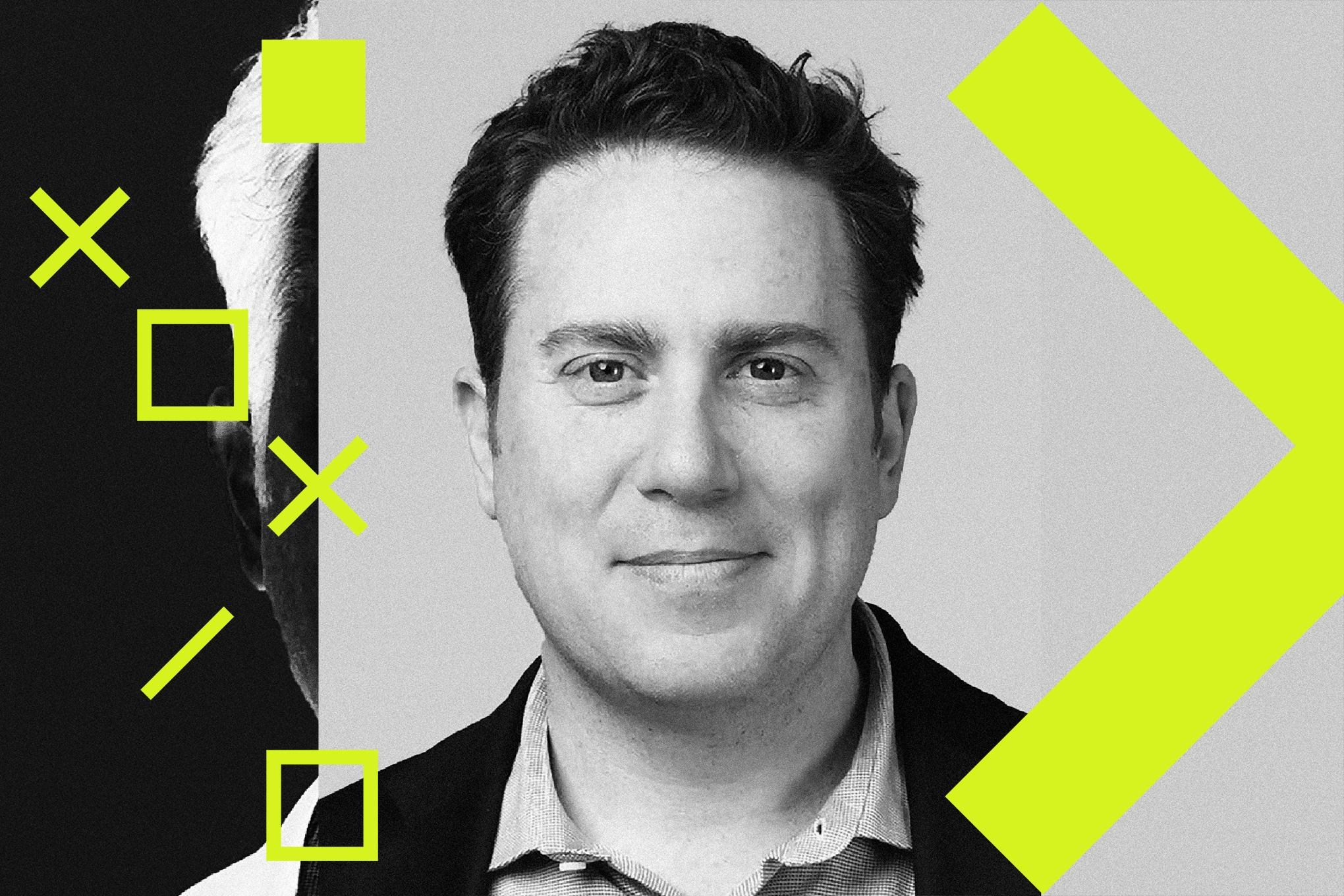
On 10 June 2026, Anthropic co-founder and chief executive Dario Amodei published a roughly 7,000-word essay arguing that the artificial-intelligence industry is outrunning the institutions meant to govern it. Hours later, his company was still selling the very systems he wants regulated. The tension is not a contradiction so much as it is the defining feature of the frontier-AI business in 2026: the people building the most capable models are now the loudest voices asking governments to constrain them.
A staff-writer's job is to read the press release against the org chart. Both, this week, point the same way.
"Hypergrowth, hyper-inequality"
Amodei's essay, titled The Adolescence of Technology, was published on 10 June 2026 and is the most explicit statement yet from a frontier-lab CEO that the technology his company is commercialising could entrench the very economic distortions the post-war order was designed to flatten. He warns of a world of "hypergrowth, hyper-inequality" and lasting job displacement, and uses the phrase "adolescence of technology" to describe a phase in which technical capability has outrun social and political capacity to absorb it. The framing is unusually candid for a CEO whose valuation, by most published estimates, is now in the hundreds of billions of dollars and whose company is, according to reporting on 10 June 2026, working toward an initial public offering.
Two structural points are worth holding onto. First, the warning and the roadmap are the same document. Amodei is not asking policymakers to slow down a rival; he is asking them to slow down a category of product that his own firm is about to list on a public market. Second, the timeline he sketches is short. He has previously said that "powerful AI" could arrive as early as 2026; the essay's horizon is measured in years, not decades. When a CEO who is also a principal architect of the technology says the runway is that short, the regulatory clock that the essay simultaneously demands becomes the binding constraint on the entire industry.
One direct report, many questions
The organisational context, surfaced on 11 June 2026, sharpens the picture. Anthropic's structure reportedly leaves Amodei with a single direct report, an arrangement that is unusual for a company of its size and is being read, fairly or not, as a measure of how concentrated decision-making has become. Coverage characterised it as confirmation of a CEO who runs a tight ship; critics will read it as confirmation of a company that has centralised frontier-model release decisions in a single human being. Both readings are compatible with the same chart.
That concentration matters because the regulatory architecture Amodei is calling for would, by design, have to pass through executives in his exact position. A binding pre-deployment review regime, third-party red-team disclosure requirements, and compute-threshold reporting — the policy ideas floating in the same essay and in adjacent industry discussions — all presuppose a single accountable principal at the lab. Anthropic's own internal structure happens to be the cleanest example of that principal model in the industry.
The counter-read: the safest lab is the one shipping
The strongest counter-argument to the regulator-friendly framing is also the simplest. Frontier capability is being built somewhere regardless; the question is whether it is being built inside a firm that has published a responsible scaling policy, an interpretability research agenda, and a public commitment to evaluate models for dangerous capabilities before release, or inside a firm that has done none of those things. Anthropic, by the company's own account, is the former. From that vantage point, the essay is not a request for permission; it is a request for rules that the company believes it can already meet and that less cautious competitors cannot.
There is a more sceptical version of the same point. Industry observers have long noted that frontier-lab CEOs have an interest in regulation that fixes costs on entrants and incumbents alike while leaving the frontier-lab's existing data, compute, and talent moats untouched. A pre-deployment review regime is easier to comply with if you already have a safety team; a third-party red-team regime is easier to satisfy if you have published a frontier-model red-team framework. None of this makes the warnings insincere. It does mean that "binding safety rules" and "Anthropic's competitive position" are not, in practice, separable variables.
What the next twelve months actually look like
If the essay's policy proposals are taken at face value, the work has to happen on a political clock, not a research one. A US federal pre-deployment review regime would require legislation or substantial rule-making by an agency that does not yet have the technical staff to evaluate frontier models. International coordination, which the essay also gestures at, has historically taken the form of voluntary G7/OECD statements rather than binding commitments. The likeliest near-term artefact is a sectoral compact — a Frontier Model Safety Accord or its equivalent — signed by a small number of US labs and their UK, Japanese, and Korean counterparts, with the European Union's AI Act providing the hard backstop on the European side.
The labour question, which Amodei names explicitly, is harder still. "Hypergrowth, hyper-inequality" is a description of an economy in which capital and compute capture the returns and wage labour captures the disruption. The essay's policy answer is, in broad strokes, redistribution and retraining. The political answer, in a US election year with a closely divided Congress, is not obvious. The Chinese model — top-down industrial policy combined with workforce redeployment in state-coordinated sectors — is sometimes held up in adjacent commentary as an alternative; this publication's read is that the political economy of the United States in 2026 does not contain the instruments to replicate that approach, regardless of its merits.
What remains uncertain
The sources do not specify which binding safety rules Amodei himself would draft, beyond the general categories in the essay; they do not specify the size of any pre-deployment review fee or the compute threshold that would trigger one; and they do not specify whether Anthropic's public IPO plans will require additional regulatory disclosure on safety evaluations as a matter of securities law. Each of these is a meaningful unknown. The single most consequential variable, the size of the compute threshold above which a model would be considered "frontier," is the kind of detail that will determine whether a regime is real or theatrical, and the essay does not name a number.
What can be said is this: the CEO of one of the three or four most consequential companies in artificial intelligence has now argued, on the record, that the technology he sells is moving faster than the society that is about to be reshaped by it. The essay is the strongest version of an argument that has been made in pieces by Sam Altman, Demis Hassabis, and others over the past three years. The novelty is that it is being made at the moment the speaker's company is preparing to sell shares to the public. The market will price that combination. The regulator, eventually, will have to.
*Desk note: Monexus treated the essay and the org-chart reporting as two data points on the same firm, rather than as separate stories. The 4 June 2026 cover line in The Economist — "the adolescence of technology" — appears to have been the first major publication to use Amodei's framing as section language; this article reads it as a structural description of the industry, not a slogan.
Wire provenance
This editorial synthesis draws on the following public wire/social posts:
- https://x.com/polymarket/status/1
- https://x.com/polymarket/status/2