The Strait of Hormuz deal isn't a deal
An MOU announced as a victory, a foreign minister facing impeachment, and a supreme leader conspicuously silent: the Strait of Hormuz 'deal' has the shape of a negotiation wearing a settlement's costume.
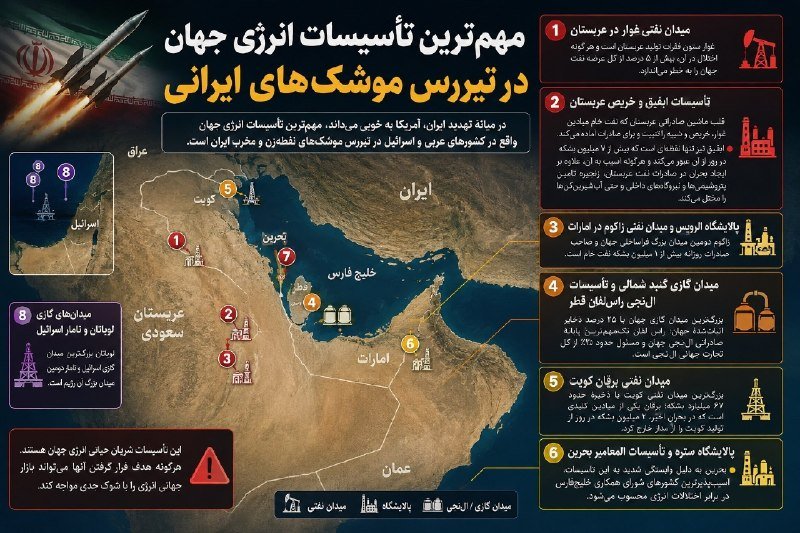
On 11 June 2026, the White House announced what it called a deal with Iran to reopen the Strait of Hormuz. Three days later, the shape of that deal is still being argued over by the two governments supposedly inside it. The MOU form is the news. The numbers in the president's remarks are the marketing.
The sequencing alone tells the story. Washington rolled out a victory lap on 13 June, with a senior administration official telling Fox that the proposed agreement was "fantastic and very strong," that Iran would reopen the strait "without imposing transit fees," and that a formal signing was set for the coming Sunday. Tehran has not confirmed the timing. By the evening of the same day, an ultra-conservative Iranian MP, Amirhossein Sabeti, was preparing an impeachment motion against Foreign Minister Abbas Araghchi over his televised remarks on the nuclear file. A pro-principlist placard had appeared in Persian criticising the silence of the supreme leader's office on the negotiations. The domestic Iranian pressure has barely begun to register on the Western coverage of the "deal."
What was actually signed
Nothing has been signed. The 11 June announcement describes a memorandum of understanding, the standard diplomatic placeholder that converts a negotiation into a press conference without converting it into a contract. MOUs bind intentions, not behaviour; they are written precisely so both sides can read the same document and claim different things from it. A "transit-fee-free Hormuz" in a US readout becomes, in Tehran's framing, a reaffirmation of existing maritime practice and Iranian sovereignty over the waterway. Both readings are technically consistent with an MOU. That is the point.
The Fox interview, recycled through Fars News in English, framed the arrangement as "a strong agreement" within hours of the White House readout. That recycling matters. Iran's state-aligned outlets do not amplify American victory claims because they admire American victories; they amplify them because the language is useful inside the Iranian bargaining process, where Araghchi now needs to sell whatever the eventual text says to a parliament that has already moved to discipline him.
The Tehran end of the wire
The impeachment motion against Araghchi is the single most revealing datum on the record so far. Sabeti's accusation, that the foreign minister has overstepped in his public commentary on the nuclear file, is the procedural opening shot of an internal fight the MOU was supposed to defer. If the deal were truly concluded, principlist critics would have to attack it on its merits. Instead they are attacking the minister's conduct, the classic preparatory move for a later substantive assault. The motion is a parked truck, not a fired one.
Equally telling is the public complaint about Mojtaba Khamenei's silence. Inside the principlist ecosystem, an unanswered grievance from a cleric-aligned critic is a signal of unresolved disagreement at the top. The supreme leader's office does not avoid comment on settled questions; it comments on them precisely to close them down. The conspicuous absence of comment on the MOU is a tell.
Why this reads as process, not settlement
Every previous Iran understanding of the last decade has gone through the same shape: a confident US announcement, an Iranian counter-statement narrowing what was actually agreed, a domestic political fight in Tehran that consumes the political capital of the Iranian negotiator, and a final text that looks smaller than the original fanfare. The Strait of Hormuz MOU fits that template almost beat for beat. The strait is genuinely chokepoint-critical, roughly a fifth of global oil flows, which is exactly why the announcement can be inflated: the stakes guarantee coverage regardless of whether the underlying commitment is precise.
The American administration's emphasis on Sunday is itself diagnostic. Sunday deadlines in Middle East negotiations are rarely deadlines in the operational sense; they are scheduling devices that give television a kicker and give negotiators forty-eight hours to paper over gaps. The fact that the White House is publicly naming a date Tehran has not endorsed is the news, not the announcement of the MOU itself.
The numbers in the president's remarks
Every figure cited in the 11 June readout (transit-fee waivers, specific reopening guarantees, enrichment ceilings) sits inside an MOU that has no enforcement architecture. Iranian compliance with any of it would depend on precisely the kind of verification regime that the MOU form is designed to avoid. Without inspectors, timetables, and penalty mechanisms, the document is a confidence-building gesture, useful only insofar as both governments want to keep talking. The "no transit fees" line in particular is the kind of concession that costs nothing to announce and a great deal to operationalise, because the legal status of fees on the strait has never been settled in any prior instrument Iran has signed.
The question nobody is asking
The right test for this MOU is not whether it survives until Sunday. It is whether Araghchi survives the next session of the Iranian parliament, whether Mojtaba Khamenei chooses to speak, and whether the American readout on Sunday morning names the same document Tehran has in its hand. If those three things line up, the MOU is doing real work. If any one of them does not, the "deal" becomes the next data point in a familiar curve: announcement, dispute, narrowing, drift. The Strait of Hormuz deal isn't a deal. It is the photo opportunity a deal will need if it ever arrives.
Follow the event.
These dated source records provide context. They do not retrospectively verify this archive article.
Separate what the nuclear watchdog reported from what it could not determine after the June 2025 strikes.