Tehran claims a diplomatic win before the ink is dry
Iran's foreign minister told state media on 12 June 2026 that the country 'stood against the apparent superpower of the world for 40 days' and is now the architect of its own deal — even as he conceded the agreement has not been signed.
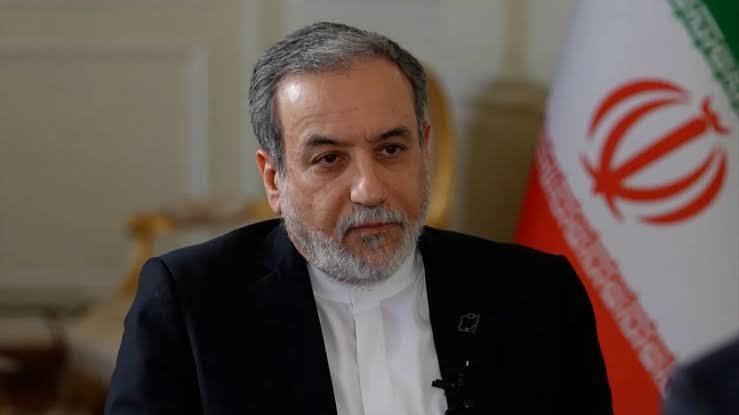
Iran's foreign minister Abbas Araghchi used a 12 June 2026 appearance on Al-Alam state television to declare that the Islamic Republic had prevailed in a war that, by his own account, was never officially over — and that the diplomatic deal now taking shape flows from that battlefield leverage rather than from Western goodwill.
Araghchi told viewers, in remarks broadcast at roughly 19:12–19:14 UTC, that "the advance of the armed forces is stabilized through diplomacy" and that "the negotiator relies on the power of the field." He added: "In one year, we went through two heavy wars. They thought they could finish the job this time, but they faced stubborn and fierce resistance from our armed forces and our people." The framing matters: Tehran is not asking for a peace dividend. It is asking the world to recognise that any signed text reflects a military stalemate, not a concession.
The deal that isn't a deal yet
The most striking line in the broadcast was also the most candid. "The agreement has not been signed yet," Araghchi said. "If it is signed, I will explain each clause." He sketched a two-stage structure and signalled that the nuclear file had been moved to a separate track, but he refused to put a signature on the page — and refused to let Tehran be photographed agreeing to a document whose contents he could not yet defend at home.
That posture is not the same as a negotiation in trouble. It is closer to a deliberate ambiguity: the regime wants credit for the architecture of the deal without taking ownership of every line until the text survives domestic vetting. Western capitals reading the same broadcast can be forgiven for noticing that this is a tactic, not a sentiment.
'We are really victorious'
Araghchi's victory language was unusually explicit. "The best time to end the war is when we have the upper hand," he said. "We are really victorious. We stood against the apparent superpower of the world for 40 days." The phrase is calibrated for a domestic audience that has been told for two years that Iran fights from a position of dignity, not dependence. The implicit message to Washington is that the next round of sanctions relief, the next unfrozen tranche, the next prisoner exchange will be priced against a claim of having held the line, not having lost it.
That framing is also an opening bid in the information war that surrounds any eventual signing ceremony. By anchoring the narrative to battlefield resistance rather than to whatever compromises the text contains, Tehran narrows the political space in which Iranian hardliners can attack a final deal as capitulation.
What the framing hides
The omissions in the broadcast are as informative as the claims. Araghchi did not detail which "two heavy wars" he meant in a single year, did not name the armed formations whose advance the diplomacy was stabilising, and did not address the humanitarian cost of those 40 days on either side of the front line. Iranian state media's coverage of civilian casualties inside Iran — particularly in infrastructure, energy and residential areas targeted in earlier rounds of exchange — has been thin by any standard applied to a Western wire.
There is also a counter-narrative that the foreign minister's language does not have to refute because it is never directly engaged: that the deal under negotiation contains concessions on enrichment, monitoring, and missile-related files that the public address conspicuously avoids. The clauses Araghchi promised to "explain" once signed may explain a great deal.
Stakes
If a text is signed, the immediate beneficiaries are the Iranian banking and oil sectors awaiting sanctions relief and the diplomatic class in Tehran that needs a win before the autumn. The losers are those within the system who built their standing on resistance without compromise and now have to defend a document. Outside Iran, Gulf states that have hedged between Washington and Tehran will be watching whether the deal constrains the proxy network or merely resets the timer on it.
The 40-day frame Araghchi has chosen will outlast the eventual signature. It is now the official Iranian story of the war, and it will be the lens through which any deal — and any future crisis — is read in Tehran, in the region, and in every foreign ministry that has to take the next call from an Iranian counterpart claiming to have just won.
Desk note: Monexus relies on Iranian state media for the foreign minister's direct quotes in this piece, on the explicit understanding that Al-Alam is a state outlet and that the victory framing is itself the news. Counter-claims from Western wires, where they emerge, will be tested against primary documents rather than press summaries.
Wire provenance
This editorial synthesis draws on the following public wire/social posts:
- https://t.me/s/alalamfa
- https://t.me/s/alalamfa
- https://t.me/s/alalamfa
Follow the event.
These dated source records provide context. They do not retrospectively verify this archive article.
Separate what the nuclear watchdog reported from what it could not determine after the June 2025 strikes.