Pakistan brokers what it calls a final US–Iran text, as both capitals stay silent
Islamabad claims a finished draft is in hand, but neither Washington nor Tehran has confirmed the document — and the gap between announcement and verification is itself the story.
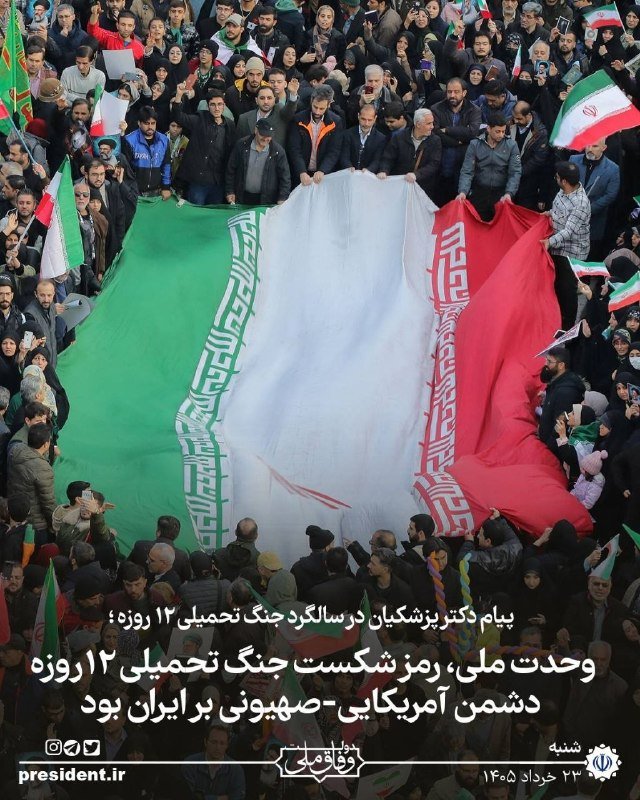
At 16:36 UTC on 12 June 2026, Pakistan's Prime Minister Shehbaz Sharif declared that "a final, agreed upon text of the peace deal has been reached" between the United States and Iran, and that Islamabad was "now working closely with both sides to finali[se]" the remaining steps. Within seventeen minutes, the same line appeared in near-identical wording across at least four Telegram channels — including Press TV, the Iranian state broadcaster — and was amplified by an account branding itself "Open Source Intel." By 16:19 UTC, an earlier post on a channel styled "wfwitness" had already framed the announcement as a pushback against "a misinformation campaign."
The single verifiable fact on the table is a quote. Everything else — the document itself, the counterparties, the sanctions architecture, the nuclear file, the regional sequencing — remains unconfirmed. The asymmetry is the story. Pakistan has put its prime ministerial name to a claim that neither Washington nor Tehran has, as of 16:36 UTC, corroborated in the public record. That asymmetry is worth dissecting before anyone treats the announcement as the end of a crisis that, for most of the spring, looked closer to ignition than to negotiation.
What was actually said, and by whom
The text circulating through Telegram is a single attributed sentence: Sharif, the sitting prime minister of Pakistan, asserting that an agreed text exists and that Islamabad is now the active intermediary. The wording is identical across the channels that picked it up — "final, agreed upon text of the peace deal has been reached" — which suggests a single official readout, in English, issued by the Prime Minister's Office and then redistributed. Press TV's framing on its 16:35 UTC post carries the same line, presented as a photograph of the prime minister speaking. The channel styled "rnintel" added a trilateral tag — "🇺🇸🇮🇷🇵🇰" — and explicitly characterised the announcement as a rebuttal to "noise," a phrase that tracks with the "misinformation campaign" language used by "wfwitness" seventeen minutes earlier.
No text of the supposed deal is in circulation. No American or Iranian official has been named as the counterpart confirming it. No ministry in Washington or Tehran has put out a press release matching the language Sharif used. The closest thing to corroboration is the repetition of Sharif's quote by other accounts, including one aligned with Iranian state media — a fact that, given Iran's interest in signalling progress, cuts both ways. Endorsement by a sympathetic outlet is not the same as confirmation by a principal.
Why Pakistan, and why now
Islamabad has spent the better part of 2026 positioning itself as the indispensable middleman between Washington and Tehran. Sharif's civilian government, and the military establishment that sets the real terms of Pakistani foreign policy, have spent decades maintaining working relations with both the Islamic Republic and successive US administrations. That dual relationship is the asset being deployed here. Pakistan shares a long, porous border with Iran, has a significant Shia minority, runs a deep commercial relationship with the Gulf, and — since the 2022–23 alignment with Saudi Arabia through to the more recent Saudi-Iranian rapprochement brokered in Beijing — has been able to talk to capitals that are currently not talking to each other.
The timing also fits a familiar pattern. Big diplomatic announcements that nobody wants to put on paper tend to surface in third capitals. The Gulf states, Oman, and Qatar have historically played the same role — providing a venue, a venue of speech, and a face-saving first draft for deals that Washington and Tehran cannot yet announce jointly. Pakistan is a less obvious choice, but the rationale is legible: Sharif can absorb political risk in a way that, say, a Gulf monarch cannot, and his government has domestic reasons to want a visible win in foreign policy.
What the deal would have to contain — and what the silence implies
Any "final agreed text" between the United States and Iran in mid-2026 would have to address at least four baskets: the nuclear file, sanctions relief, regional armed actors, and the fate of any residual US-Iranian detainee or asset arrangements. None of these has been publicly negotiated in the open. The JCPOA collapsed in 2018, and the post-2018 sanctions architecture has been built up in layers, including the snapback debate at the UN Security Council and the extraterritorial enforcement actions that have made European and East Asian counterparties nervous about re-engaging Tehran.
If a text were truly final, one would expect to see a leak of substance, not just a leak of the fact of a text. The absence of that substance is the strongest argument for scepticism. The strongest argument for cautious optimism is the repetition: when an Iranian state outlet and what presents itself as an American-aligned OSINT account carry the same line, the line usually traces back to a coordinated signal. But coordinated signal is not signed document.
The plausible alternative read is that Sharif is announcing a framework that one side has agreed to and the other has not yet endorsed — a common tactic in mediated negotiations, where the mediator's readout runs ahead of the principals'. Under that reading, the "final agreed text" is the document Pakistan thinks it has reconciled, not the document Washington and Tehran have both signed. The phrase "working closely with both sides to finalise the next steps" supports this read: finalise is not sign.
Stakes — and what to watch next
If Sharif is right, the regional consequences are immediate. A US-Iran deal would reshape the political economy of Gulf energy markets, would re-open European and Asian trade and investment routes into Iran, and would reduce the strategic premium on the Israeli campaign against Iranian proxies. It would also create winners and losers inside Iran itself: the negotiating faction around the presidency and parts of the foreign-policy establishment would be vindicated, the hardline institutional factions that have built power on sanctions resilience would be on the defensive, and the IRGC's regional footprint — the source of much of the leverage the Islamic Republic has wielded — would face pressure to be scaled back.
If Sharif is wrong, or partially right, the costs fall on him. Pakistani prime ministers who overstate the terms of a US-Iranian understanding tend to discover, in the weeks that follow, that the principals have very different ideas of what they just signed. The next 48 hours are the test: a White House or State Department readout, or a statement from the Iranian foreign ministry, would settle the question. In the absence of either, the responsible read is that Pakistan is closer to the deal than anyone outside the negotiating room, but that "closer" is not "concluded."
What the sources do not specify — and where any honest reading has to acknowledge the limit — is the existence, contents, or signatory status of any document at all. The wire this article is built on is, at the moment of writing, a single attributed quote, distributed through four Telegram channels of varying provenance, with no independent on-the-record confirmation from Washington or Tehran. That is enough to report; it is not enough to declare the crisis over.
— Monexus framed this as a statement to be verified, not a deal to be reported. The wire is a prime-ministerial claim carried by sympathetic outlets; the document, if it exists, has not been seen by the editorial process that produced this piece.
Wire provenance
This editorial synthesis draws on the following public wire/social posts:
- https://t.me/OsintLive/
- https://t.me/presstv/
- https://t.me/insiderpaper/
- https://t.me/rnintel/
- https://t.me/wfwitness/
Follow the event.
These dated source records provide context. They do not retrospectively verify this archive article.
Separate what the nuclear watchdog reported from what it could not determine after the June 2025 strikes.