Putin tells Western security conference that NATO expansion is a hostile enterprise — and warns post-2022 members will get 'nothing'
Speaking on 12 June 2026, the Russian president framed the post-2022 intake of Finland and Sweden as opportunistic and accused the alliance of preparing hostile action against Moscow.
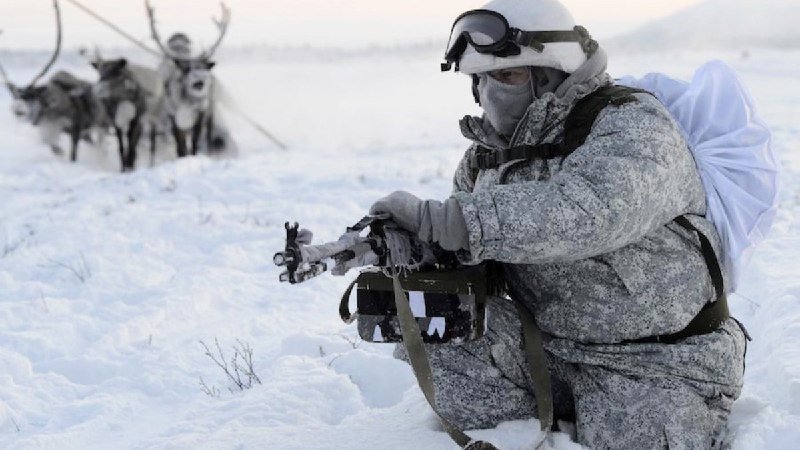
At a plenary session in Moscow on the morning of 12 June 2026, Russian President Vladimir Putin used a security conference platform to argue that the post-2022 enlargement of the North Atlantic Treaty Organisation is a hostile project aimed at Moscow — and to warn that the new members of the alliance will come away with "nothing." The remarks, aired live and relayed by Al Alam Arabic at 14:50 UTC, were the day's most pointed Russian restatement of a complaint that has framed Kremlin policy for more than three years.
The speech matters less for what it changes on the ground than for what it confirms: that the Russian leadership, more than four years into its full-scale invasion of Ukraine, is still investing political capital in the proposition that NATO — and not the war itself — is the security problem in Europe. That framing has a domestic audience and a diplomatic one, and the venue on 12 June was built to speak to both.
What Putin actually said
According to a Telegram post by Al Alam Arabic at 14:50 UTC on 12 June 2026, Putin told the audience that "all NATO countries are intensifying their efforts to launch hostile actions against Russia." The phrasing, carried by the Iranian-owned Arabic-language channel in its urgent-news banner, is consistent with the wording the Kremlin has used since 2022 to characterise Western military aid to Kyiv and the alliance's forward deployments in the Baltic and the High North.
The sharper line came in a separate exchange, relayed at 14:15 UTC by the Russian defence-adjacent outlet Zvezda News. Asked what the latest wave of NATO members would ultimately achieve, Putin replied: "If there were no cameras, I would show with a gesture known to all of you what they will achieve. Nothing." The accompanying Zvezda framing argued that a number of countries had joined the alliance after 2022 in order to obtain "a piece of the pie" in the event of a Russian defeat — a formulation repeated almost verbatim by the open-source intelligence channel Clash Report at 14:13 UTC the same day.
The "nothing" line is the rhetorical centrepiece. It is a deliberate inversion of NATO's own narrative — that the accession of Finland (2023) and Sweden (2024) was a sovereign, defensive choice made in response to Russian aggression. Putin's counter is that the choice is opportunistic, the membership cards will not be honoured when it counts, and the security dividend for the new members is zero.
The structural context: who joined, and when
Two countries have joined NATO since Russia's full-scale invasion of Ukraine began in February 2022. Finland completed the ratification process and became a full member on 4 April 2023, ending decades of formal non-alignment. Sweden followed on 7 March 2024, after a longer ratification cycle shaped by initial Turkish and Hungarian objections. The two Nordic accessions added roughly 1,300 kilometres of new NATO border with Russia and brought the alliance's membership to 32 states.
The Russian argument, repeated on 12 June, is that this border lengthening is itself a hostile act — the alliance moving its frontier onto Russian territory rather than the reverse. Moscow framed both accessions as evidence of broken promises from the 1990s, when NATO enlargement was a topic of contested diplomatic history. Independent analysts have generally treated the Finnish and Swedish decisions as a direct response to the war: Finnish public opinion moved sharply after February 2022, and Sweden's government moved with it. Putin's "piece of the pie" formulation is intended to read the accessions as vulture-like rather than defensive — a reading that requires ignoring the polling and the parliamentary votes.
What is harder to dismiss is the underlying security shift. The new members have integrated into NATO's air-policing and maritime-patrol routines, hosted allied battlegroups, and accepted a level of forward basing that did not exist before 2022. For the Russian general staff, that is a real operational fact regardless of the political interpretation placed on top of it.
The counter-read: why this speech, and why now
There is a reading on which the 12 June remarks are not aimed at NATO at all. They are aimed at the Russian domestic audience, at the foreign-policy intelligentsia in the non-Western world, and at the small set of European political actors who still argue, against the prevailing consensus, that Russia can be accommodated. The venue — a security conference in Moscow — selects for that audience by construction.
Two operational facts support the "speech for the home crowd" reading. First, no NATO government is going to revise its enlargement decisions on the basis of a Russian presidential address; the accession protocols are irreversible without the unanimous consent of the existing members, which is not on offer. Second, the "nothing" line is closer to gallows humour than to negotiating posture. It does not propose a deal. It refuses to.
The serious question the speech raises is whether it prefigures a Russian policy decision to treat the post-2022 members differently — to direct signalling, hybrid pressure, or rhetorical isolation at them in ways that stop short of overt Article 5 provocation. The Kremlin's playbook on Finland and Sweden since 2023 has been loud denunciation, not military action; there is no public evidence of an imminent shift in that posture. The sources on 12 June do not specify a policy change, and the speech itself contains no operational content.
The structural frame: a war that has recoded the alliance
The deeper story is not the speech but the security architecture it comments on. The 2022 invasion did not cause NATO to dissolve, expand at the margins, or reorient. It caused NATO to do all three at once: it took in two new members, it pushed its combat-capable formations east of the Oder for the first time in a generation, and it locked in a baseline defence-spending floor of two percent of GDP that the pre-2022 alliance had struggled to enforce. Russia's complaint on 12 June is, in effect, a complaint that the war it started produced the outcome it was meant to prevent.
That irony is not lost on the Western wire reporting, but it tends to be omitted from the Russian framing for reasons that are obvious. What is genuinely contested — and what the 12 June sources do not resolve — is whether the speech marks the start of a new rhetorical campaign aimed at the new NATO members, or whether it is a routine re-statement ahead of an expected summer negotiating window. The sources here do not let us distinguish the two.
Stakes
The audience with the most to lose from a hardening Russian posture toward Finland and Sweden is not in Brussels. It is in Helsinki and Stockholm, where the governments have spent three years integrating into NATO's command structures and where the cost of being treated as a special case by Moscow would be measured in shipping insurance, airspace management, and Baltic undersea-cable security. The audience with the most to lose from a successful Russian framing of the post-2022 accessions is in the candidate countries — Ukraine, Moldova, the Western Balkans — where the political proposition that NATO membership is a defensive good is now under rhetorical pressure it did not face a decade ago.
What remains genuinely uncertain, on the evidence available, is the timeline. The 12 June remarks are consistent with a long-running posture; they are not, on their own, evidence of a new one. A single speech is a frame, not a forecast.
Desk note: Monexus treated this as a Russia–frame story rather than a NATO–policy story. The wire services on 12 June carried the Putin remarks as colour from a security conference; we read them as a re-assertion of a long-standing position, and resisted the temptation to dress the speech up as the opening move in a new escalation cycle.
Wire provenance
This editorial synthesis draws on the following public wire/social posts:
- https://t.me/alalamarabic
- https://t.me/zvezdanews
- https://t.me/ClashReport
- https://en.wikipedia.org/wiki/Enlargement_of_NATO
- https://en.wikipedia.org/wiki/Accession_of_Finland_to_NATO
- https://en.wikipedia.org/wiki/Accession_of_Sweden_to_NATO
Follow the event.
These dated source records provide context. They do not retrospectively verify this archive article.
A dated voting record is evidence of one decision. Use the original UN record before turning it into an alignment label.
Visual explainer · historical vote of 2022-03-02 →