Trump halts Iran strikes, claims 'great settlement' in late-night reversal
US President Donald Trump announced late on 11 June 2026 that he had called off planned military strikes on Iran and that Washington and Tehran were finalising a settlement, hours after threatening to escalate.
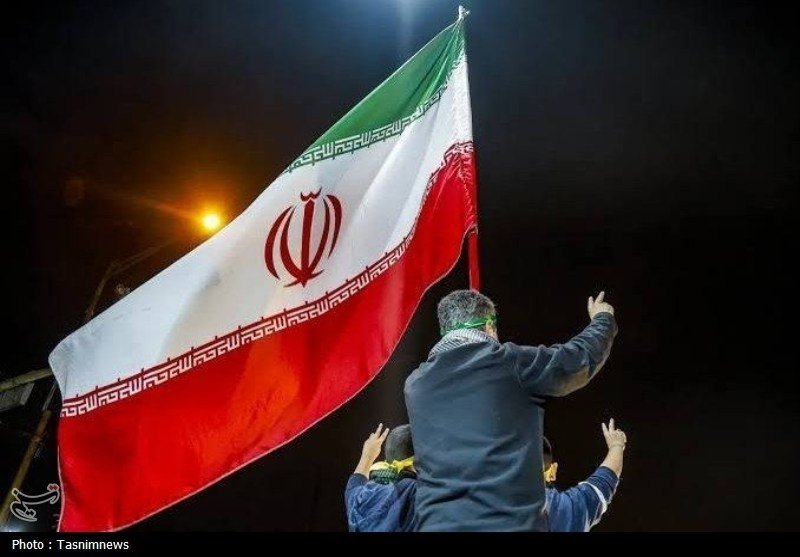
At 23:47 UTC on 11 June 2026, US President Donald Trump said he had cancelled planned military strikes on Iran and that Washington and Tehran had reached a "very good agreement." The reversal came roughly two hours after he had publicly threatened new strikes, and it capped a day of rapid escalation and de-escalation that left the substance of any settlement conspicuously under-specified.
The sequence is the story. Within a single evening, the US president moved from openly threatening intensified military action against the Islamic Republic, to claiming that negotiators were close to extending a fragile ceasefire, to declaring a "great settlement" was in hand. The market and diplomatic reaction will turn on whether the late-night posture survives the morning.
A threat, then a climbdown
According to France 24's English wire at 22:16 UTC, Trump told reporters on Thursday that he had "halted plans for new military strikes on Iran," asserting that negotiators were close to extending a ceasefire that had held since US and Israeli operations against Iranian assets in 2025. The threat itself, France 24 reported, was issued only hours earlier in a posture that implied imminent escalation rather than negotiation.
The asymmetry between the threat and the announcement is worth taking seriously. A credible ultimatum followed by an immediate walk-back does not, on its own, strengthen a bargaining position. It does, however, buy time — and time is the resource most often in short supply when a president has publicly committed to a military track.
By 23:29 UTC, Al Jazeera's breaking-news wire carried Trump's claim that the US and Iran had reached a "great settlement" and were "finalising documents." The wording matters. "Finalising" is the language of a deal in transit, not a deal concluded. The accompanying France 24 update at 23:47 UTC used softer phrasing — "a very good agreement" — suggesting that the public messaging had not yet settled on a single, defensible formulation.
What the public record actually contains
The four wire items on the record as of midnight UTC describe a process, not a text. None of them identifies a counterpart on the Iranian side by name, discloses the location of the talks, or lists a single clause of the alleged settlement. There is no confirmation, in the materials available to this publication, from the Islamic Republic's foreign ministry, from Iran's official news agencies (IRNA, Mehr, Tasnim, PressTV), or from the office of Supreme Leader Ali Khamenei. The White House has, on the public record, said only what the president said himself.
This is not unusual. Major diplomatic turns are routinely announced unilaterally before verification. But it does mean the burden of proof, in the next 24 to 72 hours, falls on both governments to produce something concrete: a signed text, a joint statement, a verifiable reciprocal step such as the release of frozen assets, the unfreezing of a port, the rollback of a sanctions designation, or a mutual de-escalation on a specific proxy file.
Why the ceasefire framing matters
The repeated reference to "extending a fragile ceasefire" is the most consequential phrase in the wire. It implies that the operative arrangement between Washington and Tehran is not a peace treaty and not a formal non-belligerency pact, but a rolling, conditional pause — the kind of arrangement that holds only as long as both sides believe that resuming hostilities would cost more than the political capital saved by holding fire.
Such pauses are easy to extend in their first weeks and harder to extend as fatigue, domestic politics, and proxy dynamics erode the central bargain. A "settlement" announced in a social-media post by the US president is a different object from a ceasefire extension negotiated through a known channel, witnessed by a third party, and tied to measurable reciprocal steps. The first is a mood. The second is a treaty.
The reporting does not yet tell us which of the two is in play.
Stakes and the days ahead
If the late-night claim holds, the immediate beneficiaries are oil markets, Gulf shipping insurance underwriters, and the diplomatic calendars of every capital with an interest in Strait of Hormuz traffic. Iranian crude exports, the principal lever Tehran has used to fund the regional axis, would face a more permissive sanctions environment only if the settlement includes a verified nuclear-constraints component — and no such component is described in the source material.
The losers, in a no-deal scenario, are the populations that absorb the first costs of any resumed exchange: Iranian civilians in range of any retaliatory strike, US service members deployed to regional bases, and the populations of Lebanon, Iraq, and Yemen that sit inside the proxy architecture. In a deal scenario, the losers are the hardliners on both sides whose domestic political viability depends on the conflict continuing.
What remains genuinely uncertain, on the public record at midnight UTC on 11 June 2026, is whether the "great settlement" exists in any form beyond the president's own statement. Until Iranian sources confirm a counterpart, until a text or a verifiable reciprocal step is produced, and until the ceasefire extension is named with a date, the responsible read is that a threatened strike has been deferred — not that a war has been ended.
Desk note: the wire on this story moved three times in 90 minutes on 11 June 2026. Monexus has confined the lede to what the French and Qatari wires could confirm in real time, and has not extrapolated a deal that the sources do not describe.
Wire provenance
This editorial synthesis draws on the following public wire/social posts:
- https://t.me/france24_fr/
- https://t.me/france24_en/
Follow the event.
These dated source records provide context. They do not retrospectively verify this archive article.
Separate what the nuclear watchdog reported from what it could not determine after the June 2025 strikes.