Trump's Strait of Hormuz gambit: brinkmanship, oil, and the price of a deal
Within 24 hours, Washington announced a 'secret mission' in the Strait of Hormuz, cancelled scheduled strikes, and declared negotiations 'pretty much wrapped up' — leaving the shape of any deal and the future of the waterway unusually opaque.
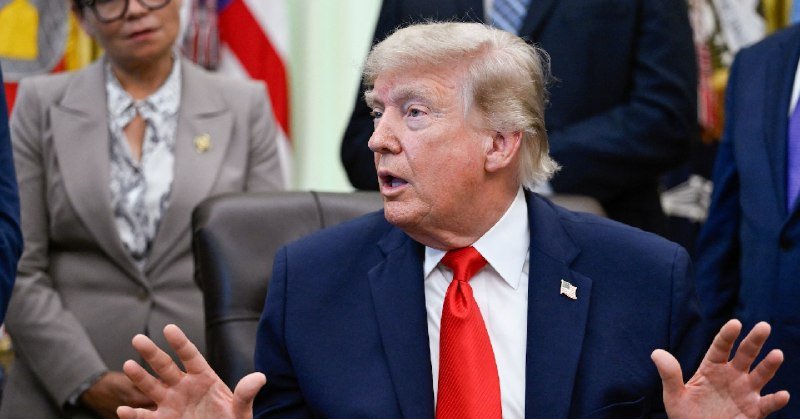
On the morning of 11 June 2026, US President Donald Trump posted that scheduled strikes against Iran had been cancelled. By the following day, he was claiming he had personally directed the US military, a month earlier, to execute a "secret mission" to escort oil tankers and commercial vessels through the Strait of Hormuz [Unusual Whales, 2026-06-12T02:58 UTC; Unusual Whales, 2026-06-11T17:37 UTC]. Stocks had already ripped to session highs the evening before on the news that strikes were off [Crypto Briefing, 2026-06-11T19:48 UTC]. Twenty-four hours earlier, the same account had reported the US would "take Khrag Island from Iran" [Unusual Whales, 2026-06-11T13:39 UTC].
The pattern — a threat, a cancellation, a confidential naval operation, a deal declared "pretty much wrapped up" [Unusual Whales, 2026-06-11T18:29 UTC] — is the strategy. The question is what the strategy is actually buying, and at what price.
A waterway that holds the global economy by the throat
Roughly a fifth of the world's traded oil moves through the Strait of Hormuz, the narrow passage between Iran and the Arabian Peninsula. Any sustained disruption repriced Brent crude within minutes. A US naval escort mission for commercial tankers, even an unacknowledged one, signals that Washington is now treating freedom of navigation through the Strait as a direct US military responsibility — not a NATO or coalition affair, not an Iranian concession, not a market matter.
The framing matters. A secret mission implies operational deniability. It also implies that the administration considers the threat severe enough to commit warships, but politically sensitive enough not to advertise them. Both halves of that calculation can be true at once.
The deal that may or may not exist
Trump's claim that negotiations are "pretty much wrapped up" sits awkwardly next to the Khrag Island remark and the cancelled strikes. None of the items above specify the counterparties, the venue, the mediators, or the substantive terms. There is no signed framework, no joint statement, no IAEA or Gulf state confirmation in the thread material. The Iranian side of the picture is absent entirely.
The most charitable read is that Washington and Tehran have agreed on a de-escalation sequence: Iran throttles back nuclear and proxy activity, the US lifts some sanctions pressure and avoids strikes, and both sides claim a win. The most sceptical read is that "pretty much wrapped up" is the kind of presidential language that travels well on financial television and means little by the next news cycle. Both readings are consistent with the available evidence; neither is confirmed by it.
What this is really about
Strip the diplomacy away and three structural facts remain. First, the US is now publicly willing to run military operations in the Strait without naming them as such. That is a precedent. Second, oil markets have learned to read Trump's social media feed as a primary signal — Crypto Briefing's note that equities spiked to session highs on the strike-cancellation post is the latest data point in a year-long pattern [Crypto Briefing, 2026-06-11T19:48 UTC]. Third, the absence of any Iranian or third-party confirmation in the public record means that the "deal" is, for now, a unilateral American narrative.
For Gulf states, the lesson is uncomfortable: their own waters are being managed, in part, by an unannounced US mission. For Tehran, the lesson is older: maximum pressure can be re-escalated, or suspended, on the basis of a single social media post. For oil buyers, the lesson is that freight risk through the Strait now has a US naval insurance policy attached — paid for by US taxpayers, justified by US interests, and revocable at any time the same feed changes its mind.
What remains genuinely uncertain
The thread material does not specify whether the "secret mission" involved actual destroyer escorts, what rules of engagement were authorised, whether Iranian fast boats approached commercial traffic during the period covered, or whether Tehran has acknowledged any of the exchanges at all. The Khrag Island claim is the most aggressive of the five items and is not corroborated elsewhere in the source list. The "pretty much wrapped up" line is presidential framing, not a diplomatic document. Markets priced the headline; the underlying facts have not caught up.
The shape of a final deal — if one materialises — will turn on questions the public record cannot yet answer: which sanctions are eased, what happens to Iran's stockpile of enriched uranium, whether the IRGC's regional posture changes, and whether the Strait mission becomes a standing deployment or quietly stands down. Until then, the operation is what it has been for a year: a sequence of posts that move crude, lift equities, and leave the waterway's future, and Iran's, decided off-camera.
This piece foregrounded the market reaction and the Strait-of-Hormuz operational angle, which most wire coverage buried beneath the strike-cancellation headline. The sources available are predominantly the originating social-media posts and a market-news Telegram channel; the Iranian, IAEA, and Gulf-state sides of the story are not in the public thread and have not been inserted here.
Wire provenance
This editorial synthesis draws on the following public wire/social posts:
- https://t.me/CryptoBriefing
Follow the event.
These dated source records provide context. They do not retrospectively verify this archive article.
Separate what the nuclear watchdog reported from what it could not determine after the June 2025 strikes.