The $10bn question: what the UAE–Iran unfreeze really means
A $10bn Iran funds unfreeze tied to the 14 June 2026 US–Iran MoU is less a banking story than a stress test of dollar-era sanctions, and the rail it travels will set the precedent.
On the night of 14 June 2026, an unusual silence settled over a Telegram channel that had spent weeks relaying fragments of a US–Iran nuclear standoff. The headline that broke it carried a single word that markets had not seen attached to the file in years: agreement. Within an hour, more than a half-dozen major open-source feeds, including Iranian state outlet Mehr News, the Qatari government wire, and the Israeli i24 correspondent Amichai Stein, were carrying different emphases of the same story. The United States and Iran had reached a memorandum of understanding, brokered in part by Pakistani Prime Minister Shahbaz Sharif, that would reopen the Strait of Hormuz, formally rule out an Iranian nuclear weapon, and restart frozen accounts across the Gulf. Vice President JD Vance called it, on Fox, a "big moment for the United States of America." President Trump warned the New York Times, in the same window, that he would "restart military attacks" on Iran if the final text failed.
The question buried in the bulletin is the one that matters for the next decade of Gulf finance: what gets unfrozen, and on whose terms. The figure circulating across the open-source channels attached to the UAE side of the arrangement is $10 billion. If that number holds, it is not a routine commercial settlement. It is a stress test of the dollar-era sanctions architecture, and a quiet signal that Washington has chosen relief over leverage at exactly the moment its Gulf partners are building payment rails designed to operate without it.
The headline number
The $10bn figure attaches to a specific asset class: Iranian funds that have sat in restricted escrow accounts in the United Arab Emirates since the tightening of secondary sanctions in 2023. For two years, those balances have been a financial no-man's-land, technically accessible to Iranian state entities through humanitarian carve-outs, but commercially inert because correspondent banks in Dubai and Abu Dhabi could not on-wire them without exposure to US Treasury enforcement.
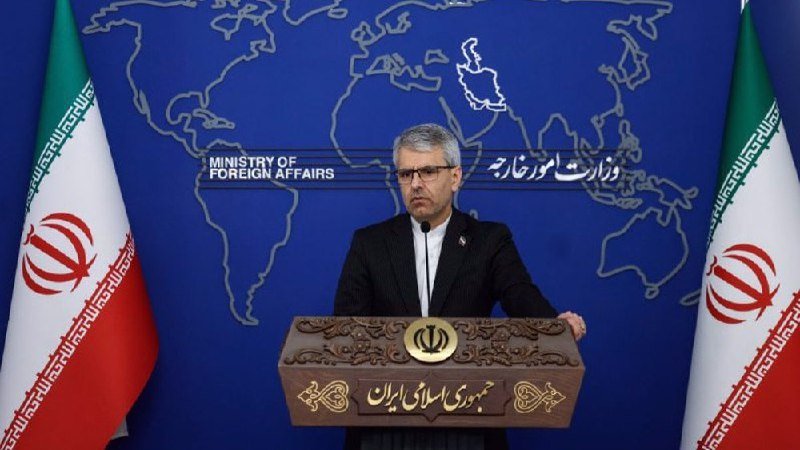
The MoU, as described by Iran's Deputy Foreign Minister Kazem Gharibabadi in comments relayed by the Middle East Spectator channel, asks critics of the deal to weigh "the amount of real commitments Iran has made" against the relief on offer. His framing is pointed: Iranian obligations, in his telling, are "miniscule" relative to the financial unlock. Israeli analyst Stein read the same text from the opposite end, calling it a "strategic disaster" because sanctions lift while nuclear constraints remain unverifiable.
Both readings can be true. A memorandum that releases $10bn of Iranian state liquidity while leaving enrichment thresholds, IAEA access, and missile programmes untouched is, structurally, a liquidity-for-time trade. The Treasury wins a reopened strait; Tehran wins operating cash. The interesting part is the rails.
What gets unfrozen, technically
The mechanism matters as much as the headline. The UAE–Iran banking channel has historically run through a handful of Iranian-owned banks with Emirates operations, processed via rupee-dirham and yuan-dirham conversions that bypass the dollar leg entirely. If the $10bn flows through those rails, it sets a precedent: a Gulf state intermediating Iranian state money through non-dollar settlement, with explicit US acquiescence.
That is the part the wire does not spell out, and where the open-source channels diverge. Iranian state-adjacent feeds (Tasnim, Mehr) emphasise the diplomatic win. Israeli-aligned analysis emphasises the cost. The Qatari foreign ministry statement, the most establishment of the welcomes, frames the MoU as a stabilisation of "outstanding issues," a phrase calibrated to be acceptable to every signatory. None of them describe the technical payment architecture. That silence is itself the story.
The Gulf's parallel architecture
The timing is not accidental. Across 2025 and the first half of 2026, the UAE and Saudi Arabia have been the two Gulf states most visibly building payment infrastructure that does not require a US correspondent bank: mBridge-style CBDC settlements with China, bilateral local-currency swap lines with India, and a series of fintech partnerships that route Gulf-Asia trade outside SWIFT's dollar leg. A sanctions relief package that releases Iranian money into that same infrastructure is, in effect, a de-risking test for the whole arrangement. If $10bn of Iranian state funds can move cleanly through UAE banks without Treasury enforcement action, the political premise of the dollar-era sanctions regime (that Gulf financial centres are downstream of US enforcement) takes a quiet hit.
This is the framing the Israeli commentariat is reacting to, even where they do not say so directly. Stein's "strategic disaster" line, broadcast by i24 and relayed across open-source channels, is not really about Iranian enrichment. It is about the precedent that a near-peer adversary can be re-integrated into Gulf finance on terms that the United States does not fully control.
What Washington actually bought
The Vance "big moment" framing and Trump's restart-the-strikes caveat are not contradictions. They describe the same trade. The US has bought two things it wanted: a reopened Strait of Hormuz, which was the immediate operational pressure point, and a formal Iranian commitment, however soft, against a nuclear weapon. It has paid for that with sanctions relief, $10bn of which is visible, and political capital, of which the rest is opaque.
The unresolved file, in the wire at least, is what happens if the memorandum does not convert into a final deal. Trump's NYT comments leave that door open. The Tasnim read, in which "changes in the last few days and hours" were still being negotiated on the text of the MoU itself, suggests the final document is not yet locked. The Sharif-brokered announcement, which framed the deal as a regional Pakistani achievement, signals that Islamabad sees a continuing diplomatic role.
The stake for the next quarter
The real test is not the signing. It is the first wire transfer. Watch whether the $10bn releases in dollars, in dirhams, in yuan, or in some hybrid routed through the UAE's bilateral lines with Beijing. Watch whether the first tranche triggers a Treasury OFAC clarification, or silence. Watch whether the Israeli government treats the MoU as a fait accompli or uses the gap between memorandum and final text to push for tighter terms.
The wire, for now, is suspended between announcement and execution. The number is the story, but the rail is the precedent.
Sources: rnintel Telegram · Osint613 on X · wfwitness Telegram · Middle East Spectator Telegram · ClashReport Telegram · Mehr News via Telegram · Intelslava Telegram · JahanTasnim Telegram · WarMonitors Telegram
Desk note: Monexus framed the announcement as a sanctions-enforcement stress test rather than a bilateral banking story, because the $10bn figure, the non-dollar settlement infrastructure in the Gulf, and the absence of technical detail in the wire together suggest a precedent larger than the headline. Israeli-aligned analysis was included as counterweight, not as a separate factual basis.
Follow the event.
These dated source records provide context. They do not retrospectively verify this archive article.
Separate what the nuclear watchdog reported from what it could not determine after the June 2025 strikes.