Iran's Bahrain radar strike exposes a quieter contest over Gulf air dominance
Imagery from IRGC-linked channels points to an unverified Iranian radar strike in Bahrain. The wire record around it tells a bigger story about who watches the Gulf's skies once the MoU headlines fade.
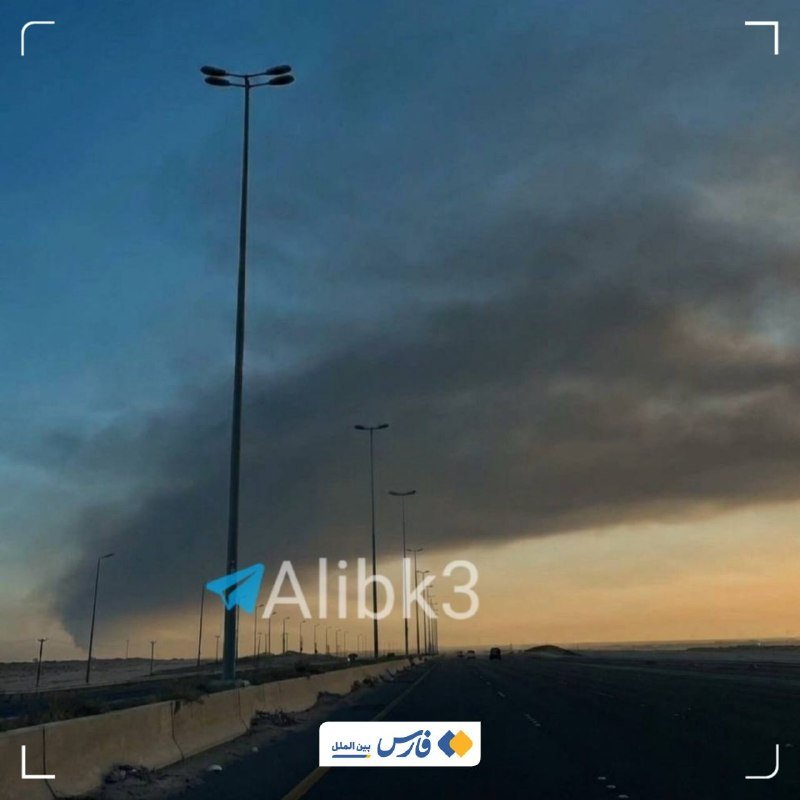
On the evening of 13 June 2026, an IRGC-aligned channel posted imagery that, if verified, would mark a striking escalation in the long-running contest for control of Gulf airspace: an Iranian strike against a radar installation on Bahraini soil, with traffic-control functions knocked out and at least one commercial flight forced into emergency diversion. As of this writing, the strike itself has not been confirmed by any Western wire, Israeli outlet, or Bahraini government statement. The structural argument does not require confirmation of the strike to land.
What the imagery circulates alongside, the reporting from the last forty-eight hours, sketches a region being rearranged by force and bargain at the same time. Iran has signed a memorandum of understanding with the United States; Trump has announced the end of the naval blockade; Tehran is being promised access to a roughly $300 billion private reconstruction fund; Israeli politicians are calling the resulting posture a "greatest strategic failure"; and a B-52 has come down at Edwards Air Force Base in California during a period of acute regional tension. The radar strike, if it happened, sits inside that frame as a single sharp image of a quieter contest the formal diplomacy is leaving in place: who watches the skies over the Gulf when the press releases move on.
The radar contest below the MoU
Air defence in the Gulf is not a single system but a layered one. Saudi Arabia runs the biggest indigenous build-out, anchored on the American-supplied Patriot and THAAD batteries and the Saudi-built, Chinese-assisted radar architecture that has expanded steadily since 2017. The UAE has quietly built its own layered network, including the Falcon Eye and the Saab-derived components of an integrated air picture, and has spent a decade positioning itself as a future exporter. Bahrain hosts the US Fifth Fleet and a forward-deployed slice of American air surveillance, which makes any radar target on its territory an immediate test of Washington's force posture. Iran's response to all of this has been denial and penetration: a dense short-range air-defence network, heavy investment in ballistic and cruise missiles, and a drone inventory that has been used to probe Gulf installations from Saudi Arabia's Abqaiq facility in 2019 onward.
A strike on a Bahraini radar target, even a small one, lands inside that record as an assertion that the Gulf's air picture is contested at the level of sensors, not just aircraft. The implication is that Iran is signalling it can impose costs on the layered network the MoU does not formally address.
What the wire shows around the strike
The factual record around the event is thin and uneven. Mehr, an Iranian state outlet, reported multiple explosions in the Strait of Hormuz overnight on 15 June 2026, attributing them to "traffic management"; OSINT channels openly noted that explanation was implausible. The Bahraini radar strike, if it took place on the night of 13 June, sits in the silence that wire reporting has not yet filled. That silence is itself worth reading. Bahraini officials have not denied, confirmed, or commented. Pentagon briefings carried by US outlets have focused on the broader Iran track. PressTV and Tasnim have, in adjacent dispatches, cast the regional balance of power as "changing in favour of Iran," citing Persian Gulf sources claiming trust in Washington's protective umbrella is wavering. None of that resolves what happened on the night of 13 June. It does, however, place the strike in a context in which Iranian messaging has incentive to claim a tactical success it has not yet been able to document publicly.
The diplomatic frame the strike sits inside
The Iran-US track dominates the same news cycle. On 15 June, Trump announced the end of the US naval blockade and declared the deal with Iran "complete." The Financial Times reported that the Trump administration is weighing approval of a roughly $300 billion private investment and reconstruction fund, financed in part by a coalition of Gulf states, with access conditional on Tehran upholding the memorandum of understanding; a signing ceremony has been framed for Switzerland. A Reuters dispatch the same evening read Iran post-deal as a country whose rulers now face the demands of an "angry, embittered population" after a war that Middle East Eye sources variously read as a chance for recovery, a setup for disappointment, or a postponement of the next conflict. The Iranian foreign minister, Abbas Araghchi, has publicly framed the foreign ministry as ready to cooperate with parliament to "achieve the country's economic goals," language that nods to a domestic audience the MoU has not yet reached.
None of that directly licenses a strike on a Gulf neighbour. It does describe the conditions under which Tehran can claim maximum messaging value from a tactical action that is small enough to be deniable, large enough to be visible on social media, and ambiguous enough to be folded into the existing MoU as "an incident" rather than a breach.
Israel reads the MoU as the threat
Israeli political reaction has been harsher than the MoU's narrow text warrants. Politicians across the opposition and inside the coalition have publicly attacked Netanyahu over what PressTV, citing Israeli sources, called the "greatest strategic failure" of the post-war architecture. Netanyahu's own framing, carried by Sprinter Press, has been to insist the operation's stated goal was never regime change but the creation of "conditions." That formulation is the giveaway. If the stated goal was conditions, then the conditions now in place, an Iran treated as a regional power under formal American engagement and a $300 billion reconstruction track, are by his own standard the result his operation produced. The Israeli reading is consistent with that arithmetic, and the radar strike, if confirmed, would sharpen it further by demonstrating that Iran now claims room to act on the ground the MoU does not occupy.
What the B-52 removes from the frame
A separate piece of the news cycle, a B-52 Stratofortress crashed shortly after takeoff from Edwards Air Force Base in California at around 11:20 a.m. local time on 15 June. Early reporting carried by OSINT channels noted a smouldering burn mark on the runway and unknown status of the crew. The crash is, on its own, a domestic incident. Its appearance in the same news cycle as an unverified Iranian strike, a signed MoU, a $300 billion reconstruction fund, and Israeli coalition recriminations is what makes it matter. A single B-52 out of the air, in a week when layered air defence is the topic, is the kind of image that travels.
The contest under the surface of the MoU is not who sits at the table in Switzerland. It is who controls the radar picture over the Gulf when the press releases are no longer running. Tehran's answer, in imagery and incident, is that the picture is not settled. The deal does not pretend otherwise; the wire record does not pretend otherwise. What remains to be seen is whether the regional architecture the MoU sketches treats the radar strike as the first move in a new game, or the last visible one in the old one.
Sources
- https://t.me/s/AMK_Mapping
- https://t.me/s/intelslava
- https://t.me/s/osintlive/205193 (Mehr / Strait of Hormuz explosions, "traffic management")
- https://t.me/s/osintlive/205194 (B-52 crash at Edwards AFB, 11:20 a.m. local)
- https://t.me/s/GeoPWatch (Trump announces end of US naval blockade on Iran)
- https://t.me/s/wfwitness (FT: $300bn private reconstruction fund under MoU consideration)
- https://t.me/s/presstv ("Greatest strategic failure": Israeli politicians on Netanyahu)
- https://t.me/s/JahanTasnim (Tasnim: regional trust in US protection "wavering")
- https://t.me/s/alalamarabic (Gulf sources: MoU "establishes Iran as a permanent regional power")
- https://t.me/s/PalestineChronicle (Iran confirmed approval of MoU; Swiss signing framed for Friday)
- https://t.me/s/alalamfa (Araghchi: foreign ministry ready to cooperate with parliament on economic goals)
- https://t.me/s/V_Zelenskiy_official (Zelenskyy in Geneva for peace-track meetings)
- https://x.com/sprinterpress (Netanyahu on operation goals; reconstruction-fund framing)
- https://x.com/reuters (Iran rulers face demands of angry, embittered population post-war)
- https://x.com/middleeasteye (Iranians processing the war: recovery, disappointment, postponement)
- https://x.com/mintpressnews (continued Israeli strikes on southern Lebanon, targeting of journalist Hadi Hoteit)
Desk note: this article is built on imagery circulated through IRGC-aligned Telegram channels on the evening of 13 June 2026. Where Western wire confirmation is available in future updates, this piece will be revised; the structural argument, however, does not depend on confirmation of the strike itself.