Streets vs. negotiators: Iran's domestic revolt targets Araghchi, Pezeshkian, and Galibaf over US talks
As Tehran's negotiators finalised a US-Iran memorandum of understanding, protesters burned effigies of Araghchi, Pezeshkian, and Galibaf. The target is not the deal's framework but the officials who sold it without asking.
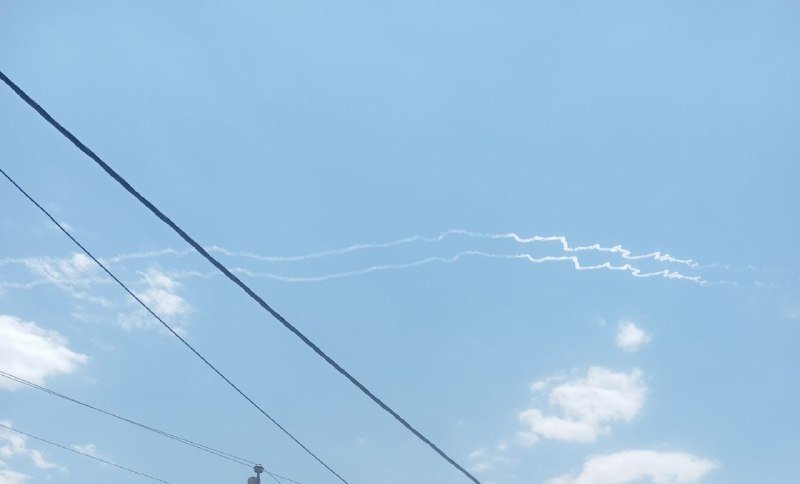
On the evening of 11 June, hours after Foreign Minister Abbas Araghchi emerged from indirect talks in Geneva and declared that the "path is now clear" for a US-Iran memorandum of understanding, protesters took to the streets of central Tehran. They carried no party flags and chanted no factional slogans. The targets were the men who had spent the previous week telling Iranians that peace was at hand: Araghchi, President Masoud Pezeshkian, and Parliament Speaker Mohammad Bagher Galibaf. Chants of "Death to the negotiator" rang through the capital, and the names of all three officials were burned on effigies in several districts, according to footage circulated on 11 and 12 June by the openly opposition-aligned channel Sprinter Press.
What makes the moment unusual is not the anger. Iranian street politics has cycled through episodes like this for four decades. What makes it unusual is the target. The protests are not aimed at the supreme leader, at the Revolutionary Guards, or at the negotiating framework as such. They are aimed at the three officials who carried that framework into a foreign capital and came back claiming victory. The complaint is procedural as much as it is political: a deal struck over the heads of a population that absorbed the cost of the war that preceded it.
The deal the street did not vote for
The memorandum in question was approved in principle on or around 14 June, with a signing ceremony expected in Switzerland on Friday 19 June, according to regional reporting carried by Palestine Chronicle. The Trump administration is separately weighing approval of a $300 billion private investment and reconstruction fund for Iran, with disbursement conditional on Tehran upholding the memorandum, the Financial Times reported. The official framing, both in Tehran and in Washington, is that the agreement ends a war that had already cost Iran heavily and opens the door to economic recovery. The street framing is closer to a hostage's complaint: you negotiated my future while I was still bleeding.
Middle East Eye's correspondents on the ground described Iranians "trying to process what has happened," with some seeing a chance for recovery and others expecting disappointment. A Reuters analysis filed the same week carried the more pointed headline: "With war likely over, Iranian rulers must face demands of angry, embittered population." Neither outlet endorsed the protests. Both treated them as a political fact that the official communiqué had no room for.
Why these three names
Araghchi carries the immediate burden. He was the face of the talks, the man who flew to Geneva and emerged to say the Ministry of Foreign Affairs is "ready to cooperate with the parliament" on the economic objectives of the deal, a line he repeated publicly on 14 June. Pezeshkian carries the political weight. He is the elected president, the man who argued before the Iranian public that diplomacy could deliver what sanctions had not, and whose office now owns the legitimacy question hanging over the memorandum. Galibaf, as speaker of parliament, is the institutional hinge. He controls the chamber that will, at some point, be asked to ratify or shelve whatever the negotiators bring home.
The selection is not random. None of the three commanded the war. None of them ordered the strikes that, according to OSINT aggregators citing Iranian state outlet Mehr, triggered the overnight "traffic management" explosions in the Strait of Hormuz in mid-June. But all three will be asked to sell the outcome. The street, having watched the costs without consenting to the strategy, is signalling that the selling will not be easy.
What the protesters are actually saying
The footage that surfaced through Sprinter Press on 11 and 12 June is openly partisan, produced and circulated by a channel aligned with the opposition abroad. That matters, and the article should say so. But the chants and the effigies do not depend on the channel for their content. They are recognisable demands from a recognisable constituency: a public that wants the war's costs acknowledged, the deal's terms debated in public, and the officials who brokered it held accountable at the ballot box or in the street.
The implicit alternative is not "no deal." Polling in the immediate post-war window has consistently shown that Iranians want the sanctions regime lifted and the economy reopened. It is "not this deal, on these terms, in this sequence." The objection is to the substitution of parliamentary ratification with a memorandum of understanding signed abroad, and to the substitution of public deliberation with a televised handshake. Araghchi's own statement, that the foreign ministry is ready to cooperate with parliament on the economic objectives, reads differently in that light. It is an admission, however carefully worded, that the political work is not yet done.
Stakes for the region
The reaction outside Iran has been quicker and more political than inside it. Israeli opposition politicians and members of Netanyahu's own coalition publicly attacked the prime minister over what one senior figure called "the greatest strategic failure," with the US-Iran memorandum framed as a strategic gift to Tehran, according to Press TV's coverage of Israeli reactions on 15 June. In Beirut, President Joseph Aoun received a phone call from Araghchi on the evening of 14 June to discuss regional implications, the Lebanese presidency confirmed. Palestinians in Gaza publicly registered frustration at being excluded from a deal that reshapes the region's security architecture without addressing theirs, even as Israeli strikes continued during the ceasefire talks, Reuters reported.
Theodor Zalewski is a pseudonym. The author writes on regional politics.
Iran's negotiators have until Friday to convert a memorandum into a signed agreement and, harder still, into a domestic political fact. The street has until then to decide whether the effigies were a warning or a verdict.