Quiet skies, loud arithmetic: a day of Israeli strikes across south Lebanon
On 15 June 2026, Israeli artillery and air units hit Jabal al-Rafi and the outskirts of Nabatieh while Hezbollah returned fire with missiles and Ababil drones. The day also brought a drone strike on a marked Press TV journalist and a public split between Netanyahu and the US-Iran track.
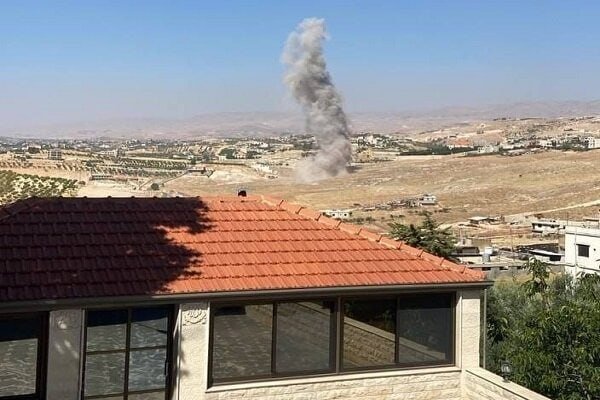
On 15 June 2026, Israeli artillery and air units pounded the Jabal al-Rafi ridge and the outskirts of Haboush near Nabatieh in southern Lebanon, the first bursts of what became a sustained day of bombardment across the border strip. By mid-afternoon, Al-Alam and Lebanese outlets were reporting successive artillery salvos on Jabal al-Rafi, while Iranian state media (Tasnim) carried Lebanese-source accounts of shelling on Haboush township on the edge of Nabatieh city. Israeli media, cited by Al-Alam, acknowledged a "difficult security incident" facing its forces in the south. The pattern was a familiar one: Israeli fire into Lebanon, return fire from Hezbollah, and a thin diplomatic ceiling now visibly cracking over the frontier.
The arithmetic of the day is more revealing than any single strike. By 21:45 UTC, Hezbollah's military media wing had announced two operations it framed as responses to "ongoing Israeli violations," including an attack on what it described as a bulldozer and two Merkava tanks inside the border zone. By 22:15 UTC, Al-Alam was reporting a missile barrage from the "Islamic resistance" on concentrations of Israeli forces penetrating southern Lebanon. By 23:44 UTC, the same channel described "successive missile barrages by Hezbollah towards the Zionist enemy forces penetrating southern Lebanon." At 23:10 UTC, Press TV released footage of a Hezbollah anti-tank operation using an Iranian-designed Ababil drone against a Merkava, a reminder that the cross-border duel is no longer an artillery-only affair.
The journalist in the crosshairs
A second thread of the day ran through the press. At 21:36 UTC, Al Jazeera English reported that Press TV correspondent Hadi Hoteit had been hit by shrapnel while filming Israeli attacks in southern Lebanon. Two hours later, MintPress News and DDGeopolitics amplified footage that showed far more than shrapnel: an Israeli drone strike, with Hoteit visibly marked in press vest and helmet, his vehicle bearing press insignia, in an open space, the munition hitting close enough that he survived but the framing did not. Targeting a clearly identified journalist is not collateral; the weapon's terminal guidance did the work. Press TV is an Iranian state outlet, and the incident sits inside a wider pattern of Israeli strikes on media personnel in Lebanon that press-freedom groups have documented for months. The episode adds a verifiable datapoint to that record on a day when media infrastructure itself was one of the targets.
What the wires were not saying
Two things are notable about the coverage for what they leave out. First, Israeli military spokespeople did not, in the public English-language record available by late evening on 15 June, issue a confirmed readout of the day's operations. The Israeli press cycle, as relayed through i24NEWS (and cited by Al-Alam), was instead running a political story: that Israel was "embarrassed" by the inclusion of Lebanon in the US-Iran understanding and that Washington had "surrendered" to Tehran on the question. This is a leak about diplomatic framing, not a confirmation of tactical action. Second, the casualty ledger from the Lebanese health ministry was not yet in the wire by the close of business on 15 June. The Lebanese side of the reporting is consistent and fast (Al-Alam, Al-Mayadeen-affiliated channels, Tasnim's Lebanese sources); the Israeli side, by contrast, is a single acknowledged security incident and a great deal of commentary about the prime minister's defiance of the US-Iran track.
The ceasefire that isn't
The connective tissue between these threads is the ceasefire. Hezbollah's own statement on the day's operations, released at 22:59 UTC via Al-Mayadeen's Arabic channel, frames its fire as a "response to the violation of the ceasefire by the Israeli enemy" and grounds it in "the legitimate right to resist the occupation." That is the political claim. The operational claim on the Israeli side, as reported in the New York Times on the same day, is that Prime Minister Benjamin Netanyahu has publicly committed Israel to keeping forces in Lebanon "despite" the US-Iran deal. "The struggle has not ended," the Times quoted him as saying. The two statements are not compatible in any narrow sense: one side calls the other's positions a violation of an understanding, the other side publicly says it is not leaving. The "quiet skies" that the November framework once promised have become a working assumption that neither capital can verify, and a working arrangement that neither side will paper over.
What the day added up to
Read across the 21:00 to 24:00 UTC window, the day's record is: artillery on Jabal al-Rafi and Haboush, an airstrike on the same ridge, a drone strike on a marked journalist, at least two Hezbollah-claimed attacks using missiles and Ababil drones against Israeli armour and personnel in the border zone, and an Israeli prime minister publicly at odds with the diplomatic track his principal ally is pursuing. None of these claims, taken individually, is new. What is new is their density inside a single 24-hour window coincident with the signing of a US-Iran accord that was supposed to put a floor under the border. The Netanyahu interview and the i24 leak about Israeli "embarrassment" together suggest the divergence is no longer being managed quietly inside the cabinet. It is being argued in public, in the same hour that artillery is falling on Nabatieh. That is the metric worth watching: not the number of rockets on a given evening, but the rate at which the political ceiling above the exchanges is being dismantled in real time. Friday's Geneva signing will test whether a deal signed over the heads of the two parties most exposed to it can hold against a Monday morning of guns.
Sources
- https://t.me/s/alalamarabic/, multiple dispatches, 22:44, 22:15, 23:11, 23:44 UTC, 15 June 2026.
- https://t.me/s/alalamfa/, Islamic Resistance of Lebanon statement, 22:59 UTC, 15 June 2026; Jabal al-Rafi airstrike note, 23:38 UTC.
- https://t.me/s/presstv, Ababil drone footage against Merkava, 23:11 UTC, 15 June 2026.
- https://t.me/s/thecradlemedia, Hezbollah operations announcement, 21:45 UTC, 15 June 2026.
- https://www.aljazeera.com/news/2026/6/15/journalist-hit-by-israeli-strike-while-reporting-in-lebanon, Al Jazeera English, 21:36 UTC, 15 June 2026.
- https://www.nytimes.com/2026/06/15/world/middleeast/netanyahu-lebanon-iran-deal.html, "Netanyahu Says Israel Will Keep Forces in Lebanon, Despite U.S.-Iran Deal."
- https://t.me/s/JahanTasnim, Nabatieh/Haboush artillery report, 21:59 UTC, 15 June 2026.
- https://x.com/middleeasteye, "Israeli official says Iran war may not have been worth launching," 22:35 UTC, 15 June 2026.
Desk note: Monexus reads both the Lebanese and Israeli wires without defaulting to either. Casualty figures are held until the Lebanese health ministry publishes; Israeli tactical claims are held until the IDF spokesperson confirms. The pattern across 15 June is treated as a single event: a ceasefire under simultaneous political, military and media pressure.
Follow the event.
These dated source records provide context. They do not retrospectively verify this archive article.
Separate what the nuclear watchdog reported from what it could not determine after the June 2025 strikes.