Trump's Iran Deal Theatre: A Signing, a Vow, and a Photo From 2018
Trump announced a signed Iran deal at the G7. The text is unreleased, the CIA doubts Tehran will comply, and the ceremony in Switzerland will produce a photo long before it produces an enforceable agreement.
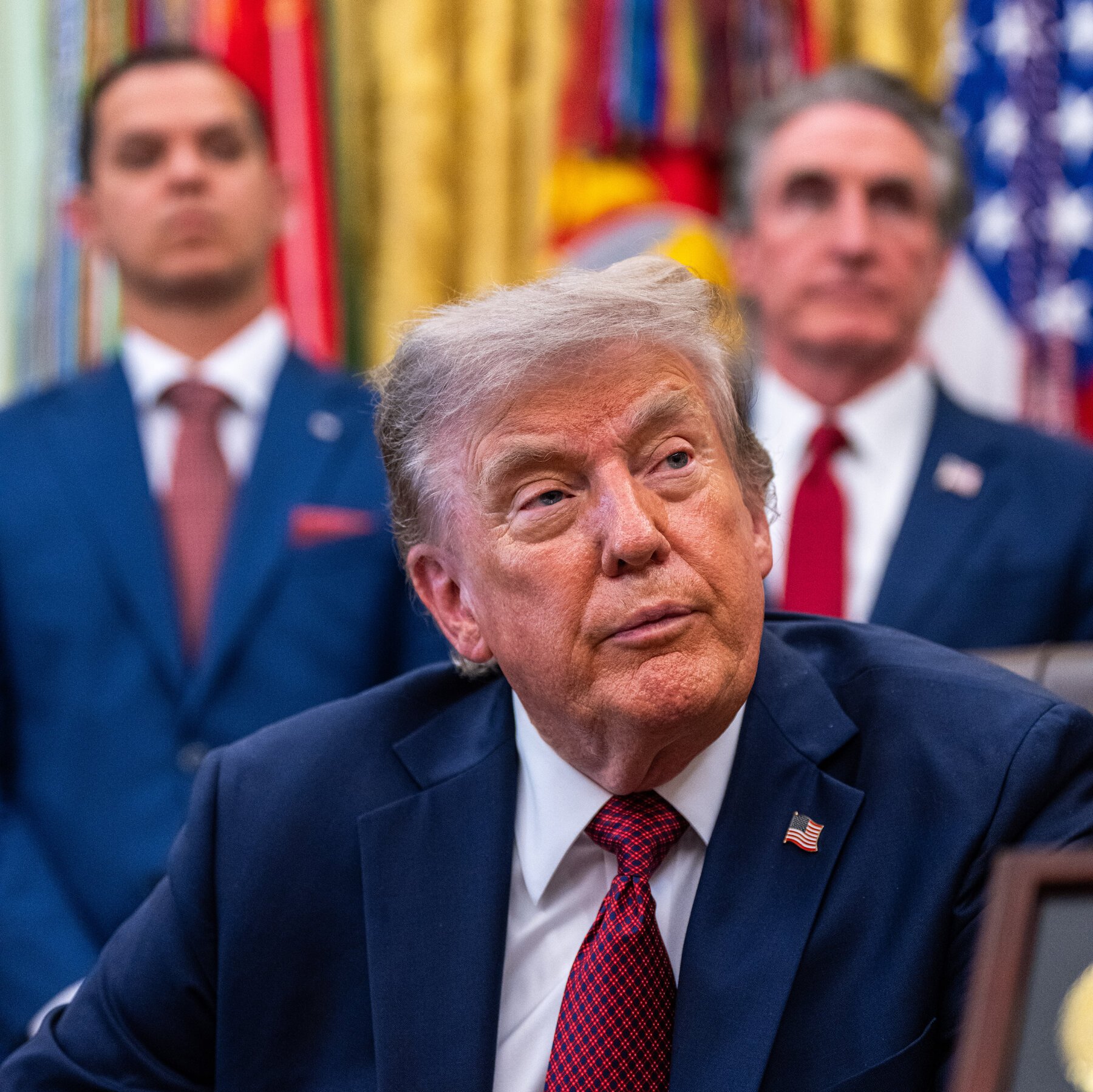
President Donald Trump stood before reporters at the G7 Summit in France on 13 June 2026 and declared, with the rhetorical finality of a man reading a verdict, that a peace deal with Iran had already been signed. The text, he said, would be released "pretty soon." A formal ceremony was scheduled for Friday in Switzerland. The Strait of Hormuz, the chokepoint through which roughly a fifth of the world's oil normally transits, would be "open from Friday." The US naval blockade of Iran was, in his telling, over. The deal was "complete."
What followed, in the hours after that performance, was not clarity but a series of fractures running through every claim the president had just made. The text of the agreement remained unreleased. Senators from both parties, briefed or unbriefed, told reporters they had nothing to read. The CIA's director, John Ratcliffe, had privately told the president and senior officials that US intelligence assessed Iran did not intend to abide by its nuclear commitments in a final deal, according to Axios reporting circulated overnight. And Iran's negotiating team had, according to Drop Site News reporting picked up by Middle East Eye, brought psychiatric professionals into the room during indirect talks to help manage the behaviour of the American side.
The deal that nobody has read
The most striking feature of the 13 June announcement is not the announcement itself but the absence of the document behind it. The New York Times reported in its late evening wire that senators, including Republicans, were "in the dark" on the agreement and had refrained from praising it; Democrats demanded an immediate briefing. Reuters framed the accord as offering Trump "exit from war, and fresh political risks," a line that captures the dual-use nature of the announcement, which functions as both diplomacy and political theatre on a global stage. The Financial Times, picked up by multiple channels, reported that the administration was weighing approval of a $300 billion private investment and reconstruction fund for Iran, with access conditional on Tehran upholding the memorandum of understanding. Trump dismissed the $300 million payment figure circulating in early coverage as "Fake News, put out by the Dumocrats."
The contradictions stack quickly. Trump told one reporter that Iran had "agreed to never have a Nuclear Weapon." When pressed on whether Iran would be allowed to produce ballistic missiles without restrictions, he cut the exchange short: "You work for fake [news]." The BBC's overnight wire flagged "confusion about the exact contents of the agreement." The Epoch Times quoted the president saying the deal could "reshape the Middle East" and "slash global energy costs." Prediction markets moved on the news, with Kalshi pricing the chances of a US-Iran nuclear deal before October at 52 percent, up sharply from the prior baseline.
The intelligence dissent
The most consequential counter-current is the CIA assessment. Ratcliffe's warning to Trump and senior officials, that US intelligence had "serious doubts about Iran's willingness to make the nuclear concessions the US is seeking," was reported by Axios and circulated by Middle East Spectator and Instant News Alerts within the same hour window. A deal whose own intelligence community does not believe the counter-party will honour is, in conventional terms, not a deal at all. It is a wager dressed up in ceremony. Trump's response has been to keep the cameras rolling.
Israeli Prime Minister Benjamin Netanyahu, in a separate signal tracked by Deutsche Welle's late wire, declined to criticise the deal but pointedly noted that he does not "always share the same views" as Trump. The restraint itself is news; Jerusalem's silence is loud.
The Kim photo and the operating logic
The day's third beat, a 2018 photograph of Trump with Kim Jong-un resurfacing on the same afternoon's news cycle, was treated by the wire services as a curiosity. Monexus is treating it as the same story. The visual grammar of both announcements is identical: a presidential declaration of diplomatic triumph, a hand extended for a photograph, the details left vague, the political reward front-loaded, the verification back-loaded. In 2018 the Singapore Declaration produced a sentence and a photo. In 2026 the Switzerland ceremony is producing, so far, the same.
That is not a small pattern. US non-proliferation policy for the past decade has been built around the proposition that a signed framework is itself a deliverable, regardless of whether the underlying commitments hold. The 2018 document collapsed under inspection within months. The 2026 framework, judged by Ratcliffe's own assessment, is built on the same sand.
What to watch by Friday
The ceremony in Switzerland will produce two artefacts: a signed paper and a photograph. Neither, on the evidence available at the time of writing, resolves the core problem, which is that the US intelligence community believes the Iranian side will not comply. The Senate briefing request is the first pressure point. The Israeli response is the second. The text release, whenever it comes, is the third. Each will be tested not against the president's rhetoric but against the gap between Ratcliffe's assessment and the page.
For now, the Strait of Hormuz will, in Trump's telling, reopen on Friday. The oil markets have already priced the possibility. The question of whether the underlying agreement has any more durability than the 2018 photo in the drawer is one the next seventy-two hours will not answer.
Follow the event.
These dated source records provide context. They do not retrospectively verify this archive article.
Separate what the nuclear watchdog reported from what it could not determine after the June 2025 strikes.