Brazil and Morocco open World Cup 2026 with a 1-1 draw that says more about the field than the favourites
A 1-1 draw at MetLife Stadium between Brazil and Morocco is the first test of a tournament that the form guide will not settle, with African football's rising credibility on the same pitch as the South American aristocracy.
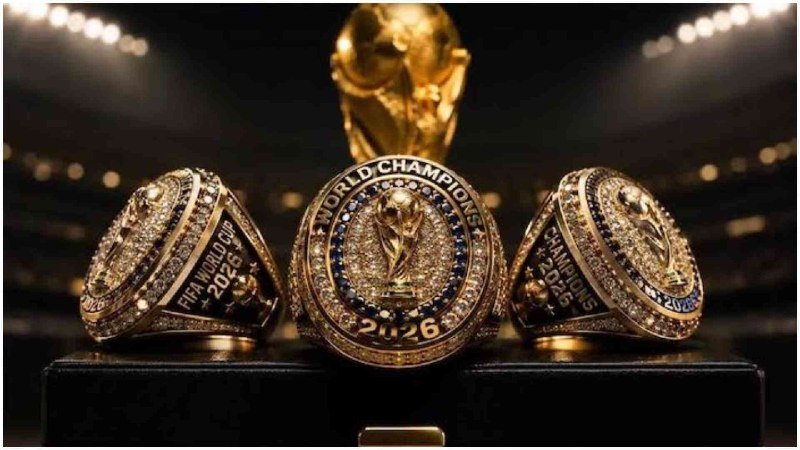
At MetLife Stadium in East Rutherford, New Jersey, on the evening of 13 June 2026, Brazil and Morocco opened the most-anticipated fixture of World Cup 2026's Group C with a result that the form book had not scripted: a 1-1 draw. Ismael Saibari gave Morocco the lead, Vinicius Junior equalised for Brazil, and a tournament that the public conversation had already reduced to a coronation for the South American favourites had to absorb, in its opening ninety minutes, the news that the field is wider than the bracket suggests. The match was played at the venue that will host the World Cup final on 19 July, a fact that gave the scoreline more weight than a routine group-stage point usually carries (France 24 English, 14 June 2026, 00:07 UTC).
The 1-1 result is, on its own, a small piece of football news. Read against the structure of the tournament and the politics of the confederations, it is something more interesting: a data point in the long-running argument about whether African football has closed the gap to the South American aristocracy in time for a World Cup that, for the first time, is being staged across three North American host nations. The Group C opener is the cleanest possible test of that argument, and on the evidence of one match, the answer is that Morocco no longer arrives at this tournament as a story about potential; it arrives as a side capable of dictating terms to Brazil for sustained stretches of a World Cup match.
What the match actually showed
Telesur's half-time summary, posted at 22:54 UTC on 13 June, captured the shape of the contest with unusual precision: Morocco impressed with its discipline and intensity through the first half, while Brazil grew into the match and found an equaliser through Vinicius Junior, leaving the sides level at 1-1 at the break. The full-time confirmation arrived at 00:25 UTC on 14 June via the same wire, with goals attributed to Saibari for Morocco and Vinicius for Brazil (Telesur English, 14 June 2026, 00:25 UTC).
France 24's English-language report characterised the contest as a "heavyweight Group C opener" played at the venue that will host the final, signalling that the broadcaster's editorial frame was less about the upset and more about the staging: the match at MetLife was a stress test of the final venue three weeks ahead of the championship match. The French-language wire ran a parallel summary under a similar headline, noting that the clash "kept its promises" — a phrase that, in French sports journalism, usually means the spectacle matched the billing even if the result did not (France 24, 14 June 2026, 00:07 UTC).
For Brazil, the read is straightforward. A draw in the opener is not a crisis, but it is a complication. The Seleção entered the tournament as one of the favourites, and a group featuring Morocco — the first African side to reach a World Cup semi-final, at Qatar 2022 — was always going to expose any slow starts. For Morocco, the result is a confirmation rather than a surprise: a team that has institutionalised the lessons of the 2022 run, with a core that plays in Europe's top leagues, treating a draw with Brazil as a baseline, not a ceiling.
The African counter-narrative
The dominant Western framing of African football at World Cups has historically been a deficit story: infrastructure gaps, player-export dependency, narrow generational windows. That framing has eroded, slowly, since the 2022 tournament in Qatar, where Morocco beat Spain and Portugal in succession to become the first African and first Arab side to reach a semi-final. The standard counter-narrative, articulated most clearly in African and Global-South press, is that the gap is structural rather than sporting: African federations have been producing top-tier talent for two decades, but the tournament conditions — travel, climate, the absence of a meaningful home confederation advantage — have suppressed that production.
The 2026 edition, hosted across the United States, Canada and Mexico, partially neutralises some of those conditions: shorter travel within a single continental footprint, summer scheduling in the northern hemisphere, and a stadium infrastructure that, whatever its other controversies, is the most expensive in World Cup history. Morocco's performance in the opening match is consistent with the view that, on a level playing field, the African game can compete with the South American aristocracy on the same evening. The match did not deliver a Moroccan win, and it would be reckless to over-read a single group-stage result. But the run of play Telesur described — Moroccan discipline and intensity through the first half, Brazil growing into the match only after going behind — is the shape of a contest between equals, not a defensive rearguard.
A tournament staged at scale
The structural frame here is the tournament itself. World Cup 2026 is the first edition to feature 48 teams, an expansion from the 32-team format that has held since 1998, and the first to be co-hosted across three countries. The expansion was sold by FIFA, and accepted by most of the global football federations, on two grounds: sporting — that more nations deserve a place at the table — and commercial — that a larger tournament generates the broadcast and sponsorship revenues that fund the rest of the global game. The third effect, less advertised, is competitive: a 48-team field makes the group stage statistically more forgiving for traditional powers and statistically less forgiving for second-tier contenders, because the path through the knockout rounds now runs through an additional round. A draw in the opener for Brazil does not end any of those calculations, but it does demonstrate that the field's middle is thicker than the seeding suggests.
The choice of MetLife Stadium for the Group C opener also carries an editorial weight. MetLife is the announced venue for the final; staging a marquee group match there, between the South American favourite and the 2022 African semi-finalist, reads as an implicit statement about which fixtures FIFA expects to be defining the tournament's narrative. The 1-1 result complicates that expectation, but it does not undo it — the final is still three weeks away, and a group-stage draw is the kind of result that sharpens favourites rather than dethroning them.
What remains uncertain
The sources available do not specify the goalscorers' minutes, the substitutions, or the disciplinary record of the match; the reporting describes the result and the shape of the first half, not the full statistical ledger. The thread context does not include a confirmed attendance figure, a referee assignment, or post-match quotes from either camp, so any deeper tactical reading of how Brazil failed to convert possession into a winning margin cannot be sourced from the materials at hand. The French-language wire's phrase that the clash "kept its promises" is editorial framing rather than a sourced tactical verdict, and it should be read as a tone-setting summary rather than an analysis.
There is also the larger question of what a single draw means for the rest of Group C. A point shared between the two sides most analysts expect to progress leaves the group mathematically intact, but it tightens the race for the two qualifying spots and raises the cost of any further dropped points — particularly for Brazil, who will face the group-stage expectation that a five-time champion does not negotiate its way through the opening round. For Morocco, the calculus is the inverse: a draw with Brazil is a foundation, and a win in the next match would convert it into a platform.
This publication framed the result as a structural data point about the width of the 2026 field, rather than as an upset; the wire reporting treated it as a heavy group-stage opener at a venue with a final to host.
Wire provenance
This editorial synthesis draws on the following public wire/social posts:
- https://t.me/france24_en](https://t.me/france24_en
- https://t.me/france24_fr](https://t.me/france24_fr