Two drones from Lebanon strike northern Israel as IDF issues fresh Lebanon displacement orders
Two suspected drones crossed from Lebanon into northern Israel on Sunday morning, landing hours after the IDF ordered forced displacement across 29 southern Lebanese towns. The pattern, not the single incident, is the story.
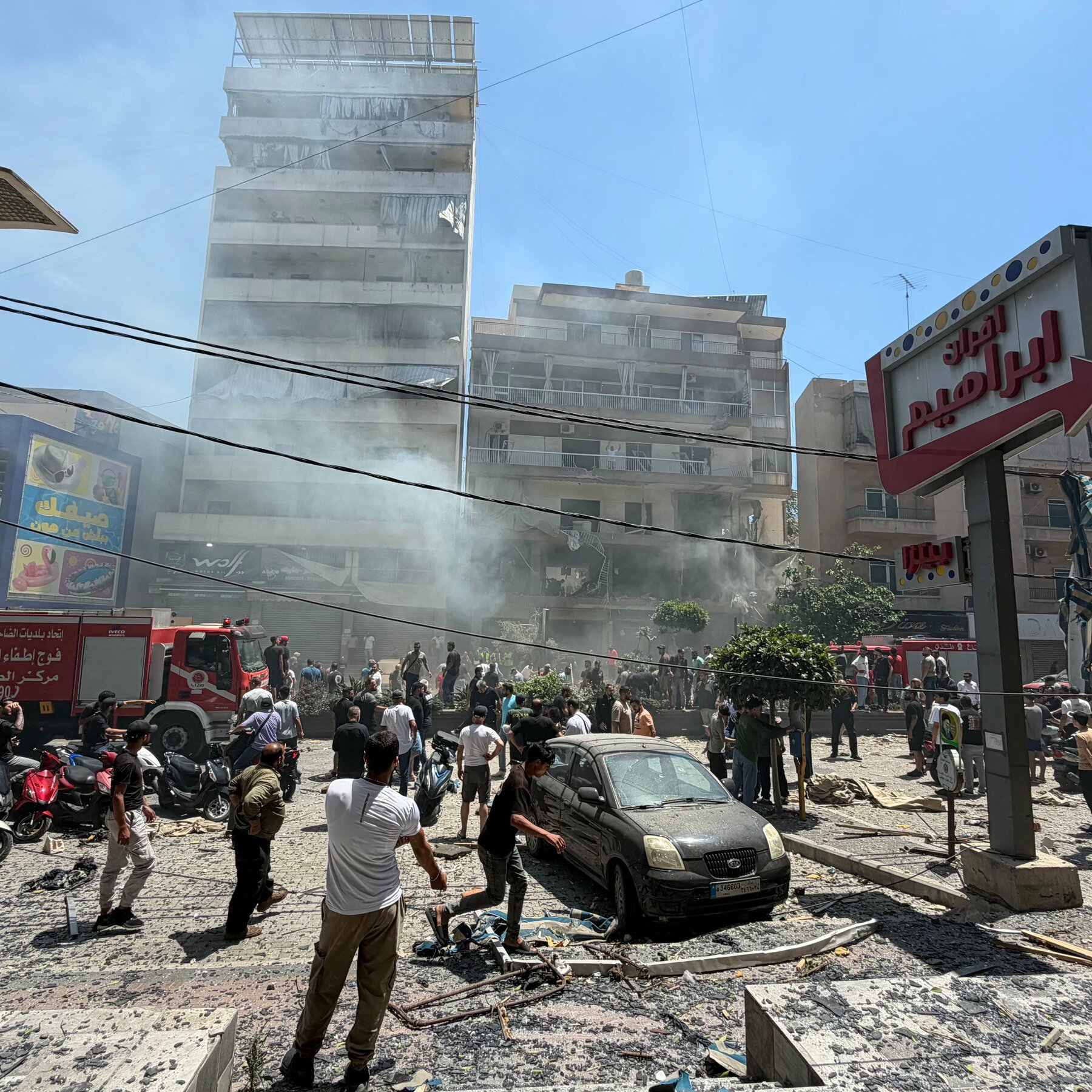
Two suspected aerial targets crossed from Lebanon into northern Israel in the early hours of Sunday, 14 June 2026, striking territory near the border and triggering air-raid sirens across multiple communities, the Israel Defense Forces said in a series of posts on its official channel at 09:01 UTC. The incident came hours after the military issued forced displacement orders covering 29 towns and villages across southern Lebanon, a Lebanese battlefield now more than nineteen months into a sustained cross-border campaign. Within an hour, the IDF walked back a separate wave of sirens in the south, attributing them to a false identification.
The episode is small in tactical terms — two drones, no immediate Israeli casualty count from official channels at the time of writing — but it slots into a pattern that has become routine along the Lebanon-Israel frontier. The structural story is the volume, not the spectacle: a near-daily rhythm of siren, intercept or impact, and displacement order, conducted in a media environment where the day's most consequential numbers are the town counts on the Lebanese side and the false-alarm tallies on the Israeli one.
What the IDF reported
At 09:01 UTC, the IDF's official channel posted that "the impact of a suspicious aerial target was identified in Israel" after sirens warned of a hostile aircraft infiltration across several areas in northern Israel. The post followed earlier reporting from Middle East Eye, which at 08:17 UTC headlined that "two drones crash in northern Israel after crossing from Lebanon." The IDF framed the incursion as a hostile-aircraft event, not a missile event, a distinction that matters operationally because the response protocols, and the intercept calculus, differ.
A second, later incident on the same channel at 10:00 UTC was less dramatic: sirens in several southern Israeli areas were determined to be a "false identification." That wording — formally a misclassification by air-defence sensors — is itself a recurring feature of the northern and southern fronts, where alert fatigue has become a documented feature of daily life in border-adjacent communities.
The Lebanese side, in numbers
The number that lands hardest is the 29. According to The Cradle Media, citing the morning's Israeli military communiqués, forced displacement orders on Sunday morning covered 29 towns and villages across southern Lebanon. The Cradle, a Beirut-based outlet that has emerged as a primary English-language source for the Lebanese and wider Axis-of-Resistance-aligned reading of the war, framed the orders as part of a campaign of "attacks continuing unabated across the south."
The 29-town figure is not a one-off. Displacement orders in southern Lebanon have been issued in successive waves since the autumn of 2023, with each new list typically rendering a prior one obsolete within days. The cumulative effect, repeatedly documented by UN agencies and Lebanese government ministries, is the progressive emptying of the border strip south of the Litani — a humanitarian pattern that Western wire reporting has tended to cover in aggregate and that Lebanese and regional outlets cover town by town.
The two readings of the same morning
Coverage of the morning's events splits cleanly along institutional lines, and the split is informative. The IDF posts present a defensive posture: sirens triggered, threats evaluated, false alarms corrected, real impacts confirmed. Middle East Eye and The Cradle present the wider frame: an Israeli campaign of air activity and forced displacement that produces, with metronomic regularity, the conditions for the very cross-border incidents the IDF then reports.
Neither frame is wrong, and neither is complete. The IDF is reporting a real and discrete event: drones did enter Israeli airspace, sirens did sound, an impact was identified. The Cradle and Middle East Eye are reporting an equally real structural condition: 29 towns under fresh displacement order, the cumulative effect of a near-two-year air campaign in the south. The honest read is that both are happening, and that each makes the other more likely — air pressure generating counter-fire, displacement generating operational space, sirens generating alert fatigue, alert fatigue generating the next false identification.
Structural frame: alert fatigue as a measure of war
There is a quieter, harder-to-film story underneath the day's two events. It is the false-alarm count, the daily number of sirens that turn out to be nothing, the evacuation orders in border towns that have become weekly rather than exceptional. These are the metrics by which a long, low-intensity frontier campaign is most accurately measured — not by the dramatic intercepts the cameras catch, but by the routine calibrations of life lived under them.
The Lebanese side has its parallel metric: the cumulative town count. Each fresh list of 29 is a data point on a curve that has bent steadily downward in populated terms since the autumn of 2023. The Israeli side has its own: the southern communities where Sunday's false identification triggered yet another sprint to shelter. Both curves are now long enough that the day's news is best read as a sample of the trend, not a deviation from it.
Stakes over the next 72 hours
In the immediate term, the operational question is whether the morning's two-drone incursion is treated by Israeli planners as a one-off or as a marker of an intensified campaign from Lebanon-based actors. The diplomatic question is whether the displacement orders, which have been the subject of repeated international calls for restraint, are read in Western capitals as a defensive measure or as the operative cause of the next incursion. Both readings are defensible; the policy responses they imply are not the same.
What remains genuinely uncertain is whether the cross-border dynamic is in escalation, de-escalation, or steady state. The sources available on Sunday morning do not specify a trend within the past week; they describe a day. The 29-town figure is striking because it is in line with recent lists, not because it represents a sudden change. That, more than any single drone, is the morning's most consequential number.
Desk note: this publication led with Israeli military communiqués for the incursion report and with The Cradle and Middle East Eye for the displacement context, in line with Monexus's standing practice of pairing frontline military reporting with regional outlets whose coverage of the Lebanese side of the border is often more granular than the Western wires'.
Wire provenance
This editorial synthesis draws on the following public wire/social posts:
- https://t.me/idfofficial
- https://t.me/idfofficial
- https://t.me/TheCradleMedia
- https://t.me/thecradlemedia