Israel tightens Home Front guidelines nationwide as Iran threat assessment shifts
The IDF Home Front Command restricted public gatherings to 5,000 nationwide and tightened activity rules on the northern border on 14 June 2026, citing a fresh situational assessment hours after Iranian missile activity was reported.
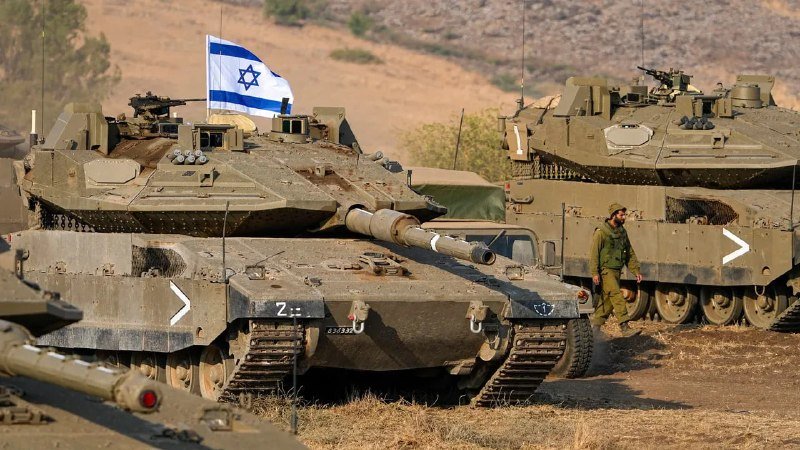
At 18:00 local time on Sunday, 14 June 2026, the Israel Defense Forces' Home Front Command activated a new set of defensive guidelines that cap public gatherings nationwide at 5,000 people and tighten permitted activity along the northern border. The order, issued after a fresh situational assessment earlier in the afternoon, runs through 20:00 on Monday, 15 June, and is the most public-facing signal yet that Israel is treating the current threat window as live, not residual.
The change matters less for any single concert, football match, or school event cancelled than for what it reveals about the working assumption now in force inside the military chain of command. The Home Front Command does not move to nationwide 5,000-person limits as a precaution. It moves when its analysts judge the probability of a long-range strike to have crossed an internal threshold. That threshold has now been crossed.
What the order actually does
The headline number is 5,000. According to the IDF's official channel, the Home Front Command updated its defensive policy effective Sunday, 14 June 2026, at 18:00, with the measures set to expire on Monday, 15 June, at 20:00. Within that window, gatherings above 5,000 people are restricted nationwide. In communities situated on the northern border, additional restrictions apply, including limits on educational activity, beach and pool attendance, and organised outdoor events in exposed areas — the standard layered regime the Home Front Command has refined across multiple rounds of escalation since October 2023.
Channel 12 reporting cited by the GeoPolitics Watch channel indicated that the guidelines were still being considered in the early afternoon, and were then finalised within roughly an hour. That compressed timeline is itself a data point. Major policy reviews on the Home Front side typically take longer; an order issued and signed off the same day points to a specific intelligence input — a launch profile, a deployment, an intercepted communication — rather than a generalised worry. The IDF has not, in its public messaging, identified that input by name. Reporters familiar with prior episodes will recognise the pattern from the April 2024 and October 2024 exchanges with Iran, in which the Home Front Command moved to nationwide restrictions hours before retaliation arrived.
Why the timing lines up with Iran
The four source items feeding this article all surfaced between 14:50 and 15:14 UTC. The al-Ali Express channel, drawing on Israeli reporting, framed the change as a direct response to an Iranian posture shift. The GeoPolitics Watch channel paired the news with the visual flag combination that has, on the channel, marked Iranian–Israeli confrontations: "🇮🇷❌🇮🇱." That is editorial framing, not a confirmation of attack, but it tracks the direction of the threat axis. The Israeli home front has spent most of 2025 and the first half of 2026 calibrated to a Hezbollah-north and Iran-deep axis; the language now used to justify the 5,000-person cap is the same language used in the run-up to direct Iranian ballistic-missile exchanges.
The Home Front Command's calculus is straightforward. A 5,000-person cap reduces the casualty exposure of any single strike on a stadium, a conference hall, or a central bus station to a tractable number, because large indoor gatherings above that threshold have historically been the highest-density target profile Iranian and proxy planners have openly rehearsed. Restrictions on the northern border, by contrast, reflect the residual Hezbollah rocket and drone threat that has not gone away even as direct Tehran–Tel Aviv exchanges have dominated the news cycle.
What the limits do not say
Three things are conspicuously absent from the published order. First, the IDF has not specified the duration beyond the 26-hour window, which is short by the standards of a sustained national emergency but long by the standards of a routine advisory. Second, no specific Iranian move has been publicly attributed as the trigger. Third, there is no accompanying call-up of civilian reservists, and the air-defence activity over the last 24 hours, where it has been reported, has not been characterised as emergency-grade.
These omissions cut two ways. The optimistic read is that the Home Front Command is closing a known window in which Iran could respond to a separate event — Israeli operations in Lebanon, a strike on a nuclear site, a high-profile assassination — and that the order is prophylactic rather than reactive. The pessimistic read is that the intelligence picture is sharper than what the public order reveals, and that the 5,000-person cap is the floor of a graduated response that may escalate over the next 26 hours. The four source items do not, on their own, let a reader choose between those reads. The IDF's own public communications are silent on which is closer to the truth.
The pattern, and what it costs
Israel has now run through multiple iterations of the Home Front Command's graduated-defence playbook since 7 October 2023, and the playbook has steadily compressed. What used to be a regionalised northern-border restriction is now a national 5,000-person cap, in a country of roughly 9.7 million people, applied to every municipality from Metula to Eilat. The cumulative effect is a civil-defence budget, a school-calendar disruption, and a tourism hit that arrive whether or not a strike ever lands. Each round of restrictions, even when it expires without incident, raises the baseline expectation of the next round.
The structural read is plain. A state that lives under recurring long-range missile threat does not, in the long run, balance that threat on a Home Front Command order. It does so on layered air defence, on the credible deterrent threat of overwhelming retaliation, and on diplomatic pressure that pushes the cost of attack up for the launcher. The 5,000-person cap is the most visible line of that layered system, and the one that costs least to deploy, but it is also the line that becomes harder to draw back once it is in place. After every prior round of escalation, the ceiling on gathering size has been slower to fully relax than the underlying threat warranted.
Stakes over the next 26 hours
If the order expires on Monday at 20:00 without incident, the framing of the day will be that the Home Front Command's precautionary machinery worked as designed. If a strike lands within the window, the cap will be cited in retrospect as evidence that the assessment was correct, and the political conversation will move to retaliation, coalition management inside the cabinet, and the cost of a fourth direct exchange with Iran in less than two years. If Iranian retaliation is delayed but signalled — a launch detected, an interception, a debris field over the Dead Sea — the most plausible outcome is a follow-on extension of the 5,000-person cap and a wider set of restrictions on the home front, in the same rhythm that has governed every prior round.
What remains genuinely uncertain is the link between the public order and the private assessment. The four source items in this cluster agree on the existence of the order, on its 5,000-person ceiling, on its 26-hour window, and on the role of the northern-border restrictions. They do not agree, and do not claim to know, which specific signal moved the Home Front Command to act on a Sunday afternoon in mid-June. That gap between the published order and the underlying intelligence is the part of the story that will only become legible after the window closes.
This article draws on the IDF's official Telegram channel for the order text, Israeli wire reporting summarised by Channel 12, and two Telegram-based aggregators. Wire-sourced attribution, where present, is to the named Israeli outlets that carried the assessment; no Western newswire confirmation of the underlying Iranian posture shift was available in the source cluster as of 15:14 UTC on 14 June 2026.
Wire provenance
This editorial synthesis draws on the following public wire/social posts:
- https://t.me/idfofficial
- https://t.me/abualiexpress
- https://t.me/GeoPWatch
- https://t.me/osintlive
Follow the event.
These dated source records provide context. They do not retrospectively verify this archive article.
Separate what the nuclear watchdog reported from what it could not determine after the June 2025 strikes.