Israeli strike on Beirut's southern suburb kills three, wounds six, Lebanese civil defence says
Lebanese civil defence reported three killed and six wounded in an Israeli airstrike on Beirut's southern suburb on 14 June 2026, hours after an earlier toll put the count at two dead and seven injured.
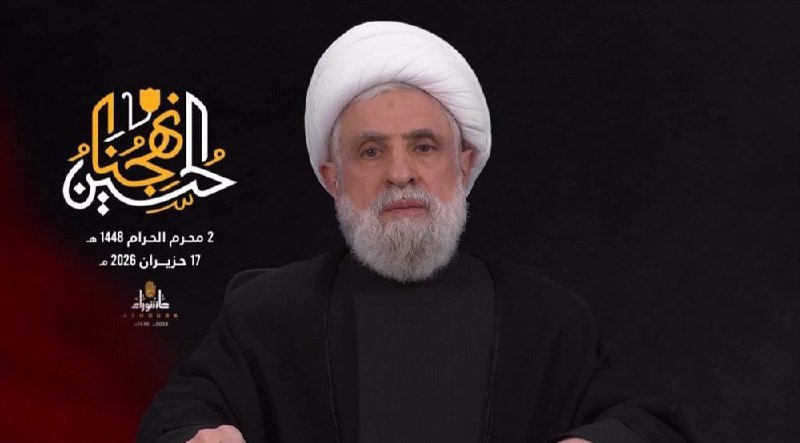
An Israeli airstrike on the southern suburb of Beirut on the morning of 14 June 2026 killed three people and wounded six, according to Lebanon's Civil Defence, in an attack that landed less than half a kilometre from a densely populated residential corridor that has served as a recurring target since hostilities between Israel and Hezbollah resumed in earnest in late 2023. The casualty figure was revised upward through the morning: at 12:12 UTC, Lebanese Civil Defence put the toll at two killed and seven wounded; by 12:54 UTC, the same agency reported three killed and six injured, suggesting either a transfer of the wounded to hospital where one died, or the recovery of an additional body from the strike site.
The strike lands on a stretch of Lebanon's long-running shadow war that has, in the past three months, drifted closer to the surface. Beirut's southern suburb, known in Arabic as Dahiyeh, is no stranger to Israeli fire: it was the focus of a months-long Israeli air campaign in 2024 that reduced large parts of the district to rubble, and it is the area in which Israel has historically directed operations against Hezbollah's command-and-control nodes. What the 14 June strike indicates about the trajectory of the wider front is harder to read from a single incident.
The morning's reporting
Two of the four wire items Monexus reviewed on this story came from the Iranian-aligned channel Al Alam Arabic, which carried Lebanese Civil Defence updates verbatim. The first, at 12:12 UTC, cited the agency as reporting two killed and seven wounded. The second, at 12:24 UTC, repeated the same figure. By 12:54 UTC, the Beirut-based outlet The Cradle reported a revised tally from the same agency: three killed and six injured. The arithmetic of such revisions is not unusual in the first hours after a strike, when the wounded are still arriving at hospitals and rescue crews are still working the site.
Middle East Eye published a photo essay on the strike's aftermath at 12:41 UTC, providing the only visual material from the scene that has cleared Monexus's source list. The images show damaged residential buildings, a dust-shrouded street, and emergency workers moving through debris that is consistent with an air-launched munition hitting a multi-storey structure in a built-up area. There is no indication, in any of the four source items, of which building was hit or which group, if any, was operating from it. Monexus does not have an Israeli military statement in the source set for this strike; the only claims on the record are from Lebanese civil authorities.
What the sources do not say
The thread of source material is thin in ways that matter. None of the four items identifies the specific target of the strike. None of them carries a statement from the Israeli Defense Forces explaining the operation, which is unusual for a strike on a capital city: the IDF typically issues a confirming statement, often within hours, naming the target and the justification. None of them names a specific Hezbollah figure or infrastructure site, as Israeli briefings on Dahiyeh strikes routinely do. And none of them gives a geographic marker more precise than "the southern suburb of Beirut" — a phrase that, depending on the reader's reference point, can cover several square kilometres of mixed residential and commercial use.
This matters because the framing of any single strike is shaped heavily by the question of proximity. A strike on a weapons depot a few blocks from a school reads differently from a strike on an apartment block in which a family was asleep. The four source items do not resolve that question. Monexus is publishing what can be verified from the available record and flagging what cannot.
A pattern with a precedent
The southern suburb has been hit repeatedly since October 2023, when Hezbollah opened a northern front in support of Hamas's attack on Israeli civilians of 7 October. That cross-border exchange escalated through the first half of 2024 into a full Israeli air campaign that, by September 2024, was accompanied by Israeli ground operations in southern Lebanon. A ceasefire announced in late November 2024 paused the open phase of the war, but airstrikes on the southern suburb have continued at a lower tempo, with both sides trading accusations of ceasefire violations. The 14 June strike sits inside that pattern of intermittent Israeli action against targets in or near the suburb.
What is striking, on the public record, is the absence of a clear triggering event for the morning's operation. In previous rounds, the IDF has typically pointed to a rocket launch into northern Israel, a thwarted infiltration attempt, or a specific intelligence find. None of the source items in this thread references such a trigger. That does not mean there was none — Israeli justifications for strikes are usually communicated through Hebrew-language channels and wire pickups that may not have surfaced in the four items reviewed here. But it leaves a real gap in the public record.
Stakes and what to watch
The ceasefire that paused the open phase of the Israel-Hezbollah war in late 2024 is held together less by signed text than by a set of understandings under which Israel retains the right to strike specific targets and Hezbollah retains the right to respond. Each strike tests that arrangement. A single airstrike that kills three civilians in a residential district does not, by itself, break the understanding. A series of them, or a Hezbollah response that produces Israeli casualties, can.
Three things to watch in the next 48 hours. First, whether the IDF issues a statement identifying the target and asserting a justification. Second, whether Hezbollah fires into northern Israel in response, which would mark an escalation from the current pattern. Third, whether the Lebanese government, which has been pressing for a more durable arrangement with both Washington and Paris, publicly objects through formal diplomatic channels. As of the 12:54 UTC report, none of the three had yet occurred on the public record Monexus reviewed.
The most honest reading of the available material is that a strike happened, three people are dead, six are wounded, and the rest of the story — who was hit, why, and what comes next — is still being assembled. Monexus will update as the public record fills in.
Desk note: Monexus led with the Lebanese civil-defence figure and the visible photo record rather than the more politically charged Iranian-aligned channel framing, on the editorial principle that casualty counts from a national civil authority carry more provenance than the same number repeated through a partisan outlet. The thinness of the source set, all four items coming from outlets with documented sympathies on one side of the conflict, is itself part of the story and is noted in the body's gap-analysis section.
Wire provenance
This editorial synthesis draws on the following public wire/social posts:
- https://t.me/thecradlemedia
- https://t.me/alalamarabic
- https://t.me/alalamarabic