Northern sirens and the slow arithmetic of escalation
Two suspected aerial impacts in northern Israel in the small hours of 14 June 2026 sharpen an already tense border, and lay bare the strategic calculation that now governs the exchanges.
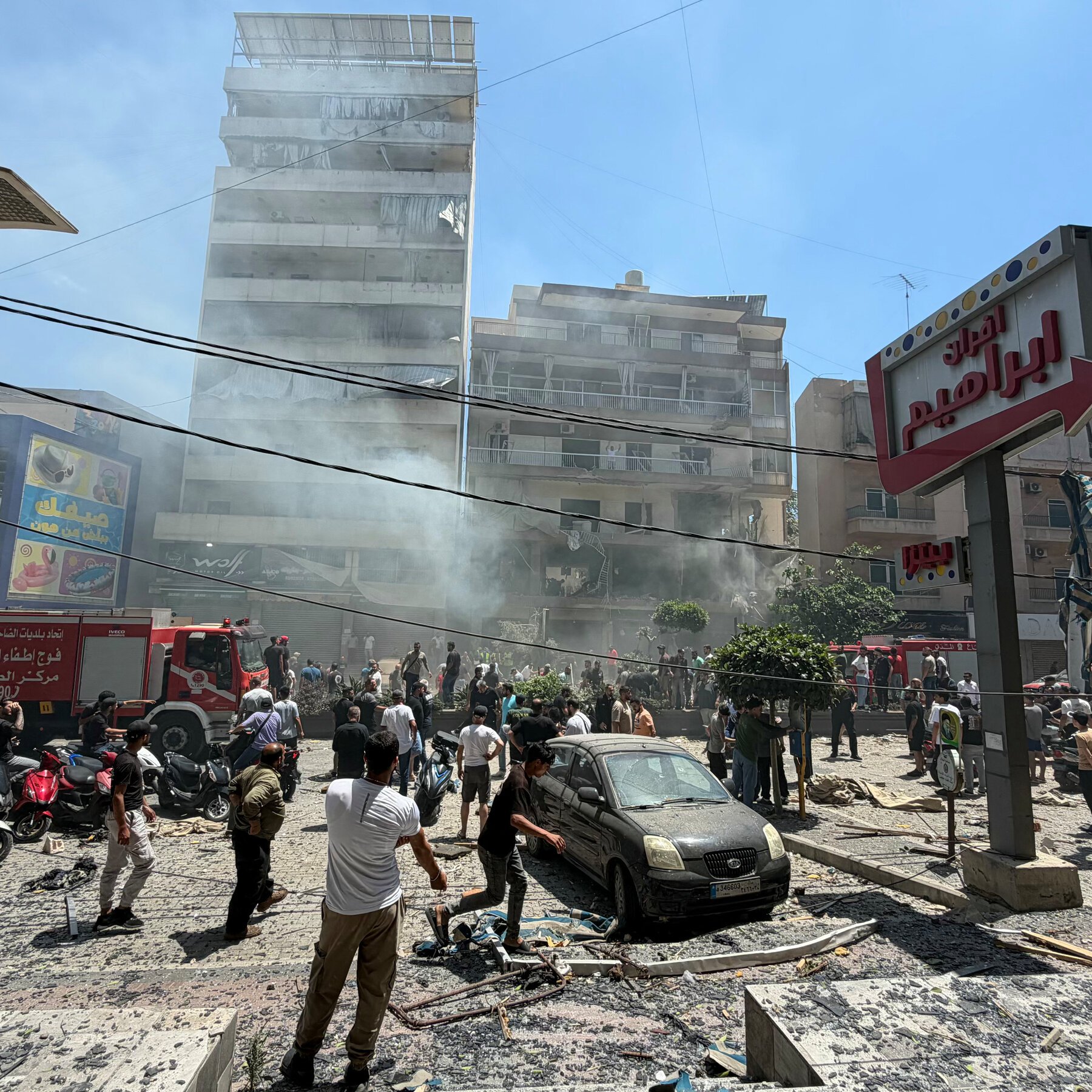
Air-raid sirens sounded across parts of northern Israel in the early hours of 14 June 2026. The IDF Spokesman's office, posting at 05:26 UTC, said two "suspicious aerial targets" had been detected following warnings of a hostile aircraft intrusion; a follow-up notice roughly a minute later clarified that two impacts had been recorded in Israeli territory. A third alert, at 05:42 UTC, repeated the warning. The military did not, in the messages that surfaced, attribute the launch. The geometry, the timing, and the operating airspace in the north of the country make the obvious read the Israeli public is already being given: this is the long tail of the Hezbollah front, persisting long after the formal exchanges of late 2024 and 2025 paused.
What the early-morning alerts actually expose is the strategic logic of attrition — the slow arithmetic by which a non-state or quasi-state actor pokes at a heavily defended border, calibrates a response, and waits for the cost curve of interception to do the political work that a single dramatic strike never could.
The incident, in plain terms
Three official Israeli channels — the IDF Spokesman's English-language account and the parallel Hebrew-language IDF channel — carried near-identical wording in the minutes after 05:26 UTC. The phrasing was deliberately minimal. Two "suspicious aerial targets" had been identified after sirens in several northern areas; two impacts were later confirmed on Israeli territory. No casualties, infrastructure damage, or interception details appeared in the immediate posts. The repeated alert at 05:42 UTC, with the same boilerplate, suggests the military treated the event as a single, contained episode rather than the leading edge of a larger barrage.
The absence of attribution is itself a tell. The IDF has, in past episodes of cross-border aerial intrusion, named Hezbollah, Iranian proxies, or, in a handful of cases, Iraqi militias within hours. Silence in the first hour usually means the military is still matching radar tracks, fragments, and any recovered debris to a launch profile — work that takes longer when the weapon is a slow-moving drone rather than a rocket whose motor signature is on every acoustic sensor in the country.
The counter-narrative that should be heard
There is another reading, less comfortable for Tel Aviv and worth airing on its merits. The northern front is not symmetrical. Hezbollah — or, in the post-2024 landscape, whatever residual network still answers to that name — operates from a state that has been economically hollowed by a years-long financial and political crisis, and from a population that, by most independent reporting, is exhausted. A two-drone intrusion is not the opening move of a campaign; it is a signalling move, the kind a weaker party makes to remind a stronger one that escalation remains a live option, that the deterrence equation has not been fully resolved in Israel's favour, and that any new front in the south — Gaza's reconstruction, the prisoner file, the daily grind of the West Bank — has a northern price tag attached.
The Israeli frame tends to flatten this: an interception, therefore safety; a threat, therefore the necessity of a harder strike. That frame is not wrong, but it is incomplete. It treats every incoming object as a referendum on sovereignty rather than as a data point in a negotiation neither side will admit to having. Monexus finds that the more honest framing is the one the wires rarely run on the front page: northern Israel is not at war, and it is not at peace, and the ambiguity is the point.
What the structural picture actually shows
Strip away the rhetoric on both sides and the picture is one of managed escalation, not a slide toward full war. The drone route from southern Lebanon to the Galilee is well-mapped; the Israeli air-defence network, layered as it is, is calibrated to engage precisely this kind of low-altitude, slow-moving profile. Each interception is a defensive success, but each intrusion is also a successful penetration — which is to say, a political achievement for the launcher, however small. The metric that matters is not whether the drones were shot down, but whether the cost-per-incursion to the defender — alert fatigue, economic disruption in the border towns, the slow withdrawal of insurance and tourism revenue from the north — continues to be lower than the cost to the attacker of standing down.
A broader pattern is also in view. Across 2025 and into 2026, the northern border has been treated by successive Israeli governments as a problem to be managed until something else gives — a wider regional deal, an internal Lebanese stabilisation, a change in Tehran's risk calculus after its own setbacks. The early-morning alerts suggest that waiting strategy is being tested in real time, with civilian populations in the line.
Stakes and what to watch
The immediate stakes are local. Two drone impacts in the north, in daylight or in the dark, are a question for the Israel Defense Forces' situational awareness, for the regional councils, and for the handful of border-adjacent municipalities that have, for nearly two years, lived with the assumption that a rocket is always forty seconds away. The wider stakes are diplomatic. If the attribution, when it comes, points to a Hezbollah-linked cell, the Israeli cabinet will face the same menu it has faced since late 2024: respond in Lebanon, respond in Syria, respond via a covert channel, or absorb. Each option has a price. None of them resolves the underlying asymmetry.
The honest summary is this: the sirens in the north at 05:26 UTC on 14 June 2026 were not a surprise, and they will not be the last. The strategic question is not whether the next intrusion is coming, but whether the policy on either side of the border is built to handle a thousand more like it.
Monexus covered this incident in real time through the IDF's official channels rather than waiting for wire confirmation — an editorial choice that lets a staff piece move at the speed of the event while keeping the framing inside the same sourcing discipline we apply to longer analytical work.
Wire provenance
This editorial synthesis draws on the following public wire/social posts:
- https://t.me/idfofficial
- https://t.me/abualiexpress